
Get the full EPUB
Drop your email and the EPUB downloads straight to your device. We'll also ping you when the next case file lands — unsubscribe any time.
Your email is already on file — enjoy the read.
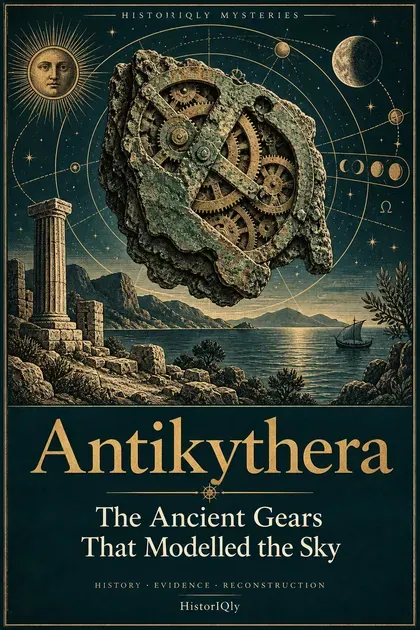
Download the EPUBRecovered during the 1900–1901 investigation of a wreck off Antikythera, a corroded bronze assembly concealed an extraordinary instrument. Its gears were recognised in 1902; tracing their purpose took generations of research.
The fragments preserve an ancient astronomical calculator. Its calendar and eclipse displays are better understood than the missing planetary gearing, which modern models reconstruct from the remaining evidence.
30
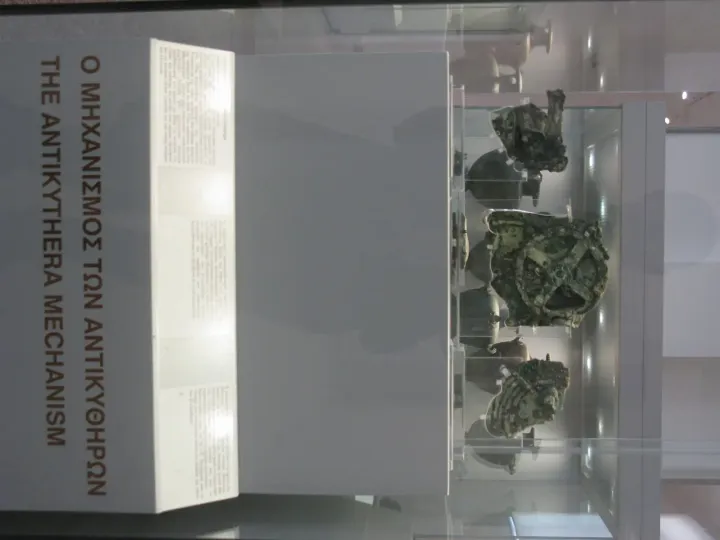
Thirty gears survive among the fragments. The complete instrument needed additional components. Their ratios linked astronomical cycles with displays arranged on the front and back of a compact case.
~50m
Divers worked at roughly fifty metres during the original recovery. One died and two were paralysed; the artefacts came at a heavy human cost.
82
Surviving pieces, from Fragment A (the main drive gear) to fragments smaller than a fingernail.
3,000+
Greek characters made more legible through advanced imaging, describing astronomical cycles and display features. The surviving text is incomplete.
The Evidence
The Gears
Thirty bronze gears survive. Their arrangement helps explain lunar motion and calendar cycles; the complete machine included missing parts. A reconstruction must fit the fragments as well as the astronomy.
The User Manual
Imaging made thousands of Greek characters easier to read, including text about the displays and eclipses. Often compared to a user manual, these inscriptions provide valuable but incomplete explanations.
The Reconstruction
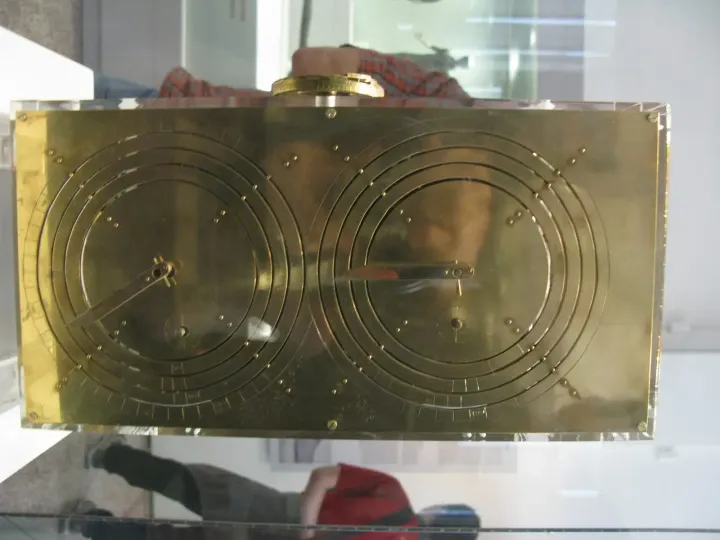
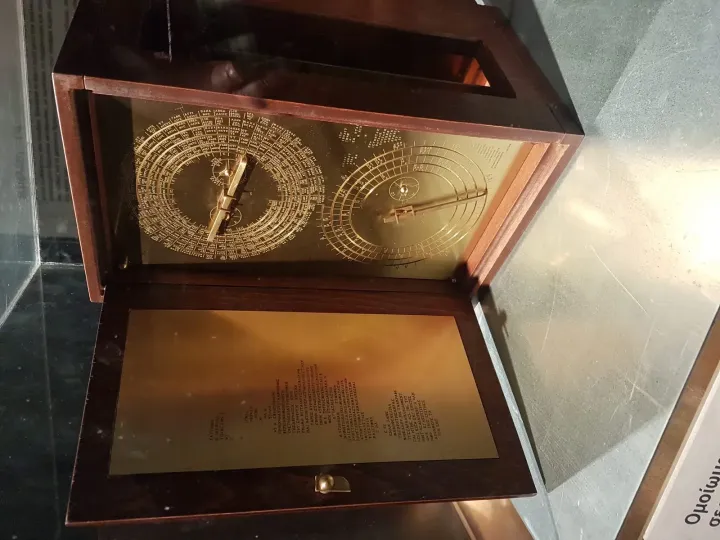
Modern models combine surviving parts with inferred gearing. They demonstrate possible arrangements for the Sun, Moon, and planets, while the original calendars and eclipse scales supply firmer constraints. A working replica is a proposed solution, not a recovered original.
Two Thousand Years
Construction
The museum dates construction to around 150–100 BCE. Calendar names and festival references offer clues to its cultural setting, but neither its workshop nor its maker has been identified.
The Shipwreck
A first-century BCE cargo ship sinks near Antikythera, carrying Greek art and luxury goods along with the mechanism. Its precise destination and the instrument’s earlier ownership remain uncertain.
The Discovery
Sponge divers from Symi locate the wreck in 1900. A Greek recovery operation continues into 1901, bringing statues and other material to Athens, including the mechanism.
The Gear
Gears are recognised in the recovered material. Valerios Stais and other early investigators begin debating whether it is an astrolabe, a navigational instrument, or a mechanical astronomical model.
Gears from the Greeks
Derek de Solla Price publishes his landmark study, using radiographic work with Charalambos Karakalos to reconstruct astronomical gearing. Later research revises parts of the model.
The CT Revolution
CT scanning and surface imaging reveal hidden structure and inscriptions. The results enable new interpretations of the lunar gearing and rear displays, without recovering all the missing components.
Key Figures
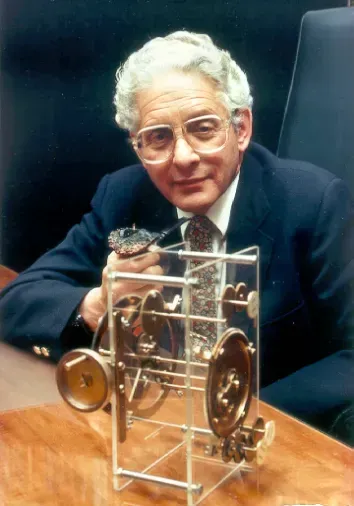
Derek de Solla Price
Physicist and historian of science whose 1974 monograph Gears from the Greeks shaped modern understanding of the instrument. His work developed an investigation begun by earlier researchers.
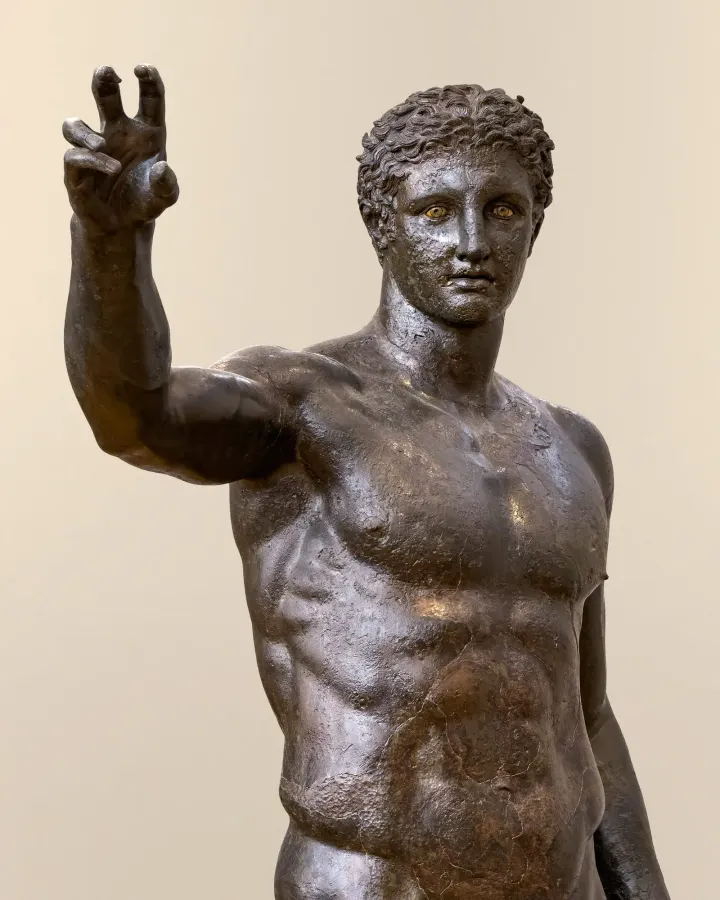
The Antikythera Youth
A bronze statue recovered from the same wreck. The cargo’s sculptures became celebrated museum pieces, while the mechanism posed a less immediately visible problem of gears, inscriptions, and astronomical calculation.
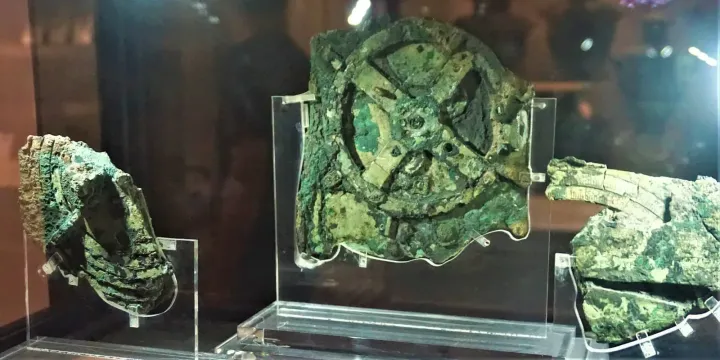
What Else Have We Lost?
The surviving bronze documents remarkable ancient engineering. Its missing parts also reveal the limits of the record: later models can explain possibilities that the original no longer preserves in full.
The book follows both histories: the ancient instrument and the modern work of making sense of it.
Get the Full Book
Read the story of the wreck, the gears, and the changing interpretations of an ancient astronomical calculator.