
The Wow! Signal
72 Seconds from the Edge of Forever
On August 15, 1977, a radio telescope in Ohio picked up a signal from deep space. It lasted seventy-two seconds. It was on the frequency of hydrogen — the most common element in the universe. It was thirty times stronger than anything around it. The astronomer who found it wrote one word in the margin.
Wow!
Nearly fifty years later, it has never been detected again.
6EQUJ5
The alphanumeric code printed by the IBM 1130 computer. Each character represents signal intensity over time — peaking at "U," thirty standard deviations above background noise. The strongest narrowband signal any SETI program has ever recorded.
30σ
Thirty standard deviations above noise. An unmistakable spike in the data.
100+
Attempts to re-detect the signal over nearly five decades. All unsuccessful.
Sagittarius
Near the galactic centre — where the density of stars is highest.
The Evidence
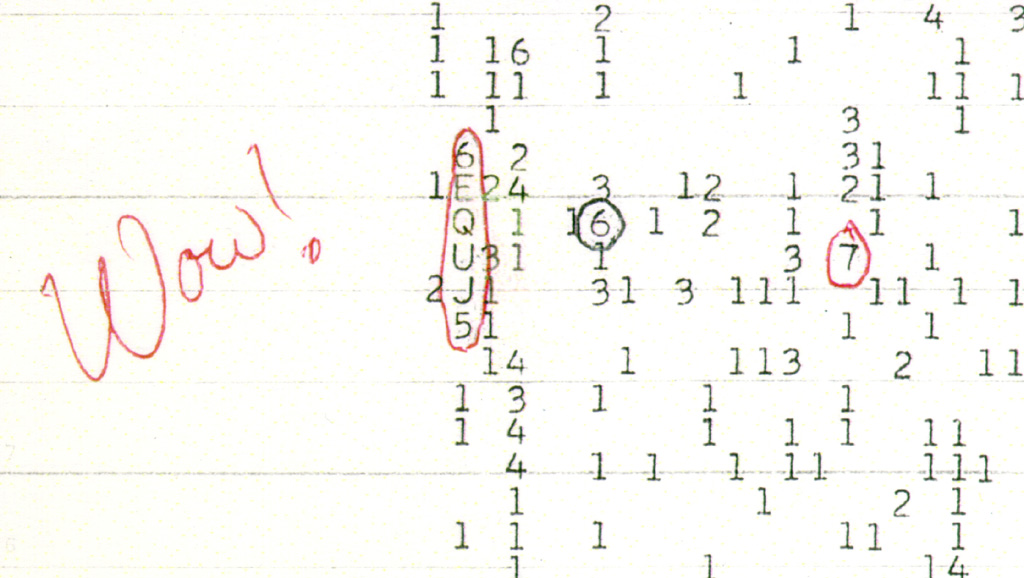
The Wow! Printout
The signal that changed SETI history. Jerry Ehman circled the sequence 6EQUJ5 in red ink and wrote "Wow!" in the margin — giving the signal its name. The original is preserved in the Ohio History Connection archives in Columbus.
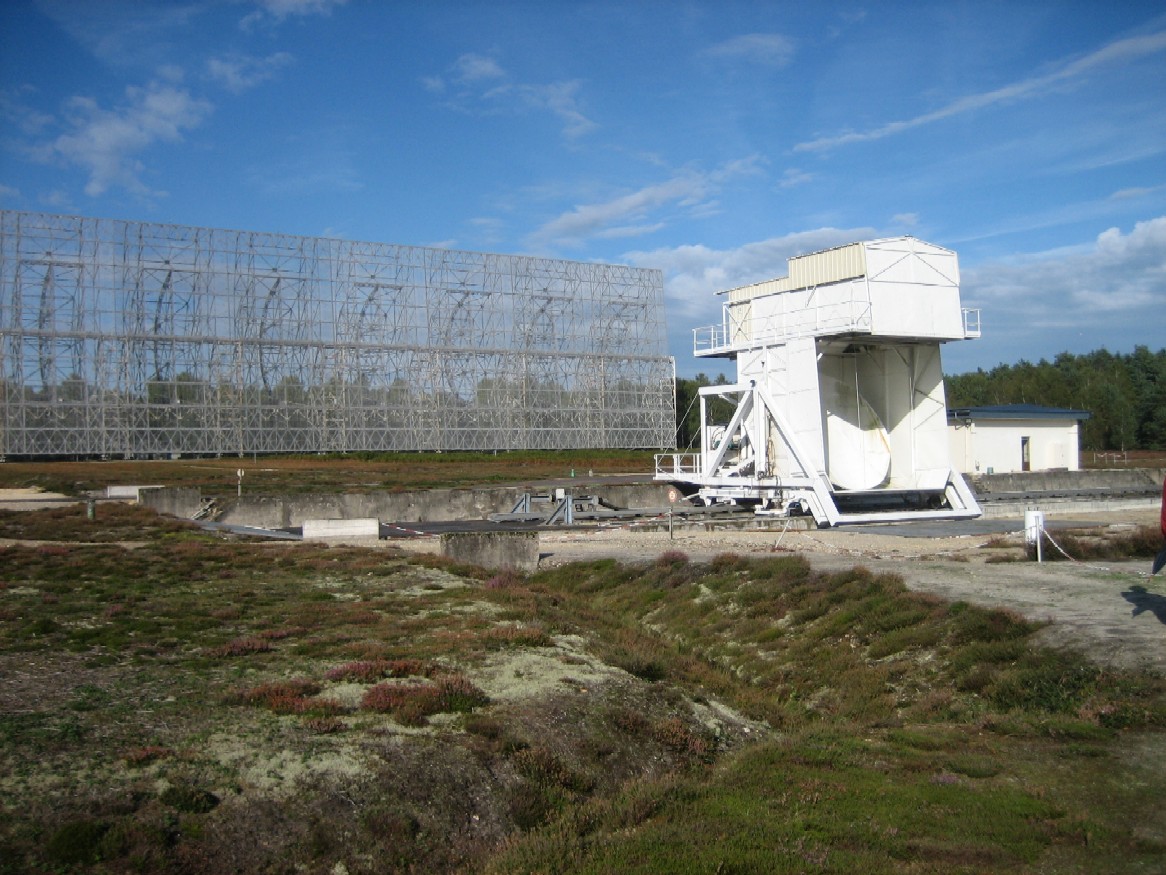
Big Ear's Design
Big Ear was demolished in 1998 for a housing development. This Kraus-type telescope in Nançay, France uses the same flat-reflector design. The original spanned three football fields of aluminium ground plane with two massive reflectors — one fixed, one tiltable.

The Machine
An IBM 1130 computer processed Big Ear's radio data, dividing incoming signals into fifty channels and printing the results in alphanumeric code. Nobody was listening in real time on August 15, 1977 — the computer recorded it with indifferent precision, and the paper rolled on.
The Signal and the Silence
The Hypothesis
Cornell physicists Cocconi and Morrison propose the hydrogen line (1420 MHz) as the natural frequency for extraterrestrial communication — a "unique, objective standard" that any advanced civilisation would recognise.
The Signal
Big Ear detects a 72-second narrowband signal at 1420 MHz from the direction of Sagittarius. Peak intensity: 30σ above noise. It matches every predicted characteristic of an extraterrestrial broadcast.
The Search
Over 100 follow-up observations using Big Ear, META, the VLA, Green Bank, and the Allen Telescope Array. Every one finds nothing. Robert Gray spends 35 years looking. The signal never returns.
The Demolition
Big Ear is torn down. The land becomes a 381-lot housing development and the Dornoch Golf Club. The astronomy community protests. The university sells anyway.
A New Theory
Abel Mendez proposes the hydrogen maser hypothesis — a magnetar flare triggering natural amplification in a hydrogen cloud. The first explanation to account for all observed properties of the signal.
Key Figures

John D. Kraus
The electrical engineer who designed and built Big Ear. Member of the National Academy of Engineering, inventor of the helical antenna, and director of the Ohio State Radio Observatory. He spent five years constructing the telescope that would one day catch the most famous signal in SETI history.

Frank Drake
Conducted Project Ozma in 1960 — the first systematic search for extraterrestrial intelligence. Creator of the Drake Equation, which estimates the number of communicating civilisations in the galaxy. His work laid the theoretical foundation that led to the Ohio SETI program.
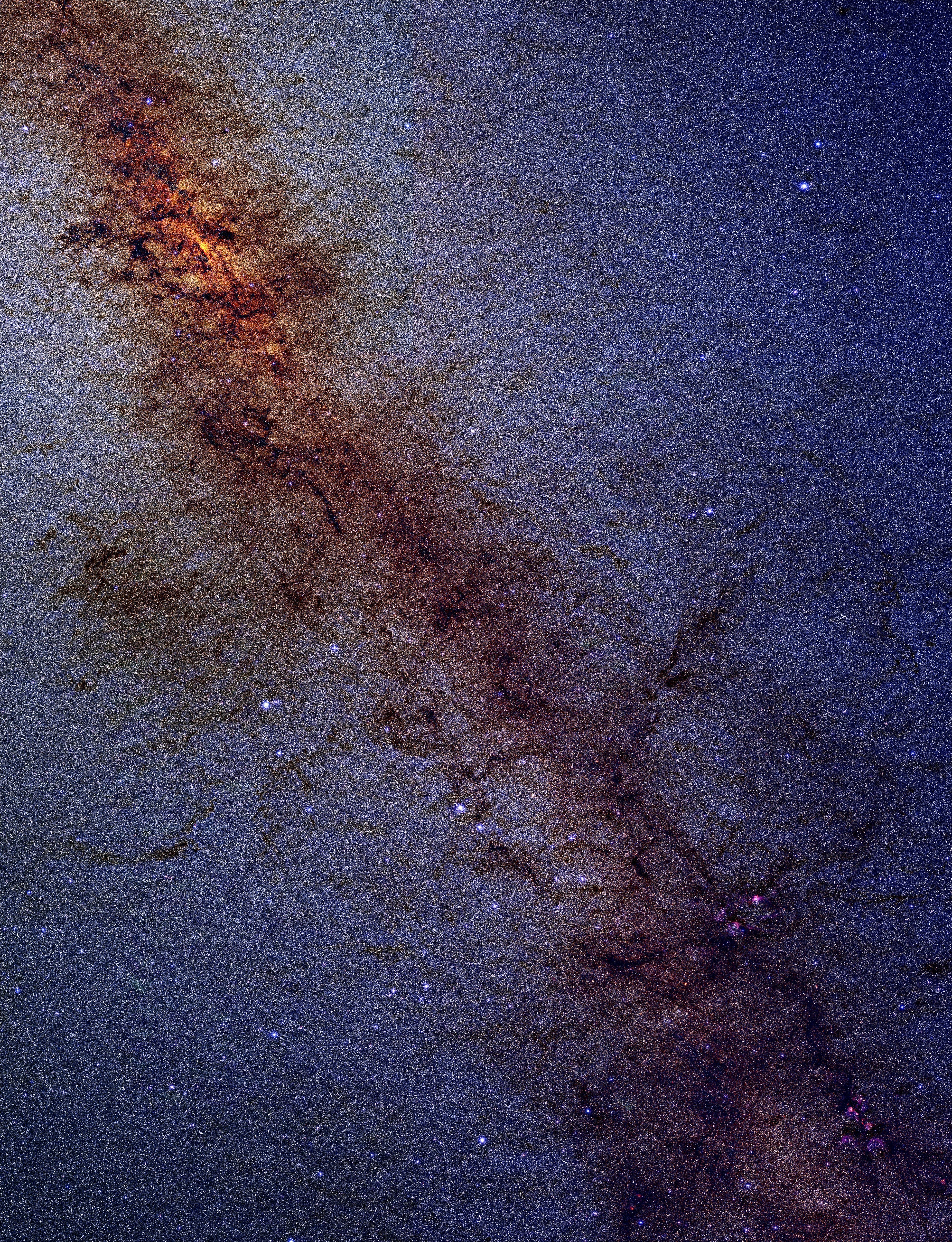
Are We Alone?
The signal lasted seventy-two seconds. The question has lasted forever. Nobody has answered it yet.
But somebody wrote "Wow!" in the margin — and that stubborn human insistence that the universe owes us an explanation might be the most important thing of all.
Get the Full Book
The complete story of the telescope, the signal, the search, and the question that won't go away.