The Voynich Manuscript
The Book Written in a Language That Doesn't Exist
A 600-year-old book, 240 pages of calfskin parchment, covered in an alphabet that appears in no other document in human history. Illustrated with plants that no botanist can identify. Written by a hand so fluent it could only belong to someone who knew exactly what they were writing. And after a century of the world's best codebreakers, linguists, and supercomputers — not a single word has been read.
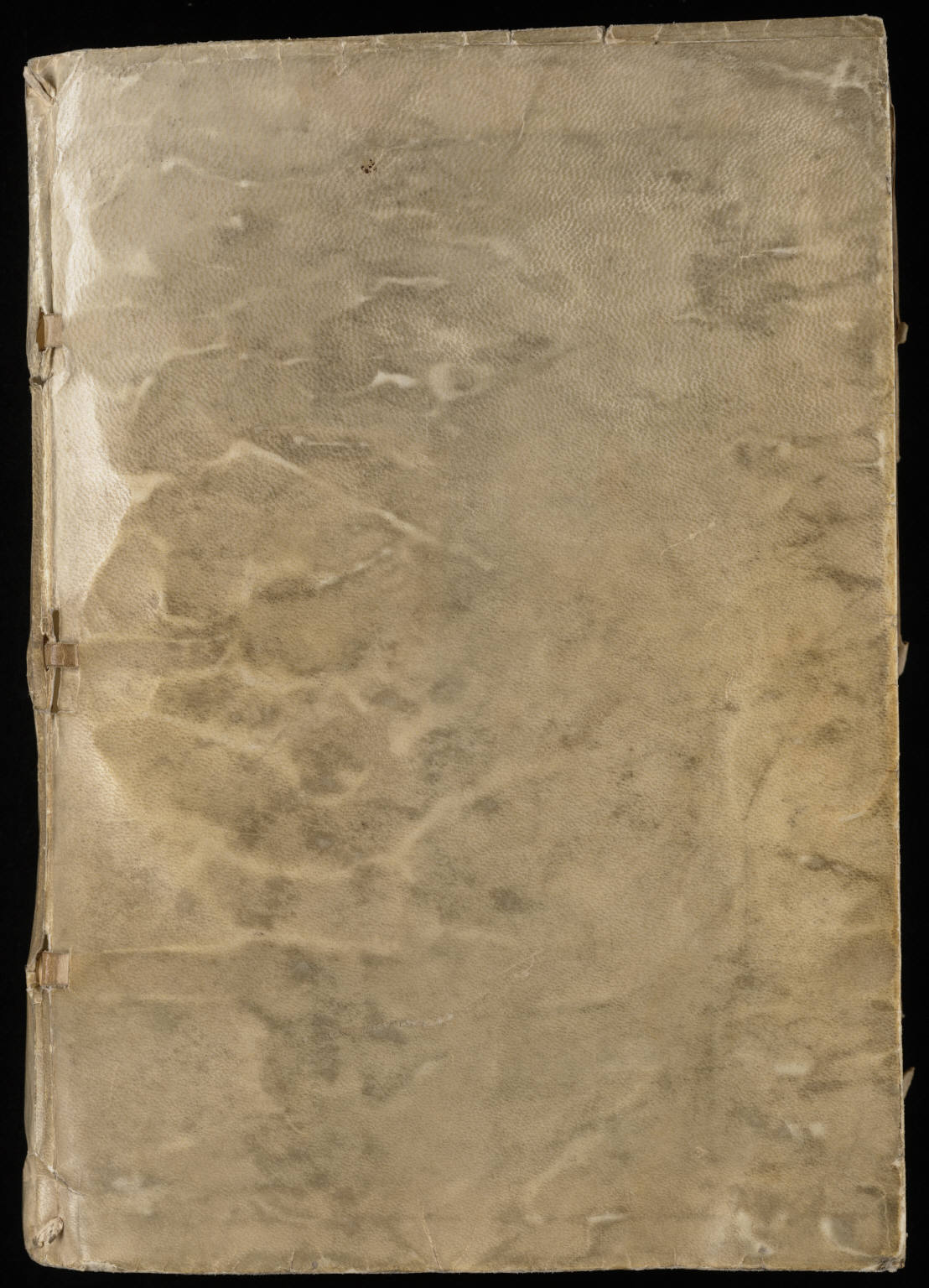
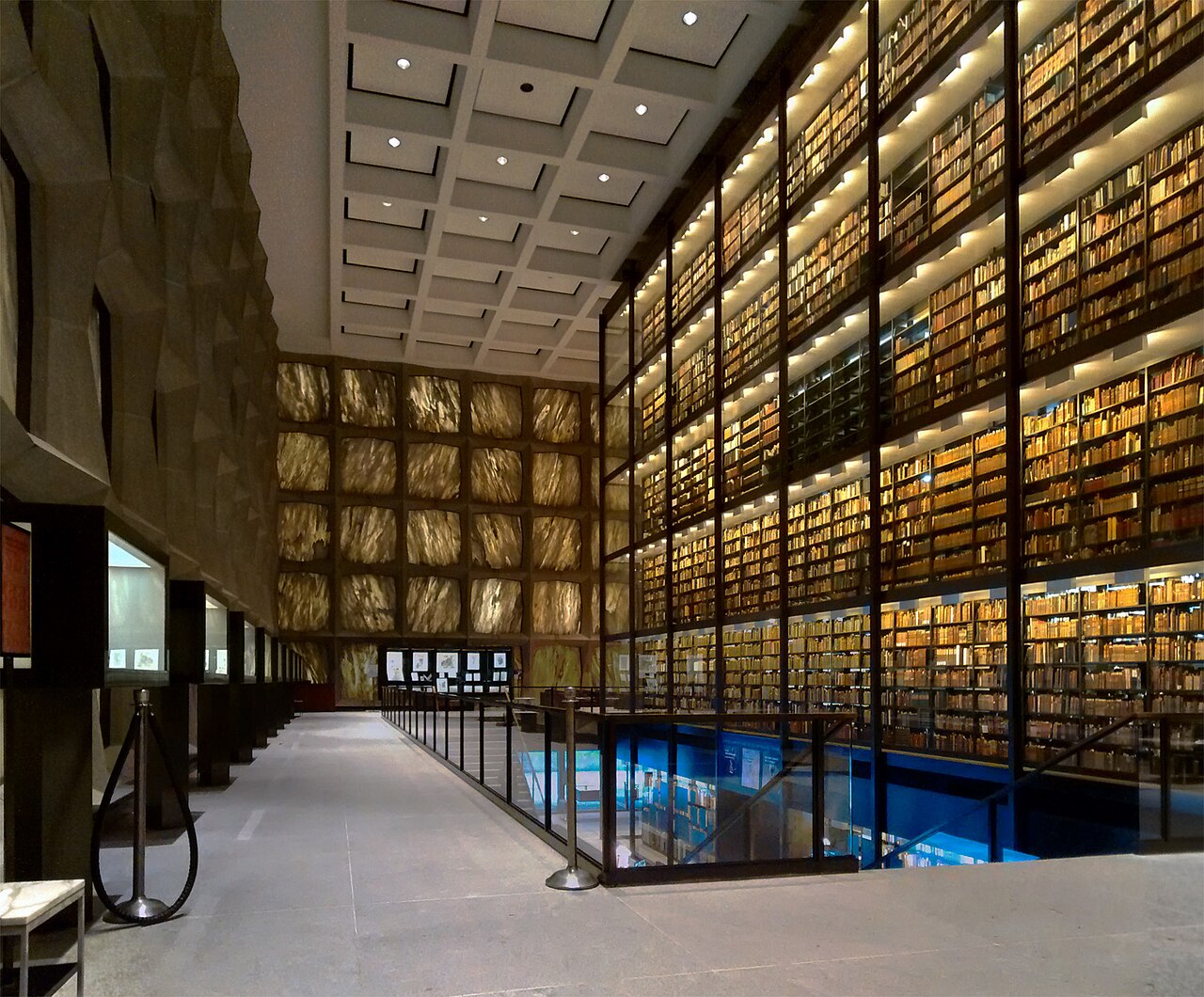
It sits in a grey box at Yale. Catalogue number: MS 408.
170K
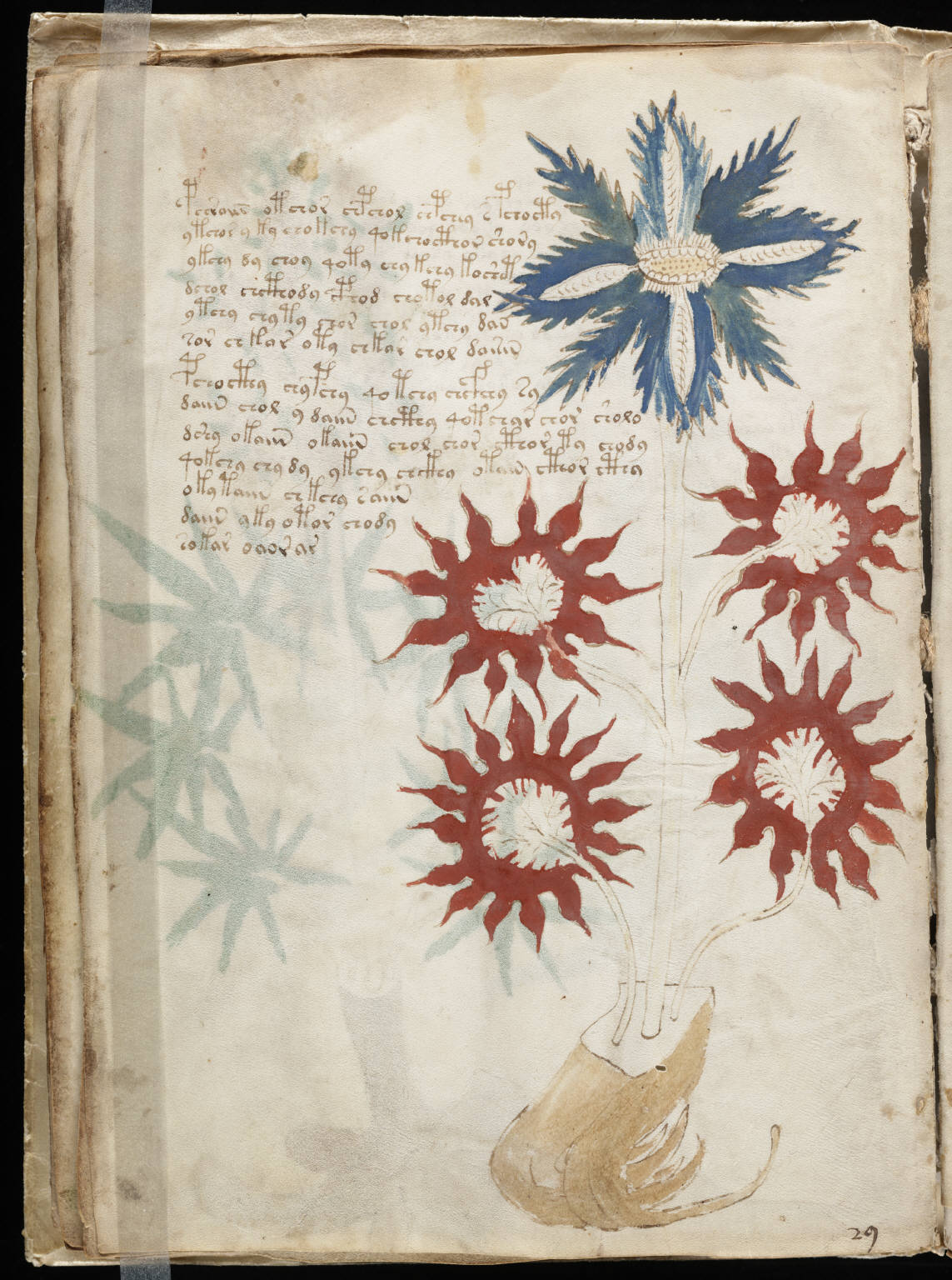
Individual glyphs written in an unknown alphabet of 20–30 characters. Approximately 35,000 "words" with a vocabulary of 8,000 distinct types. The text follows Zipf's law — the statistical signature of real language.
600
Gold ducats — reportedly paid by Emperor Rudolf II. Enough to buy a house in Prague.
113
Botanical illustrations that match no known species. Composites, inventions, or simply badly drawn?
600 yrs
The world's most famous unread book. Every claimed decipherment has collapsed under scrutiny.
The Evidence
The Impossible Plants
113 botanical illustrations fill the manuscript's largest section. Each shows a complete plant — roots, stems, leaves, flowers — surrounded by text in the unknown script. The plants match no known species. Some appear to be composites: the root of one grafted onto the stem of another, topped with an invented flower. A century of botanists have failed to identify them.
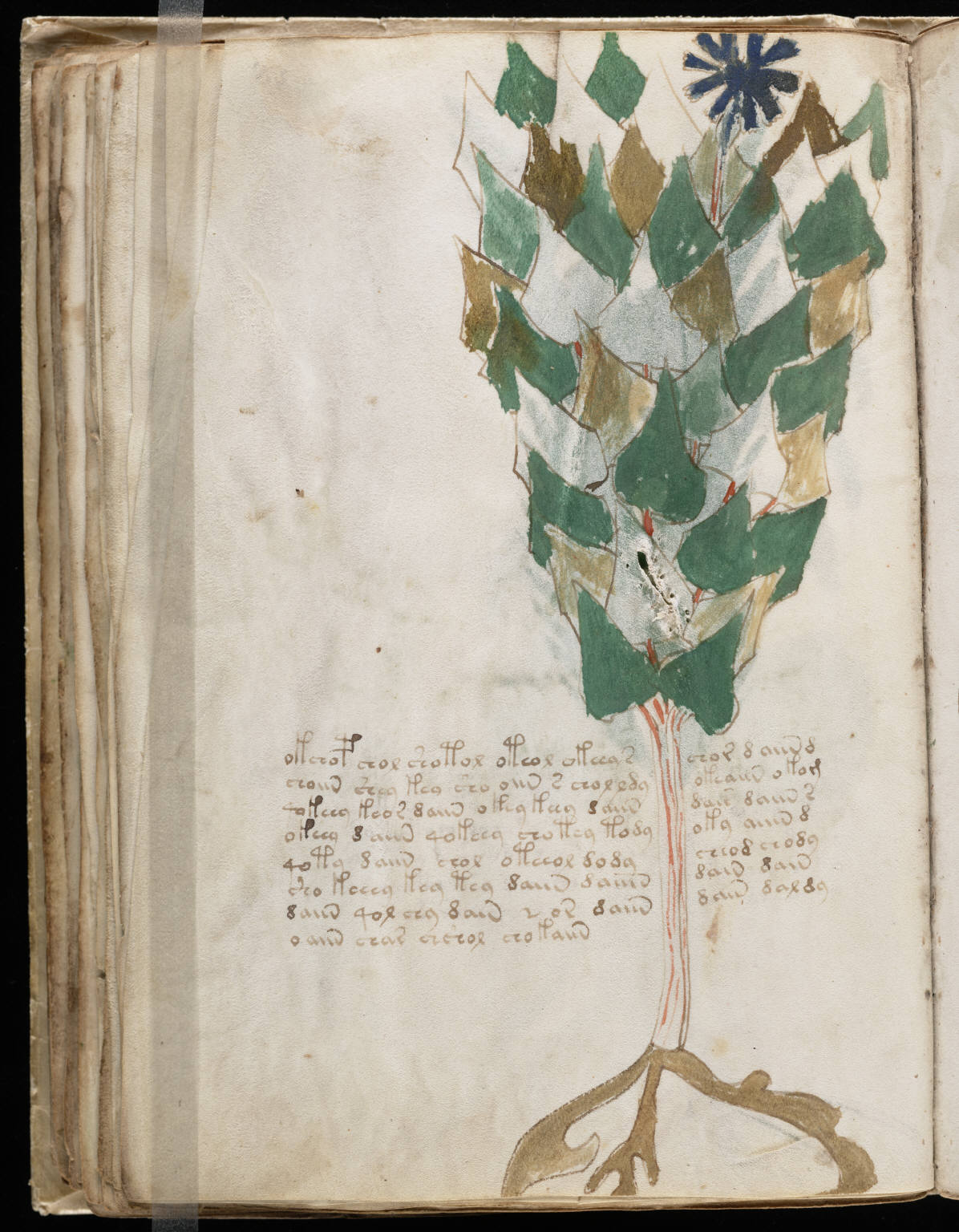
The Star Charts
Circular diagrams with zodiac symbols, concentric rings of text, and small figures. Researchers have identified what appear to be conventional representations of Aries, Taurus, and Pisces — some of the only recognisable elements in the entire manuscript. Thirty female figures surround each zodiac symbol, possibly representing the days of the month.
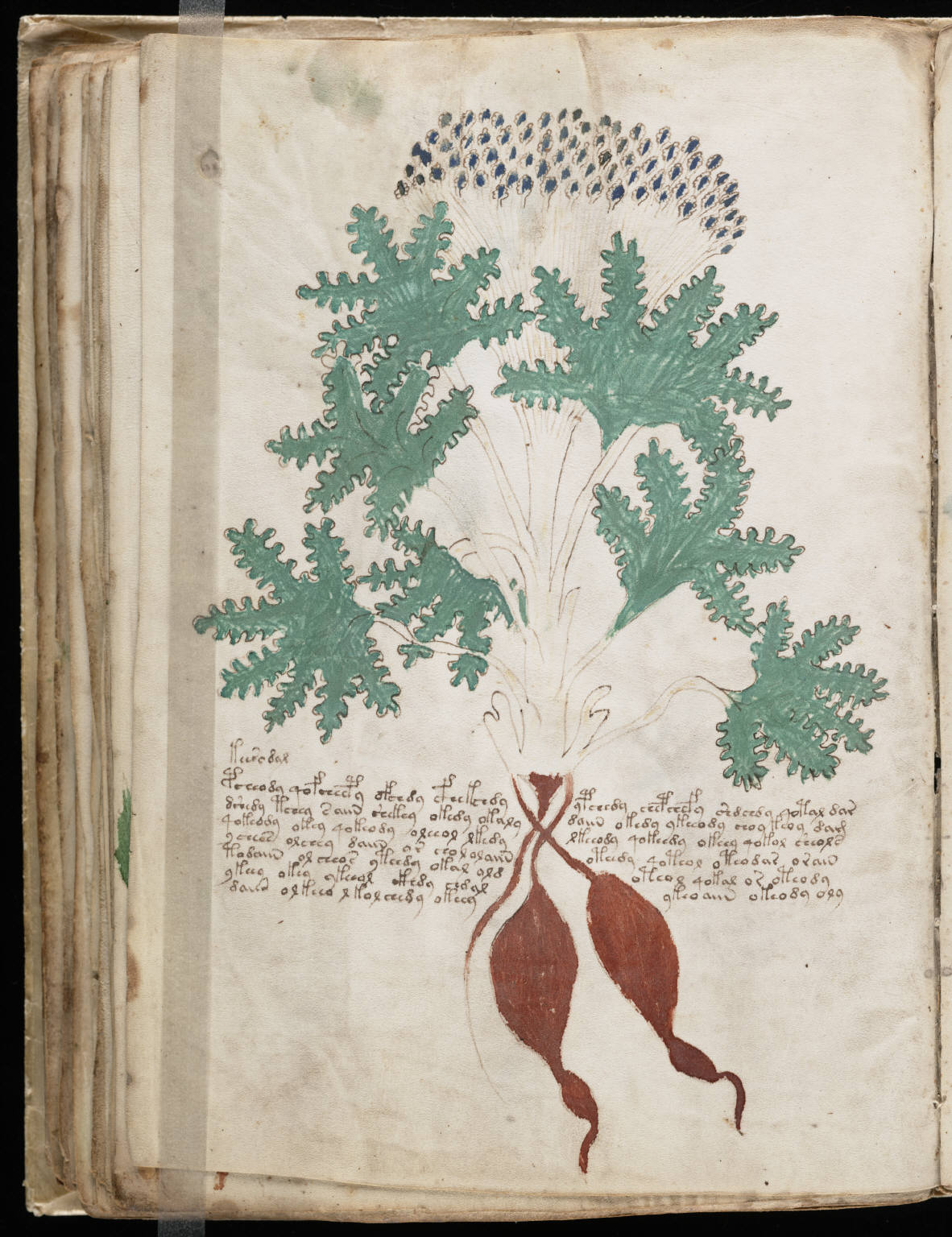
The Bathing Women
The most enigmatic section: small, naked female figures bathing in pools of green and blue liquid, connected by an elaborate network of pipes and tubes. Some stand in vessels; others float in channels. The plumbing-like structures have no parallel in medieval manuscripts. Theories range from the circulatory system to alchemical symbolism to therapeutic baths.
Six Centuries of Silence
Creation
Carbon-14 dating places the vellum between 1404 and 1438. The manuscript is created somewhere in Europe — probably northern Italy — by an unknown author writing in an unknown script.
The Emperor's Court
Rudolf II of Bohemia reportedly purchases the manuscript for 600 gold ducats, believing it to be the work of Roger Bacon. His pharmacist Jacobus Sinapius's erased signature is found on the first page under UV light.
The Letter
Johannes Marcus Marci sends the manuscript to Athanasius Kircher in Rome with a letter describing its history. Kircher — the most famous scholar in Europe — appears to have done nothing with it.
Rediscovery
Wilfrid Voynich, a Polish-Lithuanian book dealer and former revolutionary, purchases the manuscript from Jesuits at Villa Mondragone near Rome. He finds the Marci letter tucked between the pages.
The Carbon Test
Radiocarbon dating at the University of Arizona confirms the vellum dates to 1404–1438. Ink analysis confirms medieval manufacture. The manuscript is genuinely 600 years old.
Key Figures
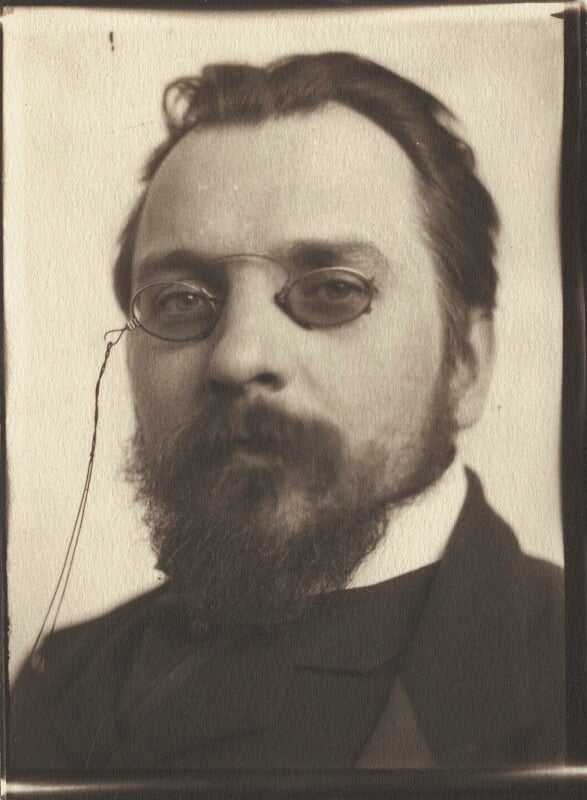
Wilfrid Voynich
Polish-Lithuanian revolutionary turned antiquarian book dealer. Escaped from Siberian exile, married a novelist, and spent his life hunting rare manuscripts. Found the manuscript at Villa Mondragone in 1912 and spent eighteen years trying to have it deciphered. He never succeeded.
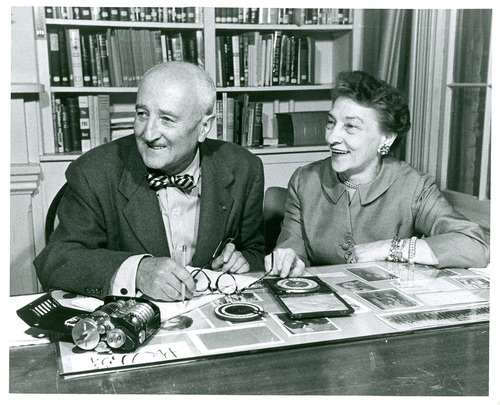
William Friedman
The greatest cryptanalyst of the twentieth century. Broke the Japanese PURPLE cipher in WWII. Led two study groups of elite military codebreakers against the Voynich Manuscript across three decades. Concluded the text was an artificial language — but never cracked it.
You Can See It. You Just Can't Read It.
The full manuscript has been digitised and published online. Anyone can examine every page, every illustration, every line of the impenetrable script. And yet after six hundred years, the world's best codebreakers, the world's most powerful computers, and an army of amateur sleuths have produced nothing — no confirmed translation, no accepted decipherment, no consensus on who wrote it or why.
The Voynich Manuscript remains the most mysterious document in history.
Get the Full Book
The complete story of the manuscript, the emperor, the codebreakers, and the language from nowhere.