
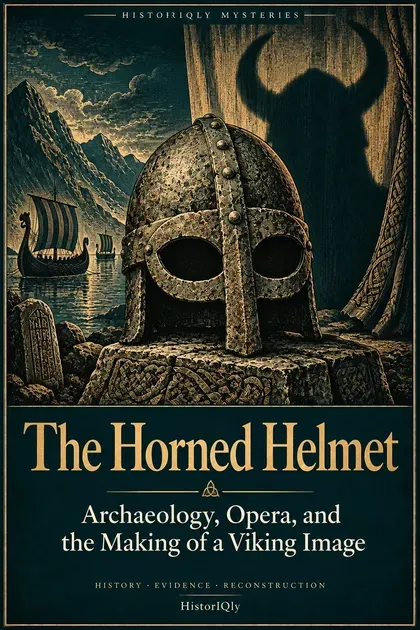
Get the full EPUB
Drop your email and the EPUB downloads straight to your device. We'll also ping you when the next case file lands — unsubscribe any time.
Your email is already on file — enjoy the read.
Download the EPUBOnly five Viking helmets have ever been found — just one of them complete. They sit in museums across Scandinavia. They are plain iron caps with spectacle guards and riveted plates. None of them have horns. None of them have ever had horns. No Viking helmet ever has.
The image of the horned Viking warrior was invented in 1876 — by a costume designer for a German opera.
1876
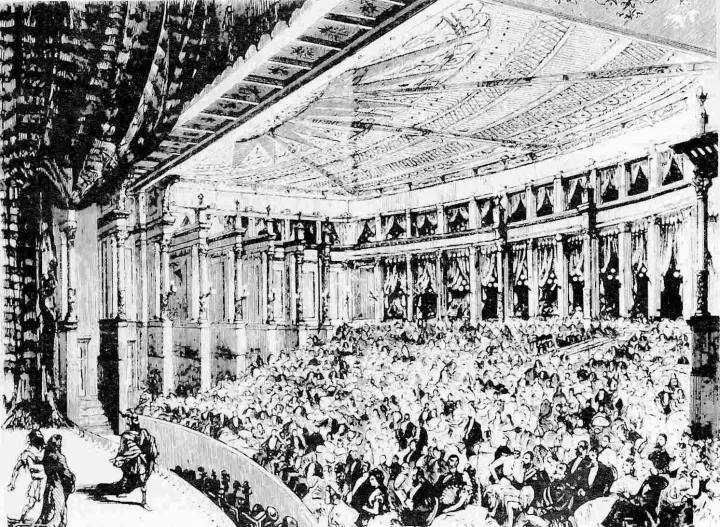
Carl Emil Doepler designs costumes for Wagner's Ring Cycle at Bayreuth. He gives the Valkyries winged helmets and Hunding horned ones. Within a generation, the image is universal.
5
In all of recorded archaeology. None with horns.
2,000
Years. The famous Viksø "Viking" horned helmets are actually from 900 BC — the Bronze Age.
100%
Surviving battle helmets do not support the familiar horned-warrior image. Horned figures in Viking-age art raise a separate question about ritual imagery.
The Evidence
The Only Helmet
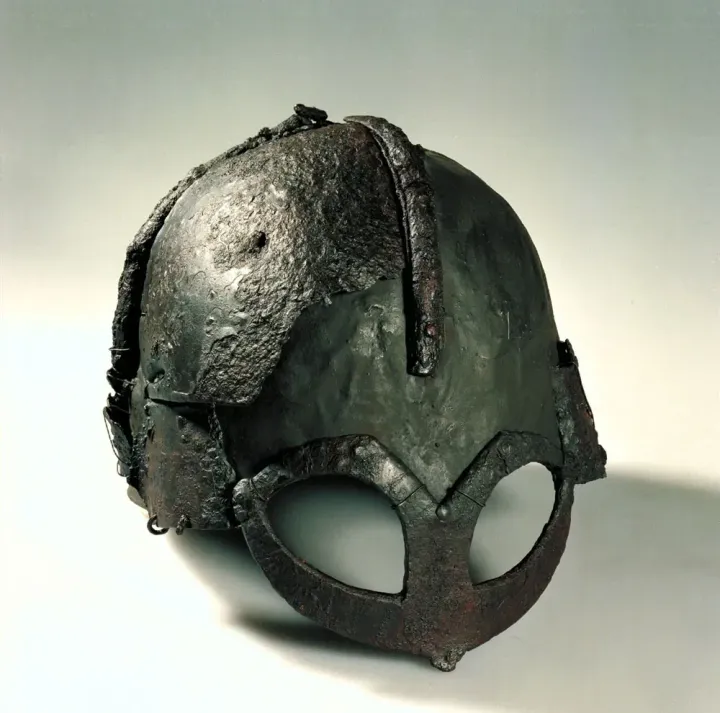
Discovered in 1943 at Gjermundbu farm in Ringerike, Norway, the Gjermundbu helmet is the only complete Viking Age helmet ever found. Made of four riveted iron plates with a distinctive spectacle guard, it is a plain, functional piece of military equipment. No horns. No wings. No decoration whatsoever.
The Wrong Millennium
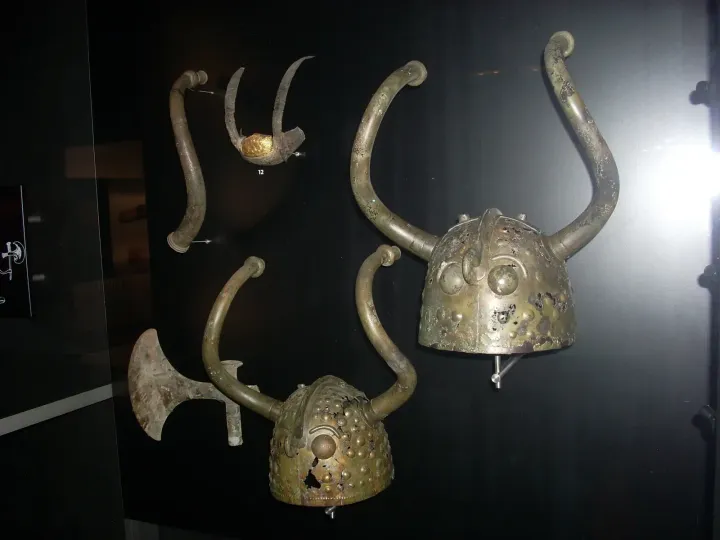
The most famous "Viking" horned helmets are the Viksø pair, found in a Danish bog in 1942. They are magnificent — and they predate the Vikings by nearly two thousand years. A 2021 study confirmed they are Bronze Age artefacts with Mediterranean, not Scandinavian, origins.
The Painter's Invention
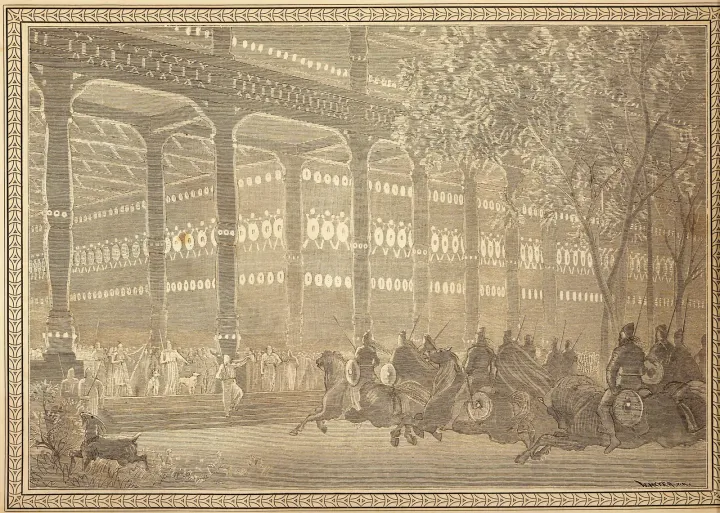
Swedish artist August Malmström illustrated editions of Tegnér's Frithiof's Saga with Vikings wearing horned helmets — images conjured from imagination, not archaeology. His paintings spread through millions of copies across Europe and defined the Viking image for a generation.
The Invention of an Icon
The Bronze Age Helmets
The Viksø horned helmets are deposited in a Danish bog — two thousand years before Vikings exist. These are the helmets that will be confused with Viking artefacts in the twentieth century.
The Poem
Esaias Tegnér publishes Frithiof's Saga, a romanticised Viking epic that becomes an international sensation. The poem describes an "eagle's helm" — not horns.
The Paintings
August Malmström illustrates Tegnér's saga with Vikings in horned helmets. The images spread across Europe through widely reprinted editions.
The Opera
Wagner's Ring Cycle premieres at Bayreuth. Carl Emil Doepler's costumes give Valkyries winged helmets and barbarians horned ones. The myth explodes.
The Debunking
Yale scholar Roberta Frank publishes "The Invention of the Viking Horned Helmet," tracing the myth definitively to the 1876 Bayreuth premiere.
Key Figures
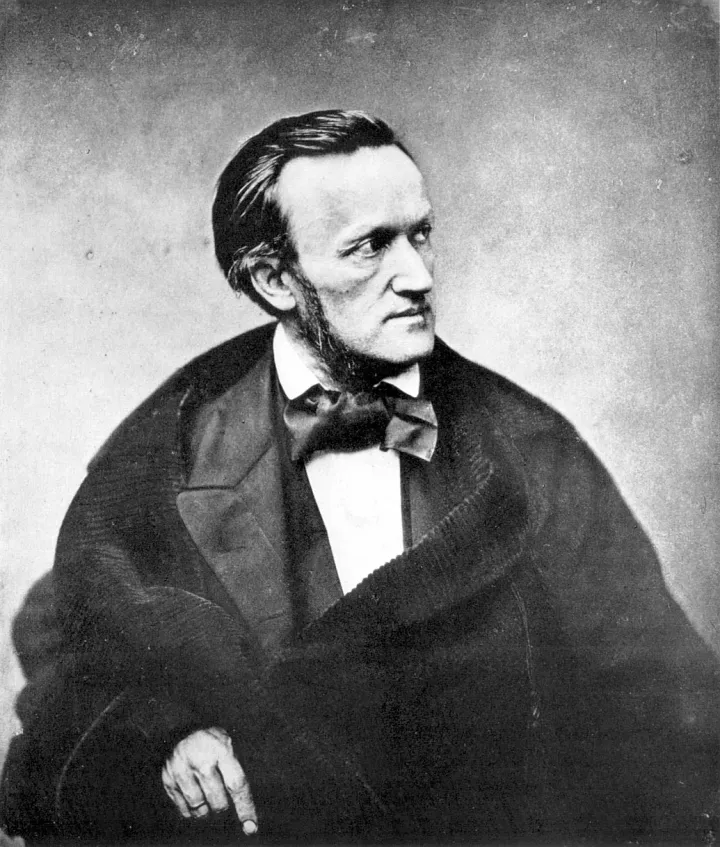
Richard Wagner
His Ring Cycle — sixteen hours of opera based on Norse mythology — was the cultural event of 1876. Wagner didn't design the costumes, but he created the vehicle that carried the horned helmet image to the world.
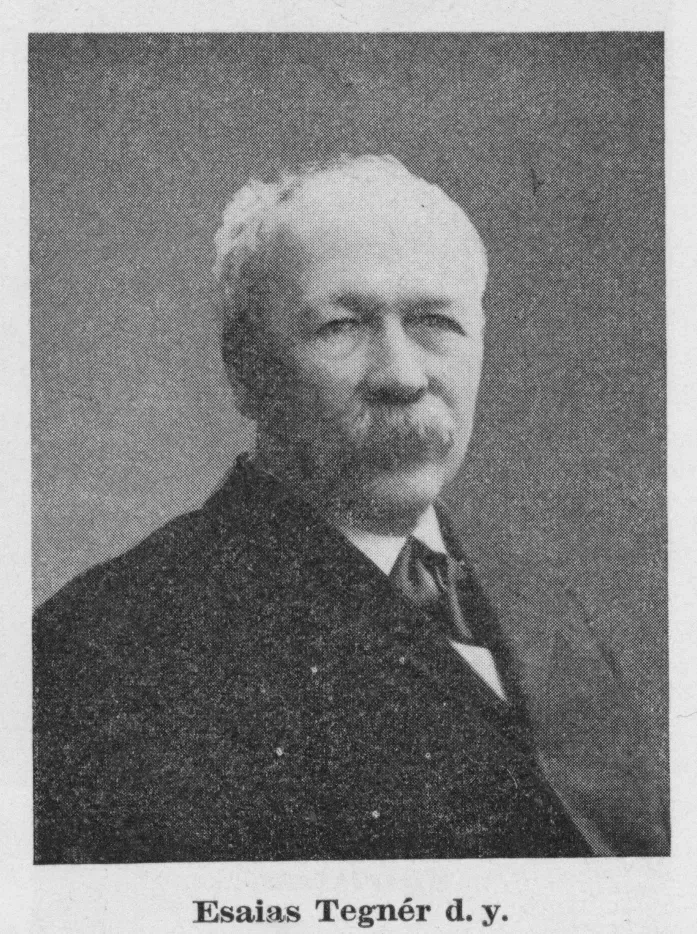
Esaias Tegnér
The Swedish bishop whose epic poem Frithiof's Saga made the romanticised Viking world irresistible to illustrators. The poem itself never mentioned horns — but the illustrations it inspired did.
The Myth That Won
The horned helmet is unsupported as ordinary Viking battle equipment. That conclusion does not erase horned figures from period art or settle what those figures represented.
It does not die. It cannot die. It is too useful, too vivid, too deeply embedded in the visual vocabulary of Western culture to be dislodged by mere facts.
Get the Full Book
The complete story of the poets, painters, and opera costumes that invented history's most persistent myth.