
Get the full EPUB
The EPUB is part of the HistorIQly Plus library. The case file on this page stays free to read.
This EPUB is already in your library. The case file on this page stays free to read.
Download EPUBPlus includes every book in the library. See what Plus includes
Every book in the library is yours to download.
All EPUBs are in English. Translations are coming.
William Huntington Russell and Alphonso Taft founded Skull and Bones at Yale in 1832. Its fifteen-member senior cohorts have included three future U.S. presidents. The windowless Tomb, the alumni connections and the gap between documented careers and secret-society legend make its history unusually compelling.
They call it The Order. Not a fraternity. Not a club. The Order.
194
Years of continuous operation since 1832. No interruption for war, scandal, or public exposure. Every year, fifteen new members are initiated. The machinery never stops.
15
Chosen each spring from the junior class — tapped on the shoulder and asked a single question.
3
Bonesmen who reached the White House — William Howard Taft, George H.W. Bush, and George W. Bush.
1+
Confirmed Bonesmen who led the Central Intelligence Agency, with deep and persistent connections to the intelligence community.
The Evidence
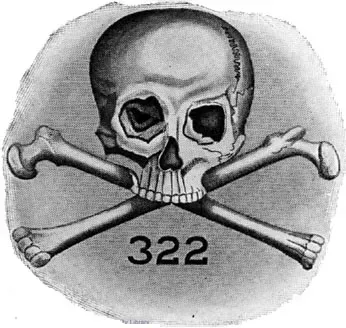
322
The number appears beneath the skull-and-crossbones on every piece of Bones iconography. Its meaning has never been officially explained. The most common theory ties it to 322 BC — the year the Greek orator Demosthenes died and, according to Bones lore, the goddess Eulogia ascended to heaven. Others believe it simply marks the society as the second chapter of a German order, founded in 1832. The society has never confirmed either interpretation.
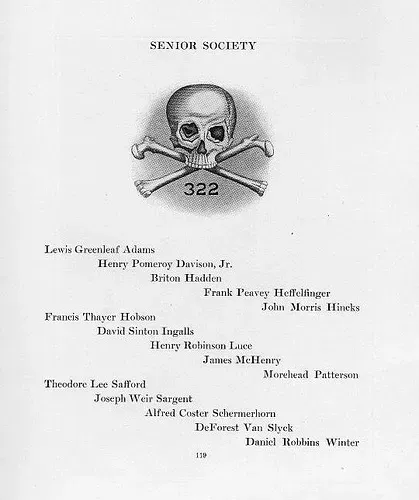
The Chosen
Henry Luce and Briton Hadden, members of the Yale class of 1920, later founded Time. Their shared society membership is one connection in a longer partnership. The printed roster reproduced here records names; it is not a photograph of their class.
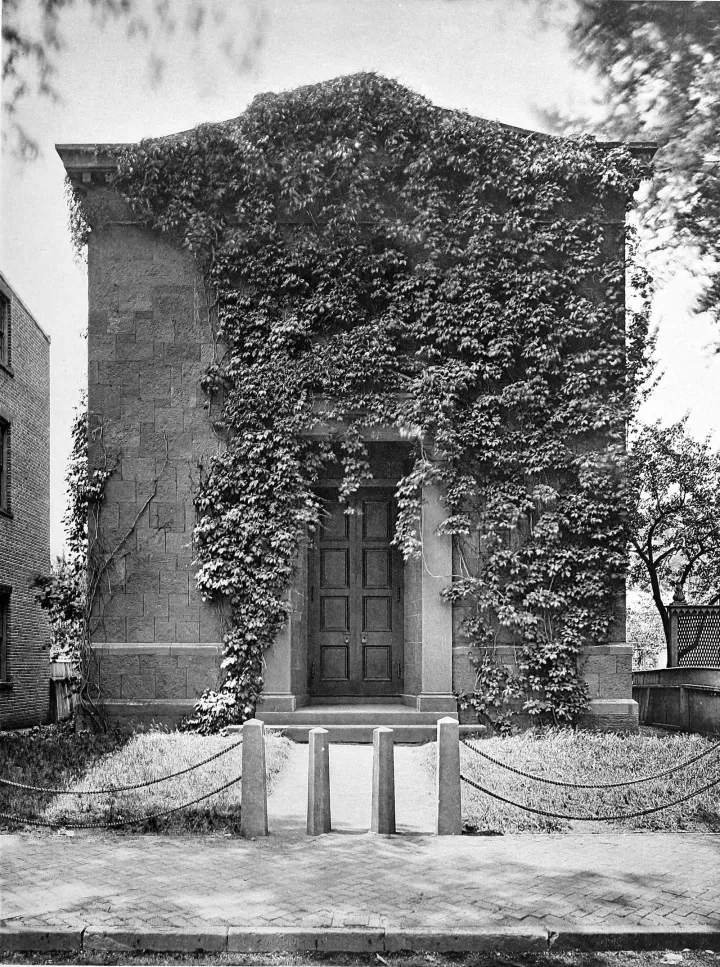
The Tomb
The brownstone Tomb at 64 High Street opened in 1856 and was enlarged in 1883 and 1903. Published photographs and accounts offer partial glimpses of its interior. Reports about a skull called Geronimo remain disputed; no authenticated identification of such remains has established the allegation.
The Order's History
The Founding
William Huntington Russell and Alphonso Taft found the Order of Skull and Bones at Yale College. Russell, freshly returned from studies in Germany, models the society on secretive student orders he encountered there. Taft's son will become the 27th President of the United States.
The Stolen Bones
A 1918 letter reported that society members had taken remains they believed were Geronimo’s. Later accounts linked Prescott Bush to the allegation; the contemporary letter did not name him. The identity and whereabouts of any remains have not been independently established.
The Spymaster
George Herbert Walker Bush belongs to the Yale class of 1948. He later serves as Director of Central Intelligence in 1976–77 and becomes the forty-first president in 1989. The class date is not the year of his junior-year selection.
The Breach
After 160 years as an exclusively male institution, Skull and Bones admits women for the first time. The decision is bitterly contested within the membership. Some alumni threaten to revoke the society's charter. The change holds — the first crack in the Order's oldest tradition.
The Election
George W. Bush (Bones '68) faces John Kerry (Bones '66) in the presidential election. For the first time in history, both major-party candidates belong to the same secret society. When asked about Skull and Bones on Meet the Press, both men refuse to discuss it. Bush wins.
Key Figures
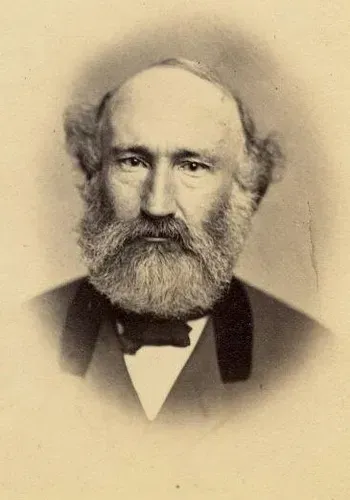
William Huntington Russell
Russell’s German journey is often invoked in accounts of the society’s origins, but the precise foreign model is uncertain. He and Alphonso Taft founded the society in 1832. The Russell Trust Association, incorporated in 1856, became the legal organisation responsible for its property.
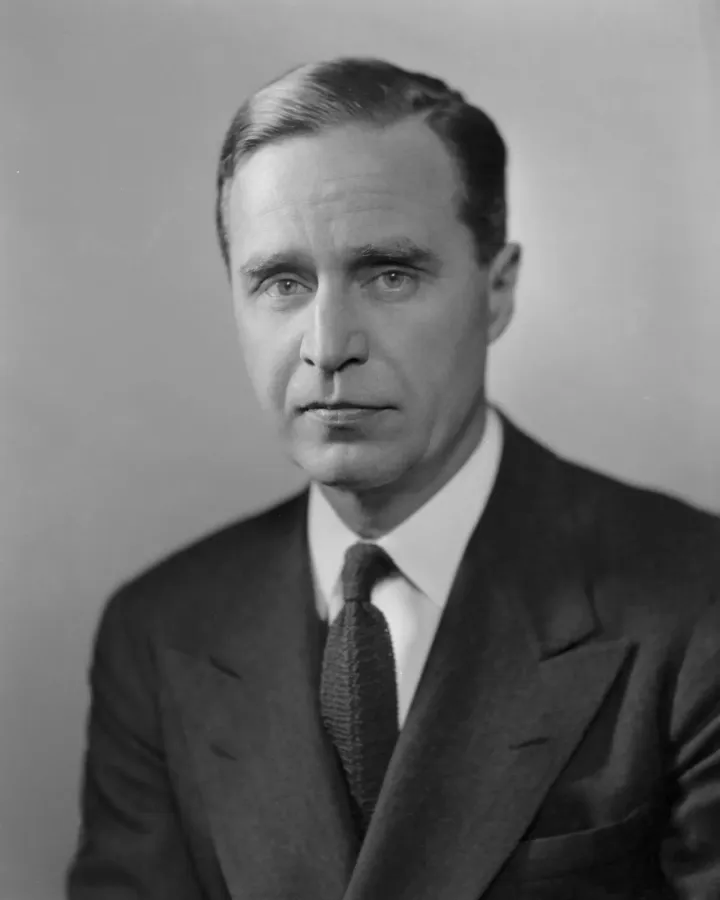
Prescott Bush
Tapped in 1917, Prescott Bush became the patriarch of America's most powerful political dynasty. A Wall Street banker who served as a United States Senator from Connecticut, he is best known in Bones lore for his alleged role in the 1918 theft of Geronimo's skull from Fort Sill. His son George H.W. Bush and grandson George W. Bush both followed him into the Tomb — and both followed him into the highest office in the land.
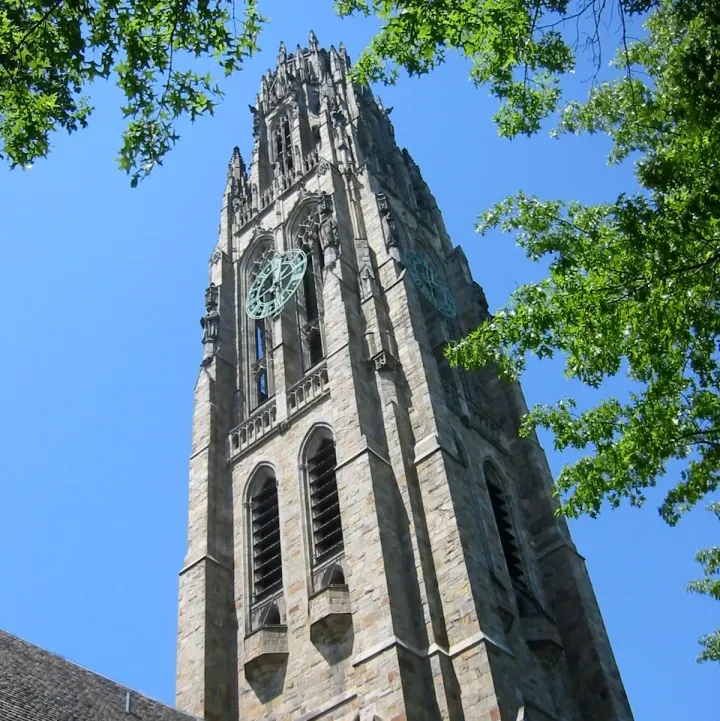
The Order Endures
Each spring, juniors are selected for the following senior-year cohort. Alumni include presidents, officials, publishers and bankers. Their shared membership is a documented association; claims that it decided an appointment or policy require evidence about that particular decision.
Skull and Bones has survived exposure, litigation and changing membership. Its closed doors continue to attract speculation, while the surviving records reveal a college society embedded in the history of elite education and association.
Get the Full Book
The history of Skull and Bones — its founding, reported customs, disputed relics and the public careers of its members.