
Get the full EPUB
Drop your email and the EPUB downloads straight to your device. We'll also ping you when the next case file lands — unsubscribe any time.
Your email is already on file — enjoy the read.
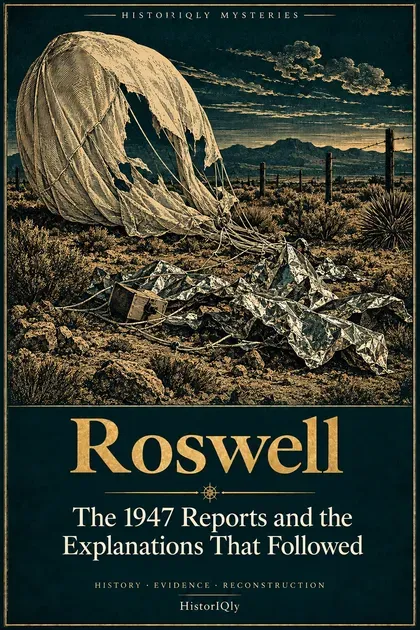
Download the EPUBIn July 1947, the United States Army announced it had recovered a "flying disc" from a ranch near Roswell, New Mexico. Hours later, they said it was a weather balloon. Decades later, witnesses offered conflicting recollections of the recovery.
One announcement, a rapid correction, and decades of conflicting accounts.
1947
The contemporary account described rubber, foil, paper and sticks. Extraordinary properties appeared in later recollections.
30 yrs
Roswell receded from public attention before Stanton Friedman helped revive the story in 1978.
Accounts
Later accounts include personal recollections and secondhand stories, with important disagreements between them.
3
The 1947 balloon explanation and 1994 Mogul report addressed debris. The 1997 report separately examined body stories.
The Evidence
The Switched Debris
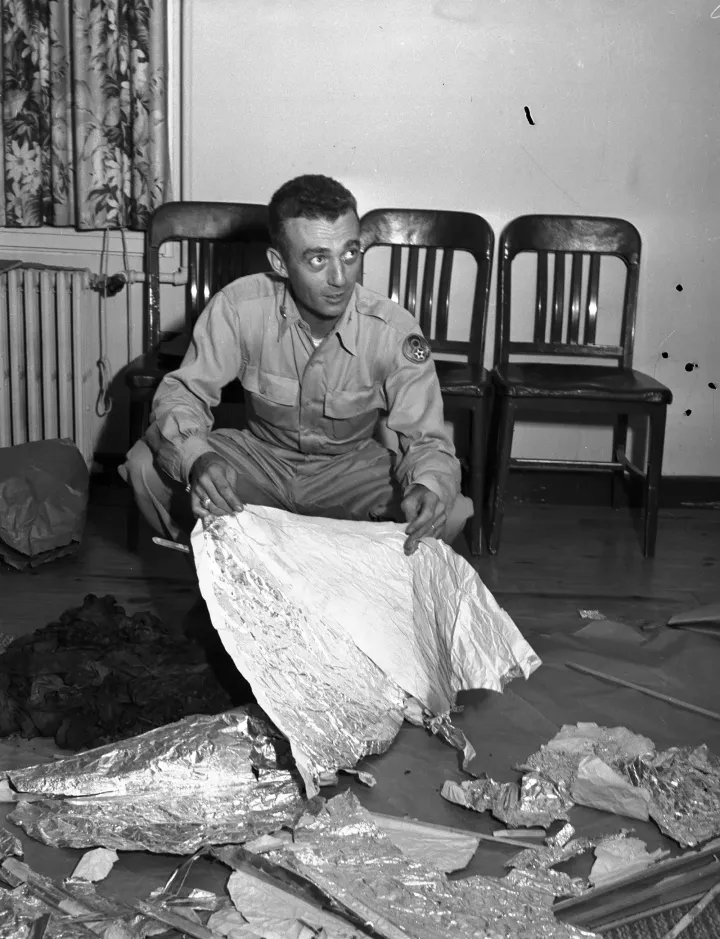
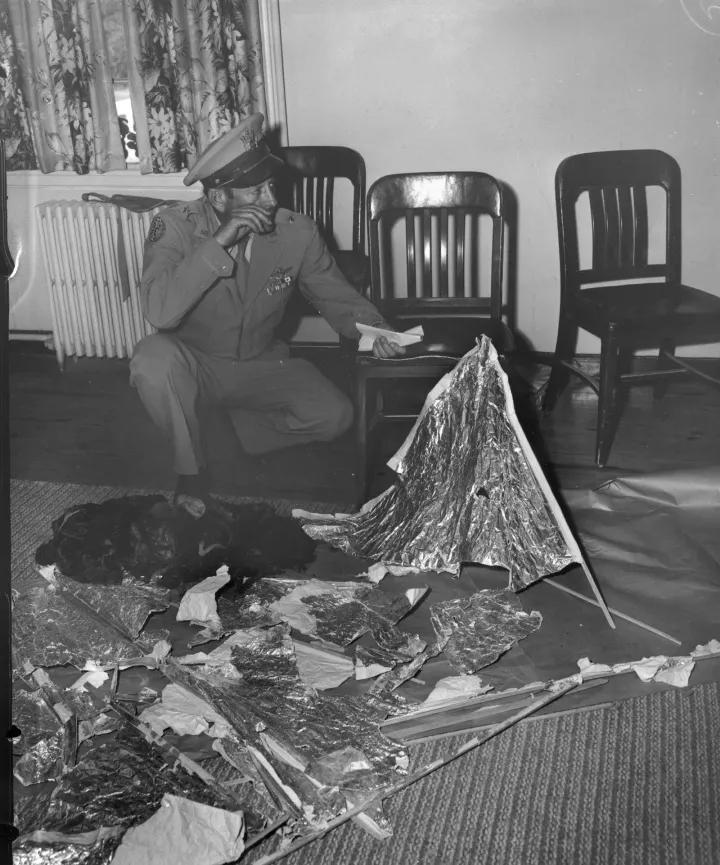
Major Marcel was photographed with debris in General Ramey's office. He later alleged a substitution. The photographs record the display, but do not themselves establish that material was switched.
The Hidden Message
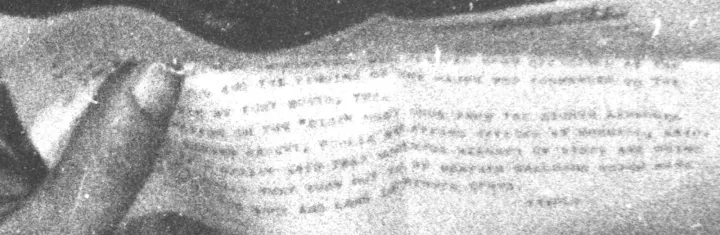
In one photograph, General Ramey holds a folded piece of paper. Researchers have spent decades enhancing the image, claiming to read words like "victims of the wreck" and "disc." Proposed readings remain disputed; the photograph has not supplied a reliable full transcription.
The Official Answer
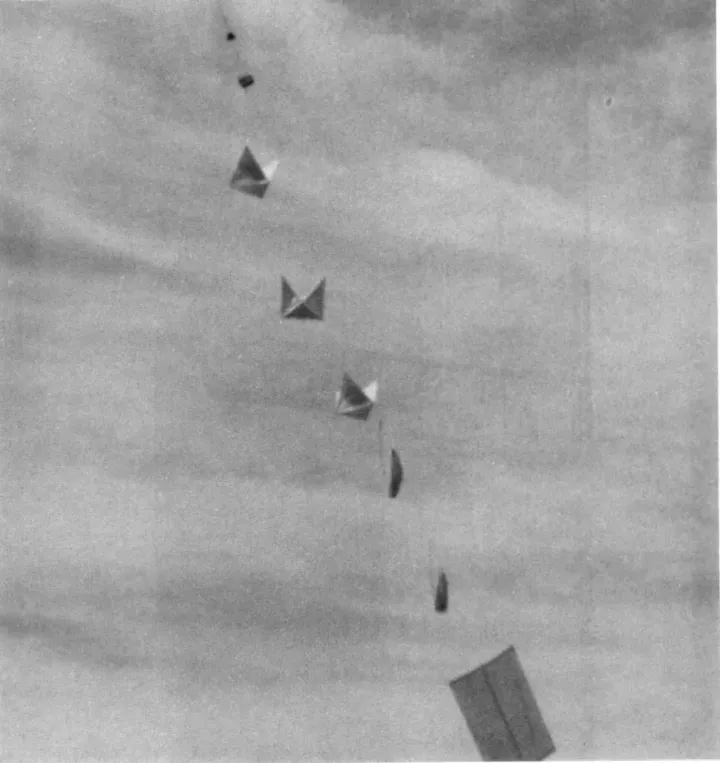
In 1994, the Air Force identified Project Mogul as the likely source. The programme tested balloons carrying acoustic equipment. Decorative target tape was proposed as an explanation for remembered symbols, rather than matched to a surviving Roswell specimen.
The 1947 Reports and the Explanations That Followed
The Discovery
In his July 9 newspaper interview, Mac Brazel dates his discovery to June 14 and describes rubber, foil, paper and sticks on the Foster Ranch.
The Investigation
Marcel and Cavitt visit the ranch during the recovery. Their later descriptions disagree about whether the material was unusual.
"Flying Saucer Captured"
Colonel Blanchard orders a press release announcing recovery of a "flying disc." The story goes worldwide. Hours later, General Ramey holds a press conference in Fort Worth — it was just a weather balloon.
The Resurrection
Nuclear physicist Stanton Friedman tracks down Jesse Marcel, now retired in Louisiana. Marcel disputes the balloon explanation and alleges that the photographed debris was substituted for the material he recovered.
Project Mogul
The Air Force identifies the Mogul balloon programme as the likely source of the debris. The proposed link to a specific launch remains disputed.
Congressional Hearings
David Grusch alleges a hidden recovery programme, based on information he says others gave him. His hearing testimony does not establish what was recovered near Roswell.
Key Figures
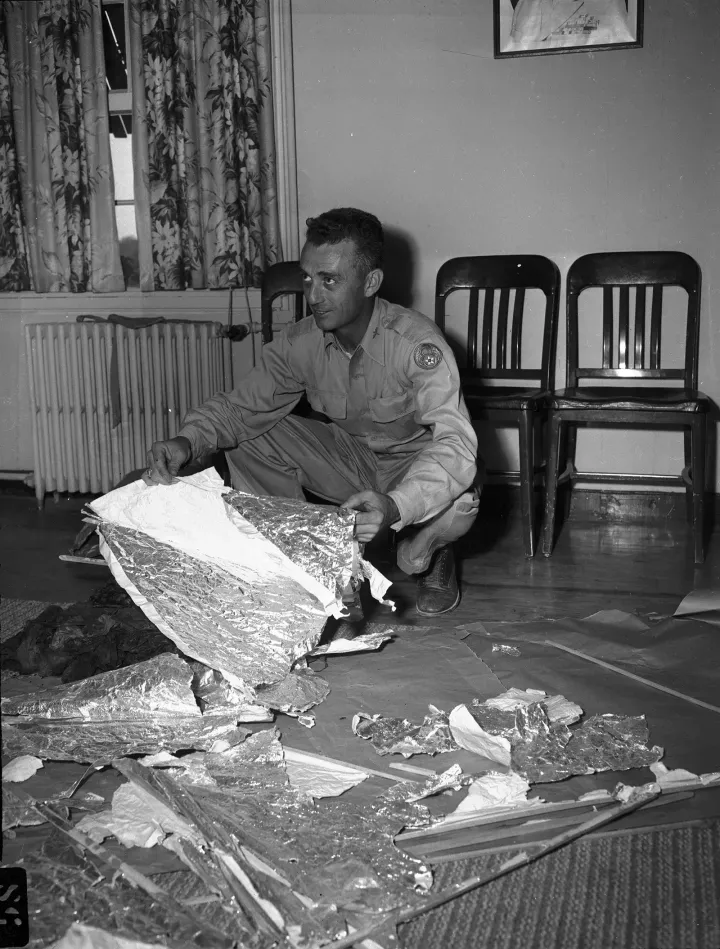
Jesse Marcel
Intelligence officer of the 509th Bomb Group. Marcel visited the ranch and later described extraordinary material and a substitution before the photographs. Those claims became central to the revived case.
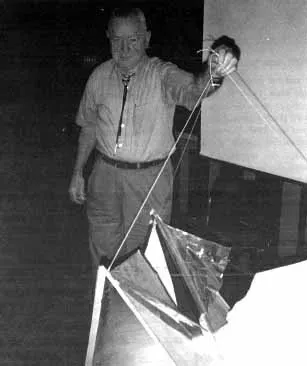
Charles B. Moore
A participant in the Mogul programme, Moore compared its components with Roswell descriptions and reconstructed a possible flight path. His calculation was a later estimate, not a measured track to the ranch.
The Desert Keeps Its Secrets
A contemporary debris report, a rapid military correction and conflicting later recollections. Follow how the Roswell story changed as each new account entered the record.
The strongest questions begin with the differences between those accounts.
Get the Full Book
From the ranch discovery to later Pentagon hearings, a history of the claims and the evidence available to assess them.