The Roman Dodecahedron
The Object That Defied an Empire
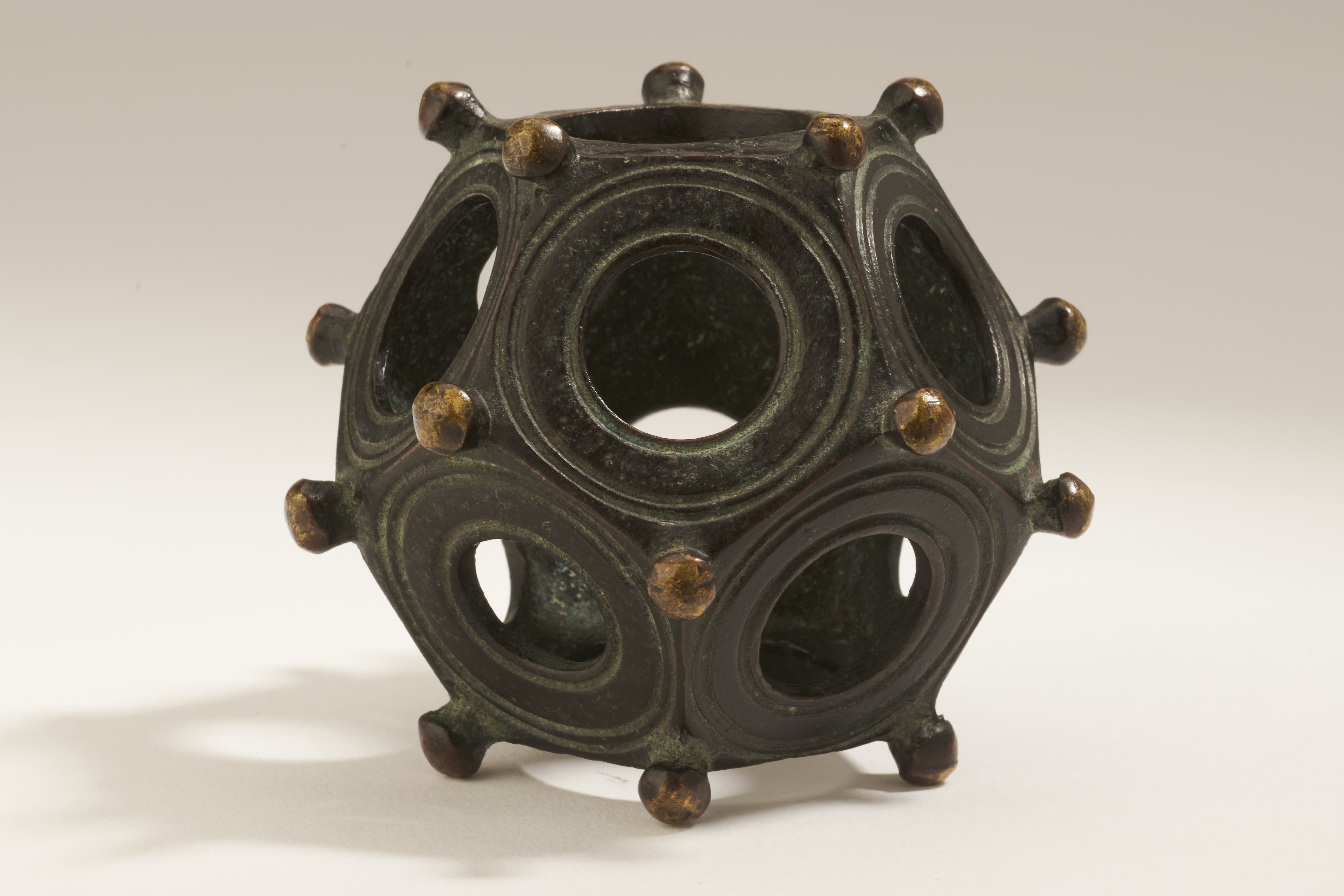
They are small, hollow, and made of bronze. They have twelve pentagonal faces, each pierced by a circular hole of a different size, and twenty knobs protruding from every corner. More than a hundred and thirty have been found across the former Roman Empire. Not a single Roman text mentions them.
After eighteen hundred years and more than fifty proposed theories, nobody knows what they were for. This is archaeology's most beautiful enigma.
12
Pentagonal faces, each pierced by a circular hole of varying diameter (6–40mm). Twenty knobs at the vertices. Hollow interior. Cast in leaded bronze using the lost-wax technique. Size: 4–11cm. No two are identical.
NW Only
Found only in Britain, Gaul, and Germania. None in Italy, Spain, Greece, or the Mediterranean. Concentrated in the Gallo-Roman cultural zone.
1739
Presented to the Society of Antiquaries of London. Found in a field called Hagdale, Hertfordshire. That specimen is now lost.
None
No signs of use or wear. Polished exterior, rough interior. Made with extraordinary care then apparently set aside — buried, hidden, or placed in graves.
The Evidence
The Varying Holes
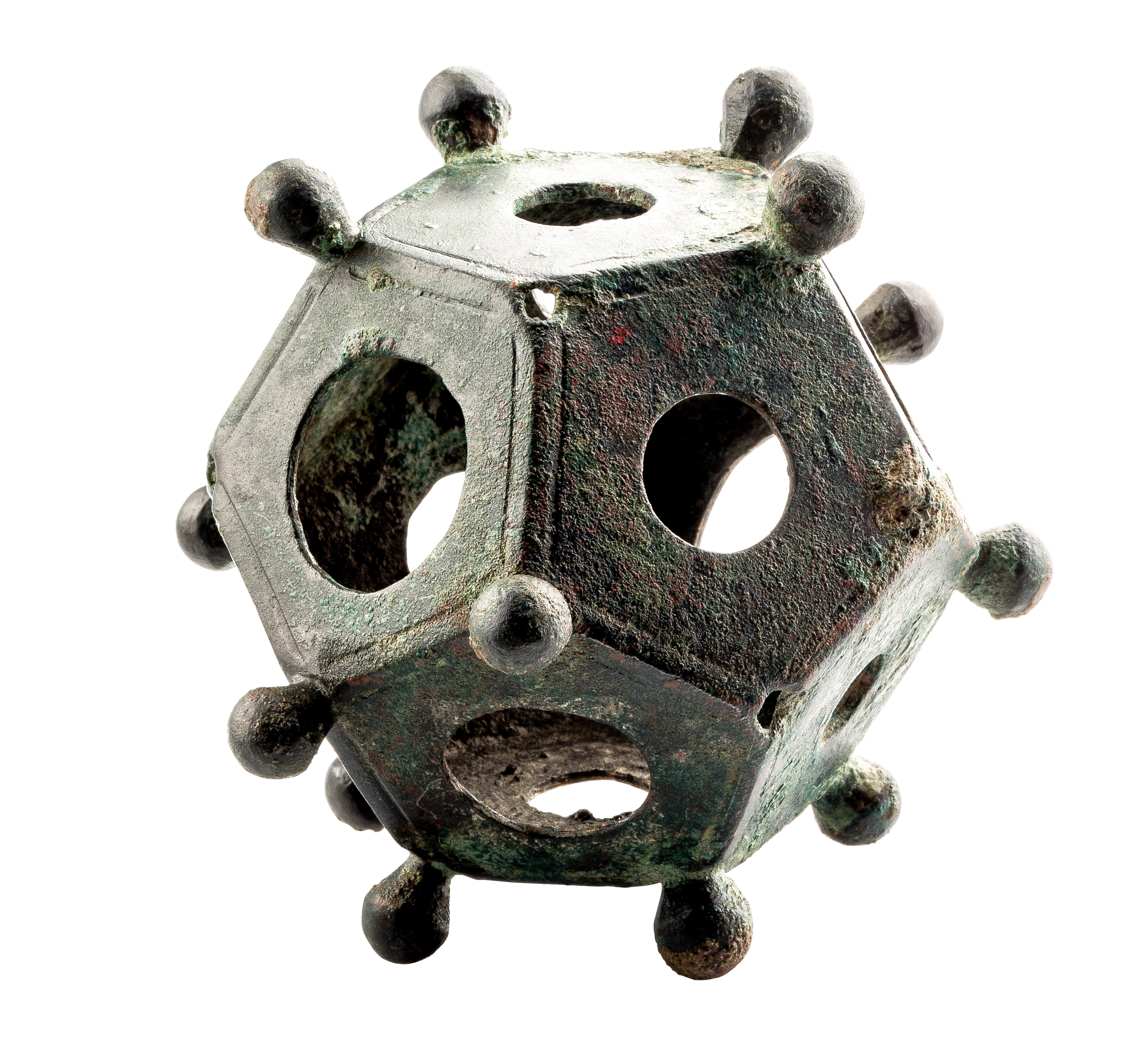
Every face has a different-sized hole. The largest opposing holes never match. Concentric rings decorate each aperture — more rings around smaller holes. The systematic variation implies purpose, but no theory has explained the pattern convincingly.
Not Standardised
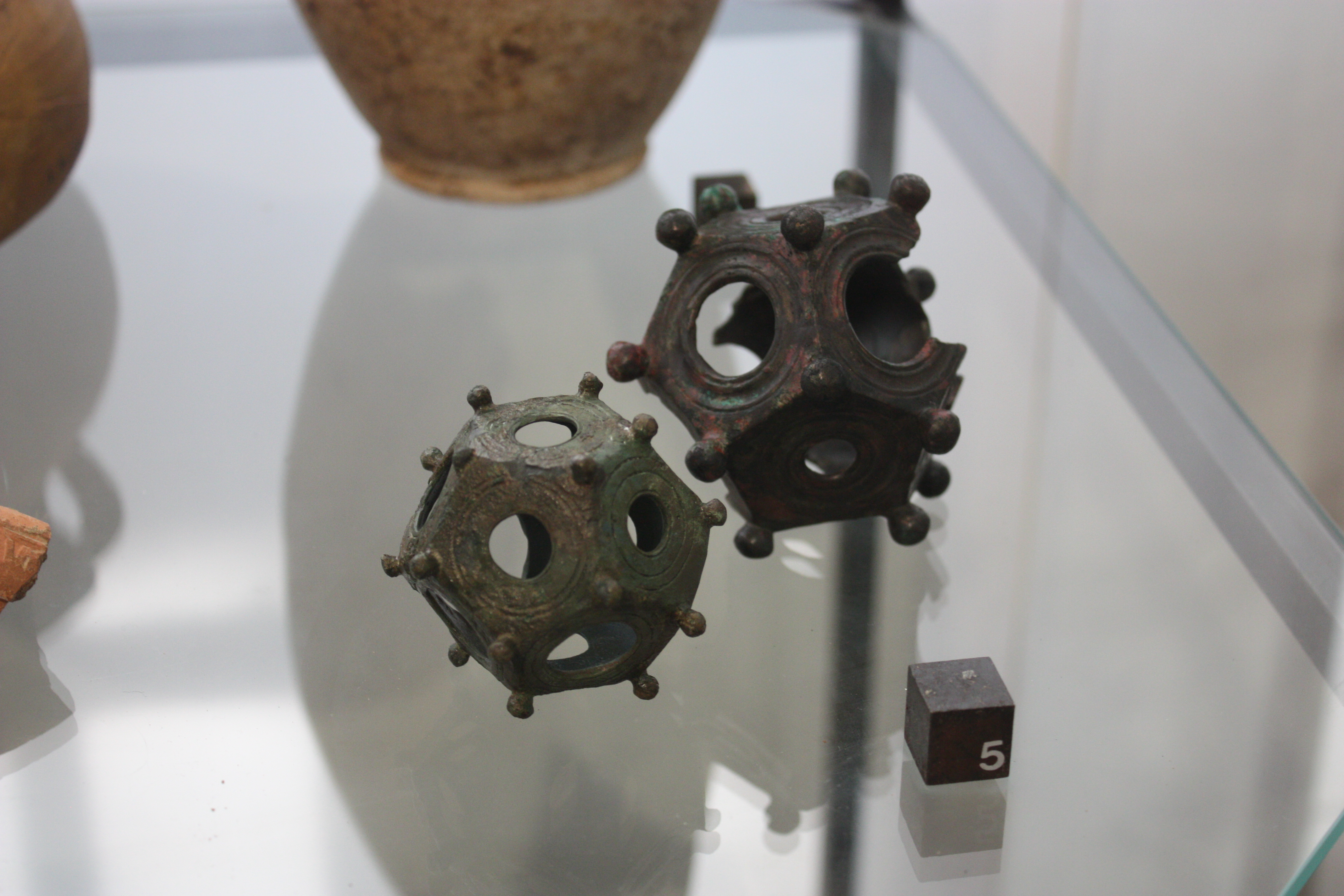
No two dodecahedra are dimensionally identical. They range from 4 to 11cm, weigh 35 to 580 grams, and show different hole arrangements. This rules out any theory requiring precision calibration — rangefinders, gauges, or measuring instruments.
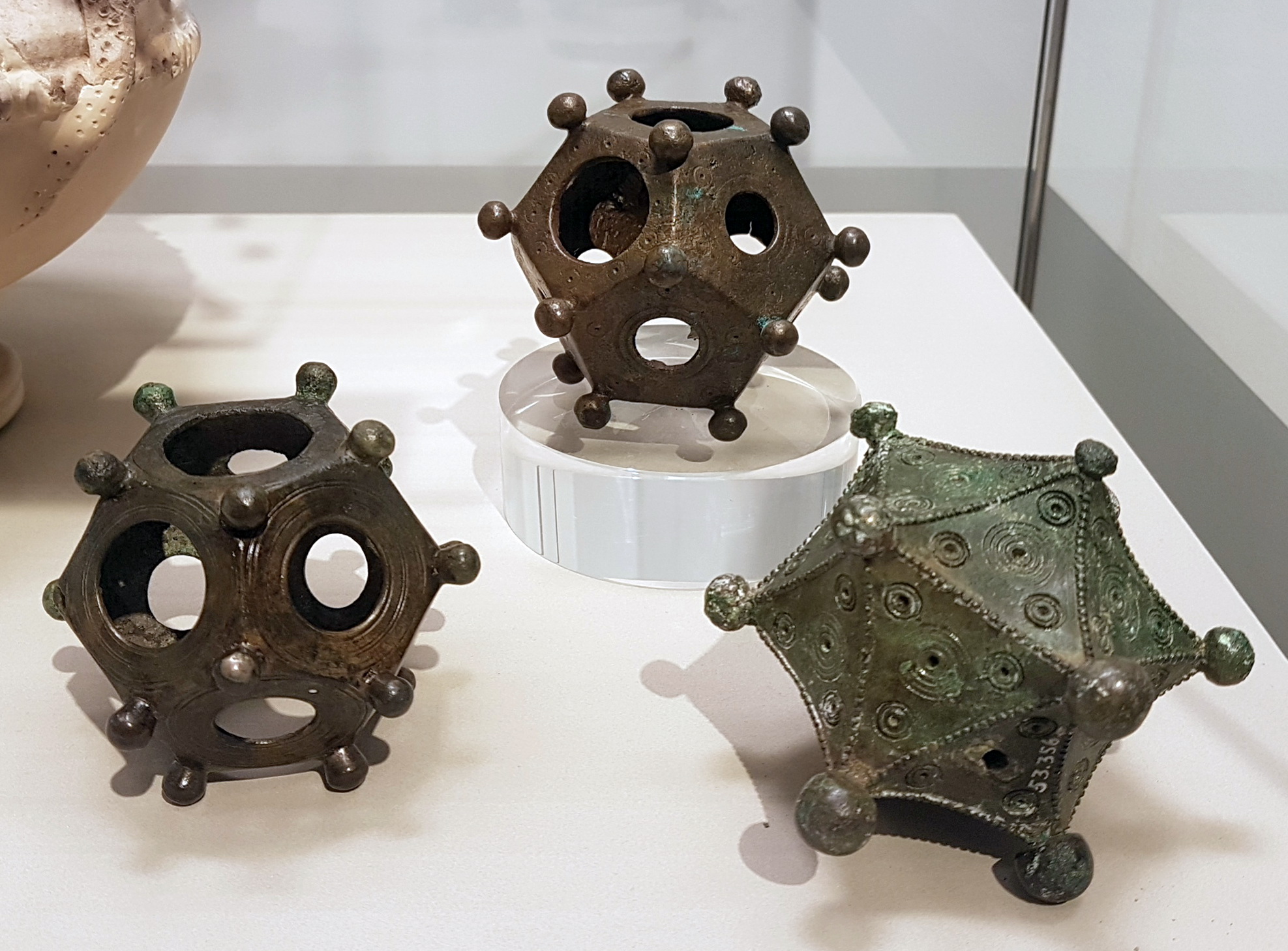
The Icosahedron
At least one Roman icosahedron (20 faces) exists alongside the dodecahedra — both are Platonic solids. Plato assigned the dodecahedron to the cosmos itself: "the god used it for arranging the constellations on the whole heaven."
Eighteen Centuries
Manufacture
Dodecahedra are cast in bronze across the Gallo-Roman frontier provinces — Britain, Gaul, Germania. They are expensive, individually crafted objects made by skilled metalworkers using the lost-wax process.
The Silence
Christianity becomes the state religion. Pagan practices including divination are criminalised. Some dodecahedra are deliberately broken, buried, or hidden. No written record of their purpose survives — if one ever existed.
First Recorded Find
"Mr. North" presents a bronze dodecahedron to the Society of Antiquaries of London. Found in a field called Hagdale, Hertfordshire, alongside copper coins. The specimen is later lost.
The Krefeld Grave
A dodecahedron is found in a wealthy woman's grave in Krefeld, Germany, alongside a bone staff — suggesting it may have been mounted as a scepter head. One of the strongest clues to ritual function.
Norton Disney
Amateur archaeologists discover a remarkably preserved dodecahedron at Potter Hill, Lincolnshire — the 33rd found in Britain. XRF analysis reveals leaded gunmetal composition. The find goes viral worldwide.
The Mystery Endures
Featured on BBC's Digging for Britain, the dodecahedron trends globally. 3D-printed replicas flood the internet. After 130+ specimens and 50+ theories, the purpose remains completely unknown.
Key Figures
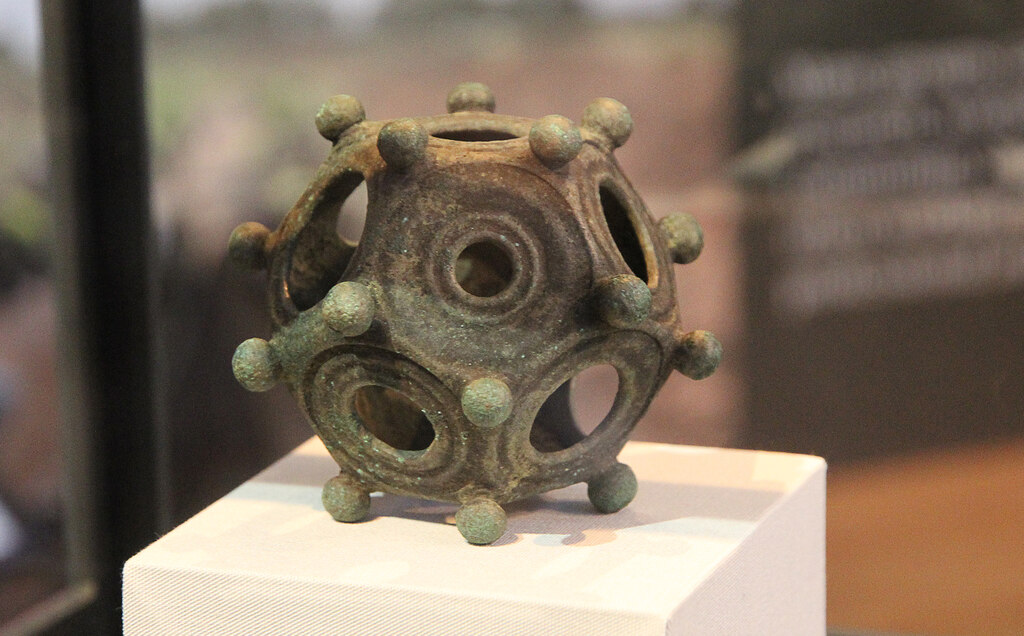
Norton Disney, 2023
Found by the Norton Disney History and Archaeology Group during a controlled excavation at Potter Hill, Lincolnshire. One of the largest (8cm, 245g) and most finely made examples ever recovered. Secretary Richard Parker called it "the find of a lifetime."
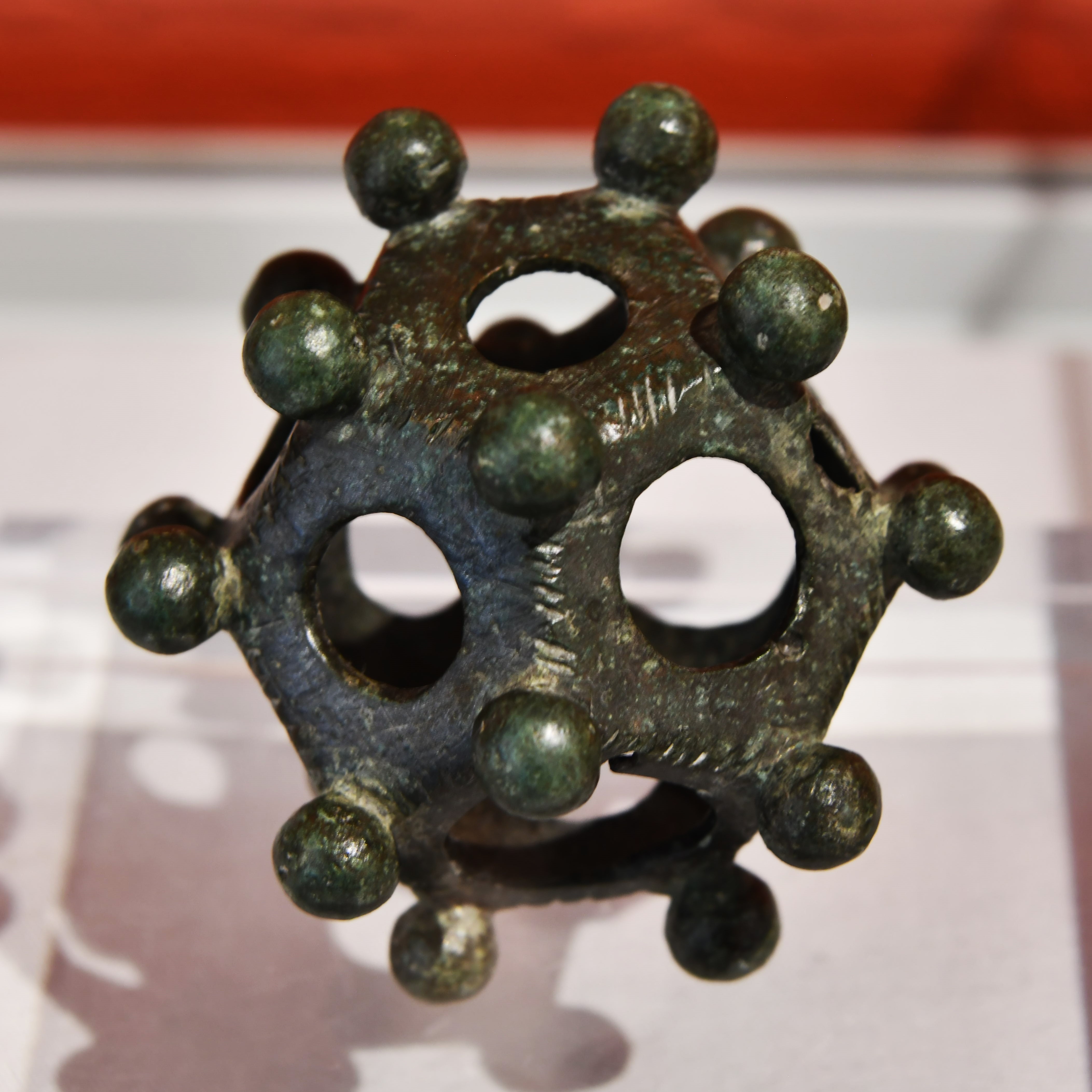
Corbridge, Hadrian's Wall
English Heritage's specimen from Corbridge Roman Town — the northernmost complete find in Britain. "Complex objects," the curators note, "a skilled craftsman would have been needed to make them. They would have been expensive and likely made to order."
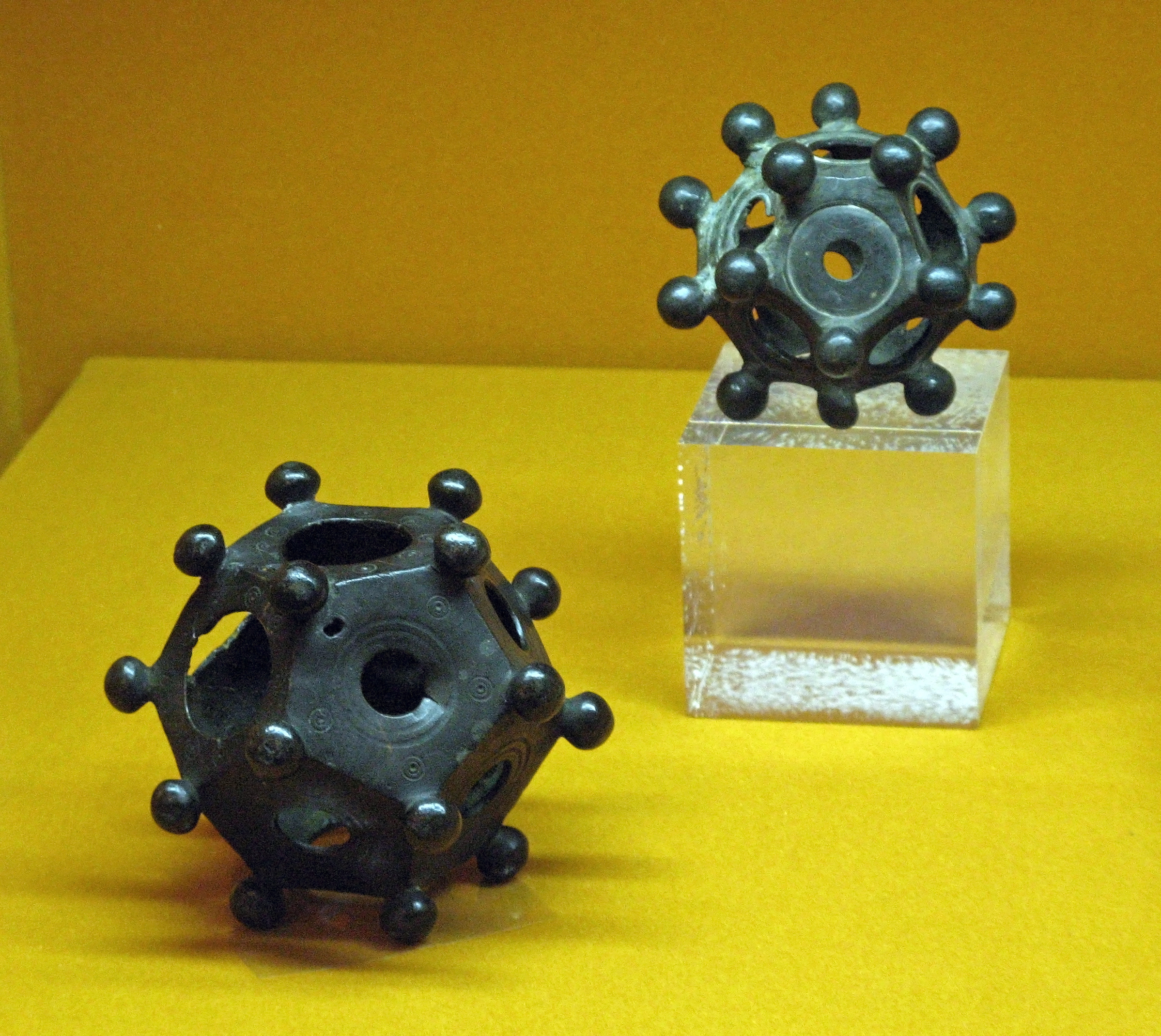
Perfectly, Stubbornly Silent
They were made by people whose names we will never know, for purposes we cannot determine, in a world that vanished so completely that only its foundations remain.
After eighteen hundred years, the dodecahedra still refuse to explain themselves.
Get the Full Book
The complete story of the discoveries, the theories, and the mystery that has baffled archaeologists for three centuries.