The Lost Colony of Roanoke
The Disappearance That Haunts America
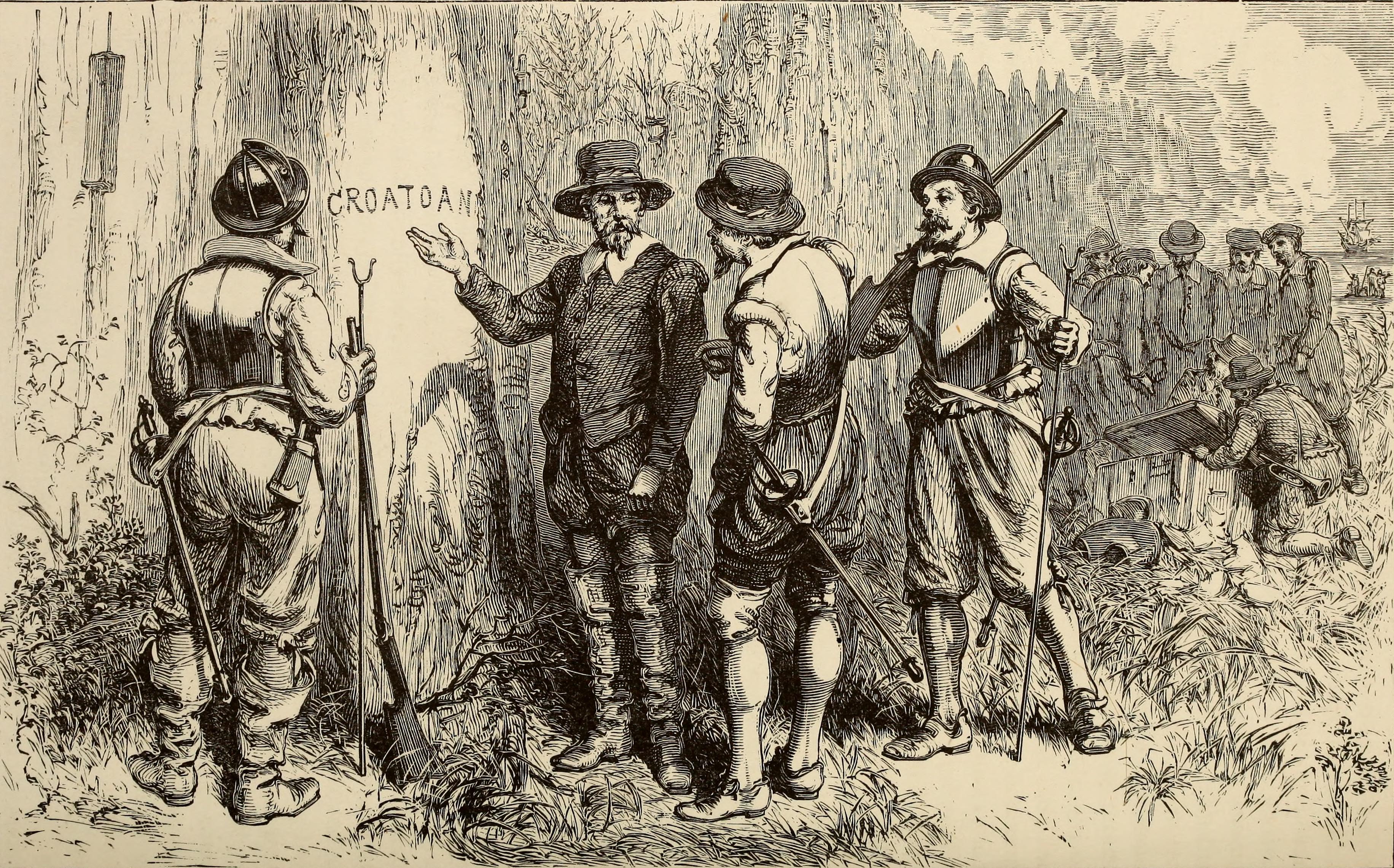
In 1587, Governor John White kissed his nine-day-old granddaughter goodbye and sailed for England to fetch supplies. When he returned three years later, 117 colonists had vanished. The houses were gone. The fort was overgrown. Only one clue remained: the word CROATOAN, carved into a gatepost in "fayre Romane letters." No Maltese cross. No distress signal. No bodies. No graves.
It took over 400 years of archaeology, DNA analysis, and detective work to begin assembling the truth — and the answer is stranger than anyone imagined.
1587
117 English men, women, and children — the first families to attempt permanent settlement in the New World. They were stranded on Roanoke Island when their pilot refused to continue to the Chesapeake.
Virginia
Virginia Dare, born August 18, 1587 — the first English child born in North America. Her fate remains unknown.
3 Years
The Spanish Armada crisis trapped Governor White in England. By the time he returned, everyone was gone.
CROATOAN
One word carved into a post. No distress signal. The colonists' own message — pointing to Manteo's island, fifty miles south.
The Evidence
CROATOAN
When Governor White returned in 1590, he found the colony deserted. On a gatepost, the word "CROATOAN" was carved in clear Roman letters — pointing to Manteo's island. No Maltese cross meant no distress. The colonists had left voluntarily. But a storm prevented White from reaching Croatoan Island, and he never saw his family again.
Site X
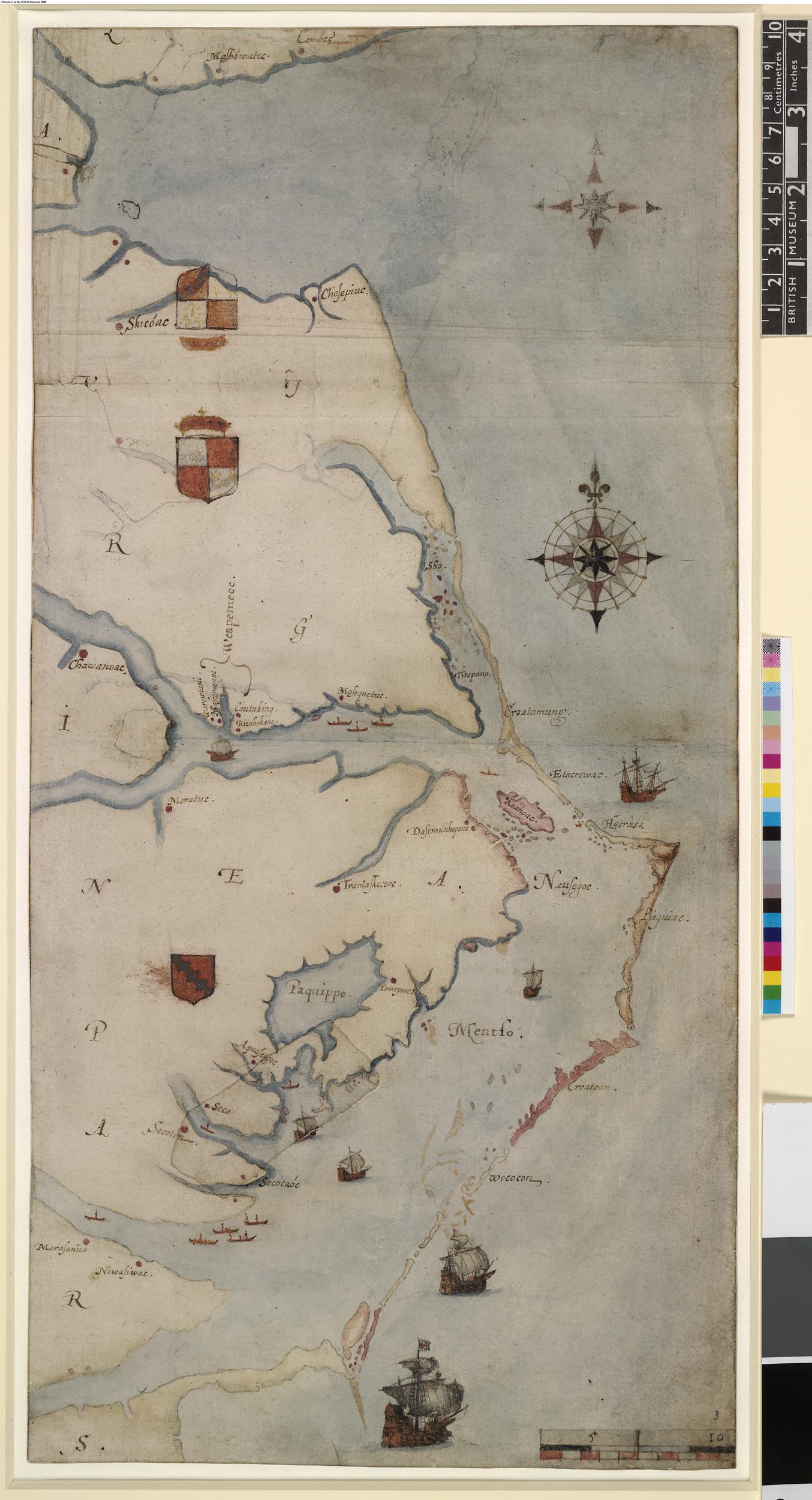
In 2012, researchers at the British Museum discovered a hidden symbol on John White's map — a fort marker concealed beneath a paper patch, pointing to a location fifty miles inland. Excavations at "Site X" in Bertie County have since uncovered Elizabethan-era English ceramics, suggesting some colonists moved inland.
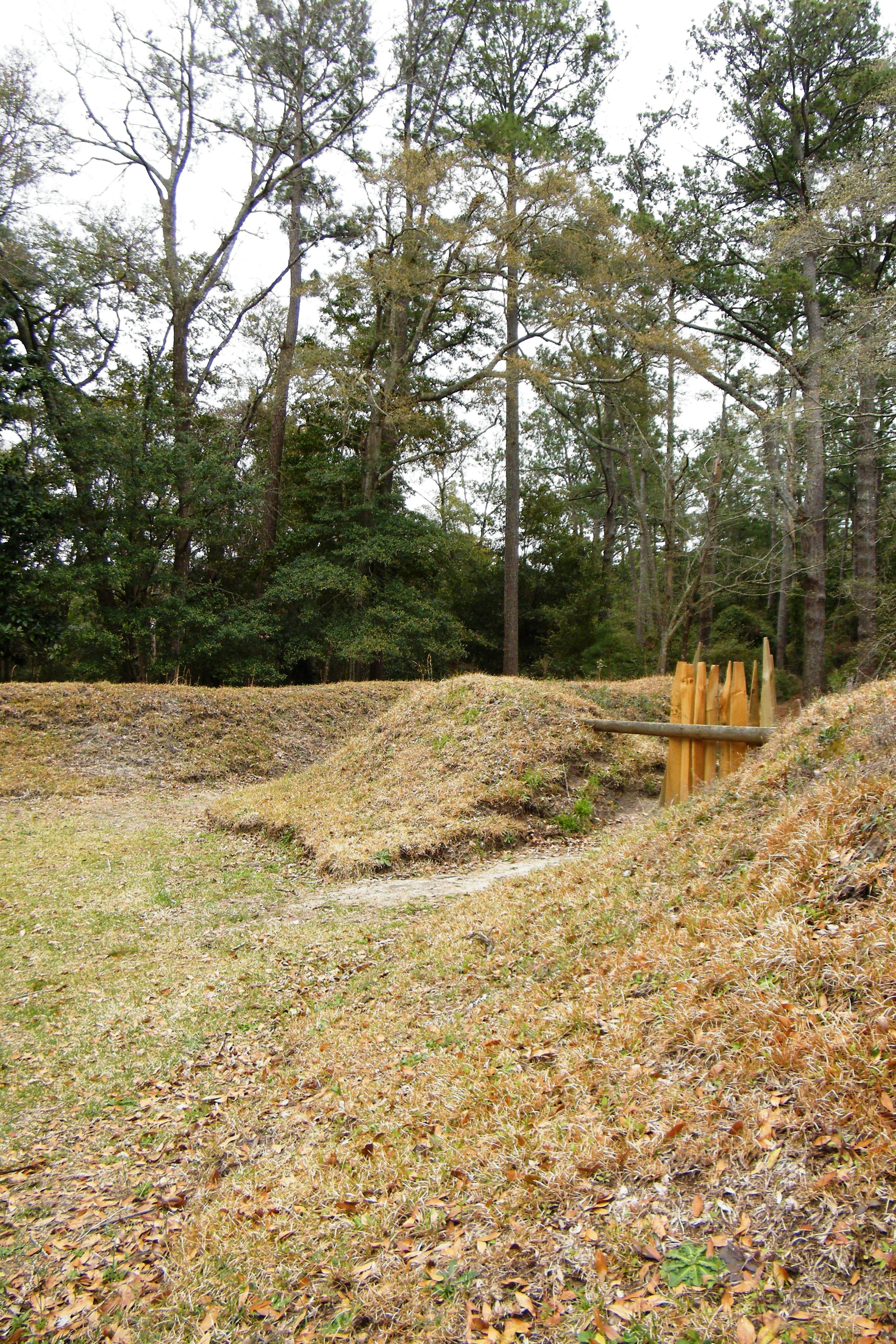
The Archaeology
Excavations on Hatteras Island (ancient Croatoan) have uncovered 16th-century English artifacts — a gold signet ring, sword parts, writing slates — mixed with Native American pottery. In 2025, hammerscale deposits confirmed European metalworking at the site. The colonists didn't vanish. They adapted.
Lost and Found
The First Colony
Ralph Lane establishes a military garrison of 107 men on Roanoke Island. Relations with the Algonquian peoples deteriorate. Lane kills the chief Pemisapan. The colony is abandoned within a year.
The Lost Colony
117 colonists — men, women, and children — settle on Roanoke. Virginia Dare is born. Governor White sails for supplies, promising to return quickly.
The Armada
The Spanish Armada crisis locks down every English port. White's resupply attempt fails. He is wounded. Three years pass before he can return.
CROATOAN
White finds the colony deserted. The word CROATOAN is carved on a post. A storm prevents him from reaching Croatoan Island. He returns to England, never learning his family's fate.
The Evidence Emerges
A hidden symbol on White's map. English ceramics fifty miles inland. A gold ring and hammerscale on Hatteras Island. The colonists didn't vanish — they dispersed and adapted.
Key Figures
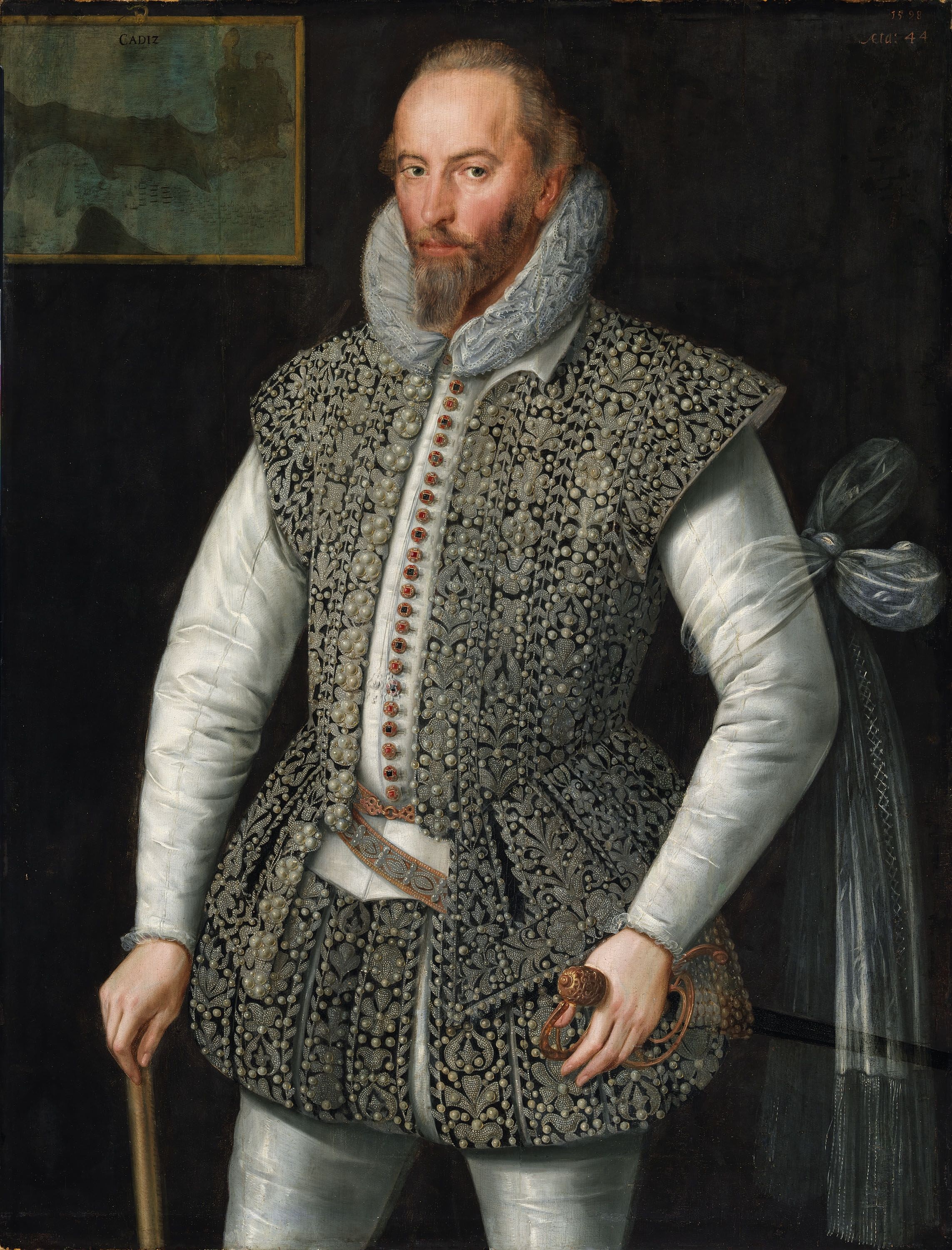
Sir Walter Raleigh
Courtier, poet, privateer, and colonial promoter. Raleigh financed the Roanoke expeditions but never set foot in America. His charter from Elizabeth I created "Virginia" and launched England's colonial ambitions. Imprisoned in the Tower by James I, he was executed in 1618.
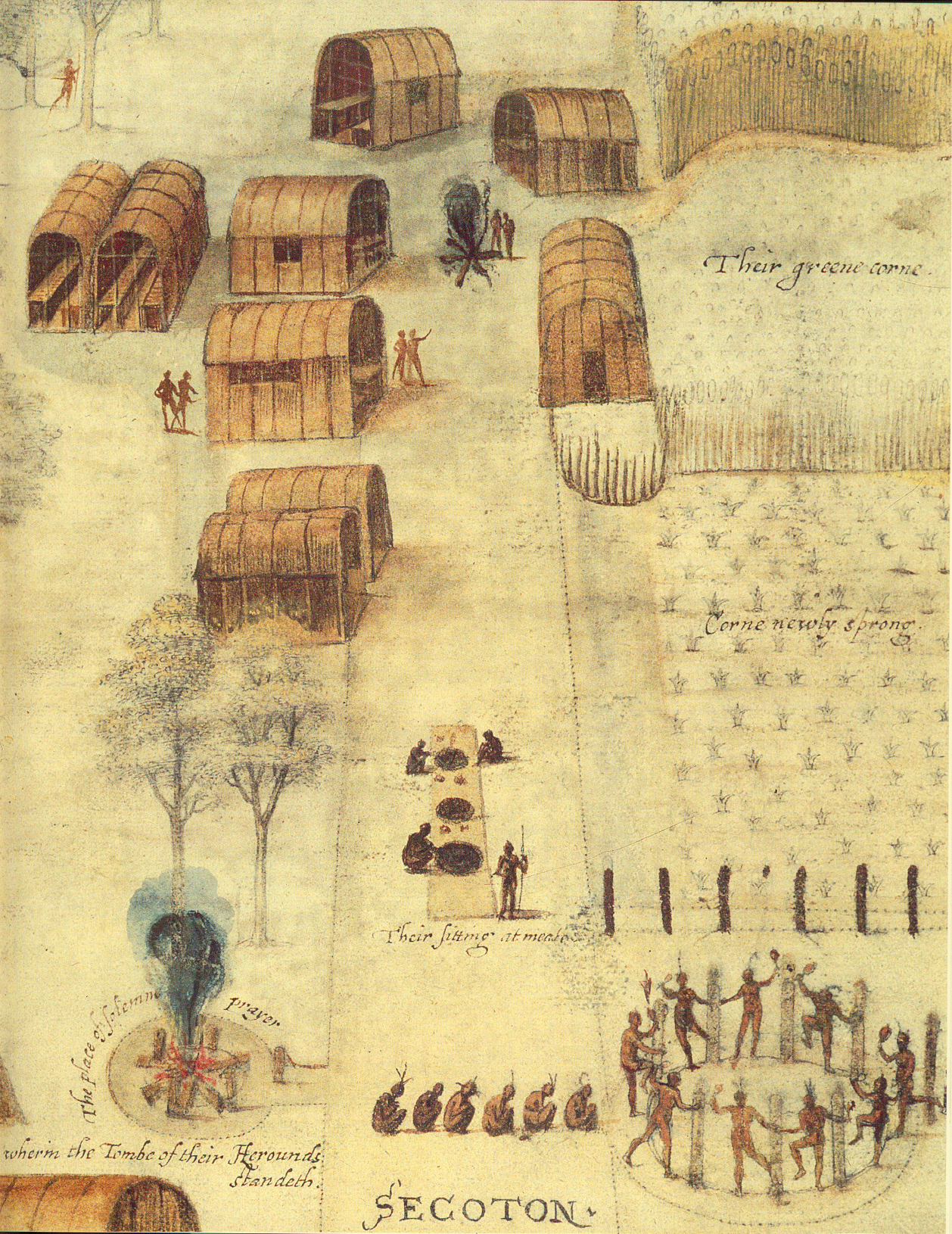
John White
Artist, mapmaker, and reluctant governor. White's watercolours of Algonquian life are among the most important visual documents in American history. He left his daughter, son-in-law, and nine-day-old granddaughter on Roanoke Island in 1587 — and never saw them again.
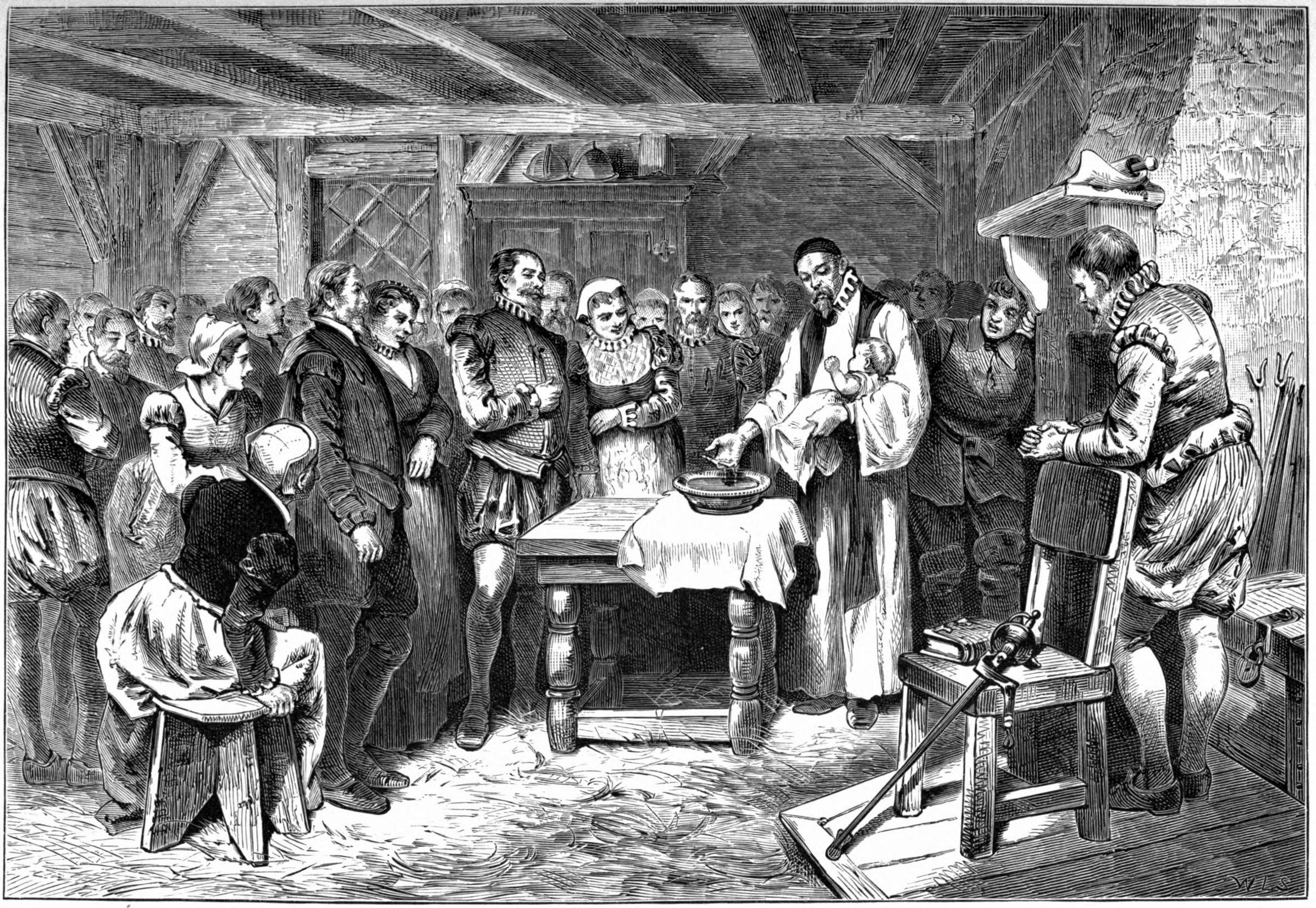
Still Searching
The Lost Colony did not vanish into thin air. The archaeology tells a story of dispersal, adaptation, and survival — some colonists joining Manteo's Croatoans on Hatteras Island, others moving inland to the Albemarle Sound. Their descendants may walk the streets of North Carolina today.
But the definitive answer has never been found. And in that uncertainty lies the story's enduring power — a colony that refuses to be found.
Get the Full Book
The complete story of the colonists, the CROATOAN carving, the Armada, and the four-century search for answers.