
Free with an account
The EPUB is free. Create a HistorIQly account and it downloads straight to your device.
Sign in to download Create a free accountFree account, no card needed. Already have one? Sign in
Your account is ready — enjoy the read.
Download the EPUBFree for everyone with a HistorIQly account.
All EPUBs are in English. Translations are coming.
In 1912, a skull was found in a Sussex gravel pit that would rewrite the story of human evolution. It was announced to the world as the missing link — proof that England had produced the first true human.
It took 41 years to discover the truth.
1912
Amateur archaeologist Charles Dawson presents skull fragments to the Natural History Museum. The Keeper of Geology declares them extraordinary.
0
People who examined original bones before 1953.
500+
Published citing Piltdown as fact.
38
Other fakes by Dawson discovered later.
Forensic Analysis
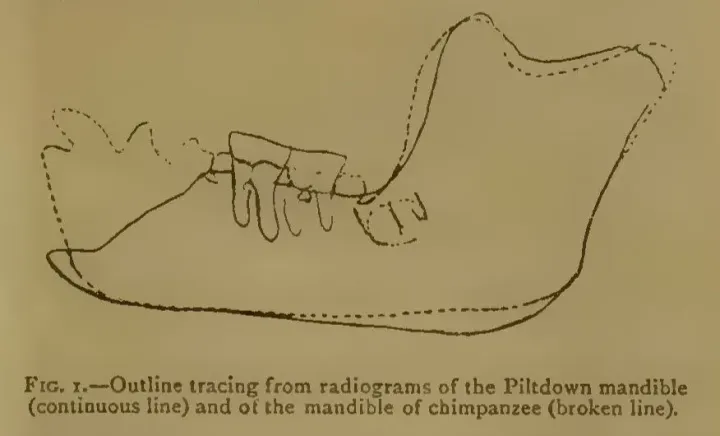
Filed Molars
Under a microscope, the flat molar surfaces dissolved into parallel scratches — the unmistakable marks of a steel file. Someone had manually ground down an ape's teeth to mimic human wear patterns.
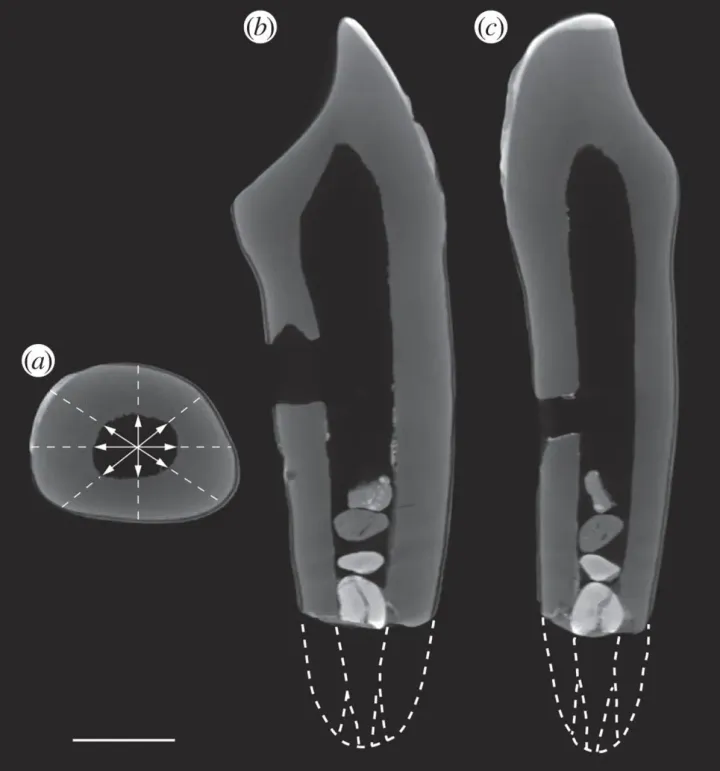
Painted Bones
The brown colour was artificial. Later spectroscopy found varying combinations of iron, chromium and silver. The jaw belonged to an orangutan; contamination makes its precise radiocarbon age uncertain.
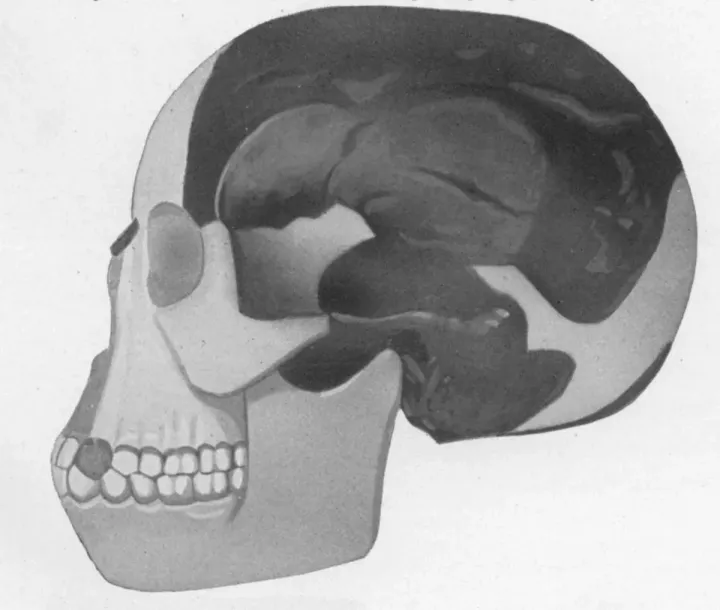
Impossible Anatomy
The crucial connecting bone (condyle) was snapped off. Its absence removed an important anatomical check. The reconstructed combination was disputed long before chemical and microscopic tests established fabrication.
41 Years of Deception
First Fragment
Dawson claims a workman handed him a skull fragment. He pockets it and waits three years.
The Announcement
Dawson and Woodward announce the discovery at Burlington House. The "Missing Link" is found.
The Insurance Policy
Dawson "finds" a second skull two miles away. The apparent repetition persuades some doubters, although the material again comes through Dawson.
The Exposure
Weiner, Oakley and Le Gros Clark combine anatomical examination, microscopy and chemical tests to establish a composite forgery.
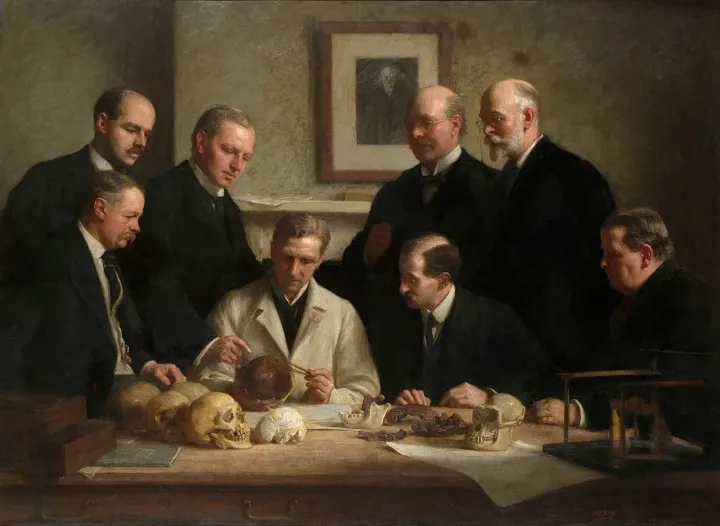
The Real Question
The discovery appealed to researchers because it appeared to combine a large brain with an ape-like jaw. Re-examining the material exposed how that composite had been assembled.
The episode raises questions about authentication and the weight of scientific authority. Naming a likely forger does not, by itself, explain why the claims survived so long.
Get the Full Book
15 chapters follow the disputed remains, the scientific investigation and the exposure of the forgery.