
Get the full EPUB
The EPUB is part of the HistorIQly Plus library. The case file on this page stays free to read.
This EPUB is already in your library. The case file on this page stays free to read.
Download EPUBPlus includes every book in the library. See what Plus includes
Every book in the library is yours to download.
All EPUBs are in English. Translations are coming.
In April 1943, a body washed ashore on a Spanish beach. He was dressed as a Royal Marines officer, with a briefcase chained to his belt containing top-secret invasion plans. The Germans found the documents, accepted a false strategic picture that reinforced concern about Greece and Sardinia. The officer never existed. The plans were fake. And the body belonged to Glyndwr Michael, a Welshman who had died after ingesting rat poison.
It was the most audacious deception of the Second World War — and it supported the broader deception covering the invasion of Sicily.
1 Body
A single corpse, dressed as Major William Martin, Royal Marines, was deployed off the coast of Huelva, Spain. His pockets were filled with love letters, theatre stubs, and an angry bank overdraft notice. His briefcase held forged letters between British generals suggesting the Allies would invade Greece, not Sicily.
18+
Hitler ordered the 1st Panzer Division to Greece, 7 divisions from Italy, and 10 more to the Balkans.
160K
Soldiers who invaded Sicily on July 10, 1943 — the largest amphibious assault in history to that point.
53 Years
The true identity of the body was not revealed until 1996, when files were declassified at the National Archives.
The Evidence
The Fake Identity
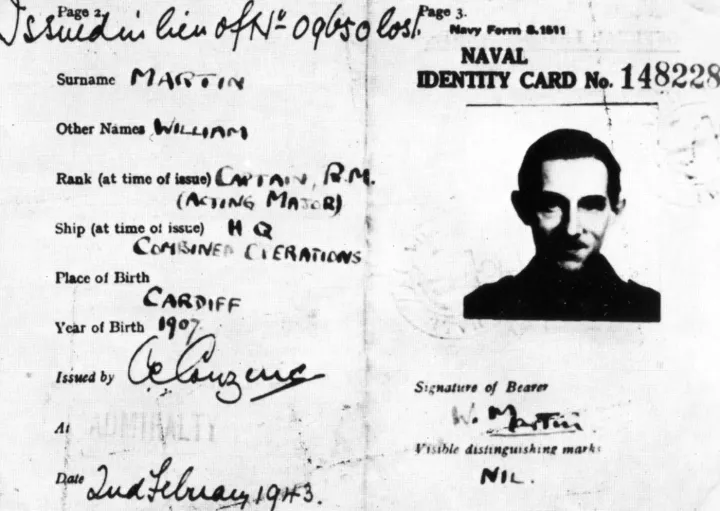
A complete identity was fabricated for "Major William Martin, RM" — Naval Identity Card No. 148228, born Cardiff 1907. The photo was of MI5 officer Ronnie Reed, who resembled the corpse. Every detail was cross-referenced: dog tags, uniform, personal effects, even a Catholic designation to ensure respectful treatment in Spain.
The Body
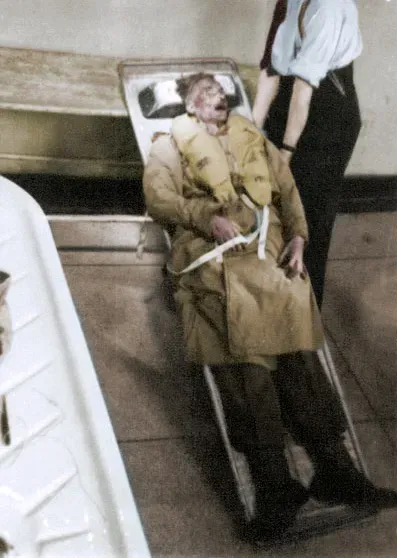
Glyndwr Michael died of rat poison in January 1943 and was kept on ice for three months. Sir Bernard Spilsbury, Britain's top pathologist, advised the planners that the body might plausibly be taken for a casualty of an aircraft lost at sea. The gamble paid off — the autopsy found nothing suspicious.
The Eyelash Trap
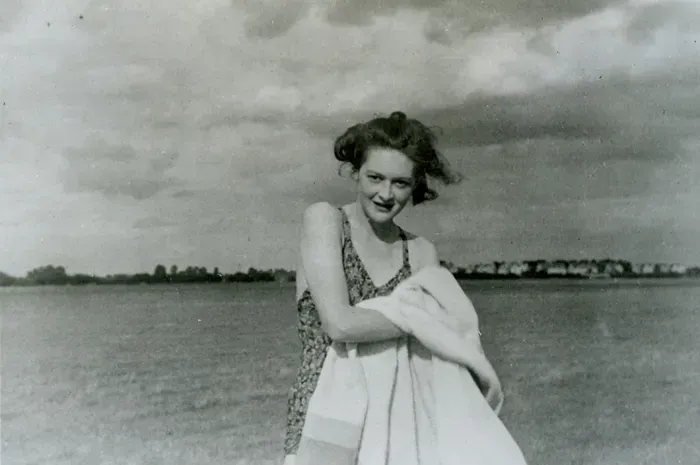
Montagu sealed a single black eyelash inside one of the letter envelopes. When the documents were returned through diplomatic channels, the eyelash was gone — proof that the Spanish had opened, read, and resealed the letters before passing them to German intelligence.
From Corpse to Conquest
The Body
Glyndwr Michael, a homeless Welshman, dies at St. Pancras Hospital after phosphorus poisoning. Coroner Bentley Purchase identifies his body as suitable for the operation. It is placed in cold storage at Hackney Mortuary.
The Journey
The body is dressed, placed in a steel canister packed with dry ice, and driven 500 miles overnight from London to Scotland by MI5 driver Jock Horsfall — a former racing champion — through the wartime blackout.
The Drop
At 4:15 AM, HMS Seraph surfaces off Huelva. The body is lowered into the sea. Lieutenant Jewell reads Psalm 39. Five hours later, fisherman Jose Antonio Rey Maria finds the corpse near the mouth of the Rio Tinto.
Swallowed Whole
Hitler declares Sicily is NOT the target. He orders the 1st Panzer Division to Greece and redirects 17 more divisions. Signal to Churchill: "Mincemeat swallowed rod, line and sinker."
Operation Husky
160,000 Allied troops invade Sicily. The German panzers are in Greece. Hitler delays committing reserves for critical days, still convinced Sicily is a feint. Mussolini is deposed two weeks later. Italy surrenders.
Key Figures

Ewen Montagu
Lieutenant Commander, RNVR. Barrister, son of Baron Swaythling, and Naval Intelligence representative on the Double Cross Committee. He drove the operation forward with a lawyer's precision and published "The Man Who Never Was" in 1953. He became Judge Advocate of the Fleet after the war.
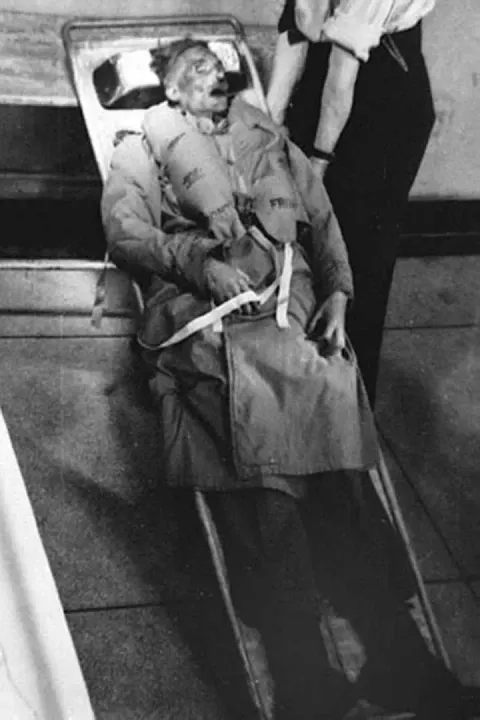
Glyndwr Michael
Glyndwr Michael was born in Aberbargoed and died in London in January 1943, aged 34, after ingesting phosphorus-based rat poison. His body supplied the invented William Martin identity; his real name was added to the grave decades later.
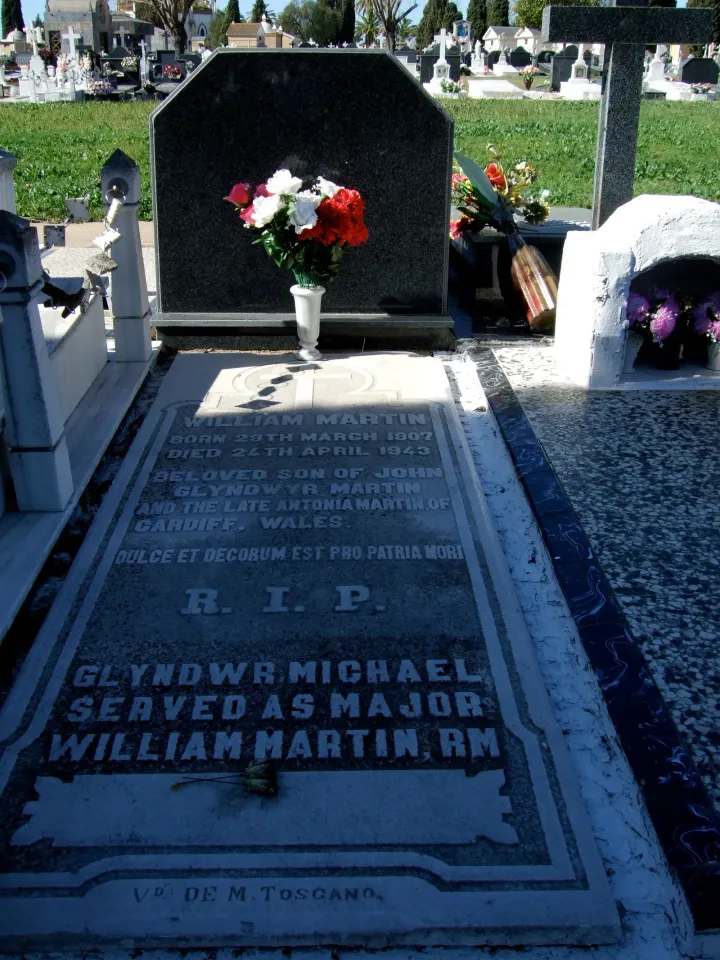
Two Names on One Stone
In the Cemetery of Solitude in Huelva, a headstone bears two identities. The original inscription honours "William Martin, Beloved Son" — a man who never existed. Below it, added in 1997 after the files were declassified: "Glyndwr Michael; Served as Major William Martin, RM."
A homeless man who was invisible in life became the most important soldier in the Mediterranean. In death, he served his country more than most men serve in life.
Get the Full Book
Follow the invented identity, the forged letters, the submarine journey and the German response to a remarkable wartime deception.