The Nazca Lines
The Desert That Drew Itself
On a sun-scorched plateau in southern Peru, ancient hands scraped away the desert surface to reveal something astonishing: hundreds of enormous figures — birds, spiders, monkeys, whales — visible only from the sky. They lay hidden in plain sight for centuries. Then the aeroplanes came.
Why would anyone draw pictures that only gods could see?
800+
Straight lines, 300 geometric designs, and over 70 animal and plant figures etched across the driest desert in the Americas. The largest figures span nearly 370 metres — longer than three football fields.
4mm
Per year. Twenty minutes of drizzle across twelve months.
15cm
Lines are only 10–15 cm deep — a thin layer of dark pebbles removed to expose lighter soil.
893
Total geoglyphs identified by 2025 — 781 found using AI and drone technology.
The Evidence
Visible Only from the Sky
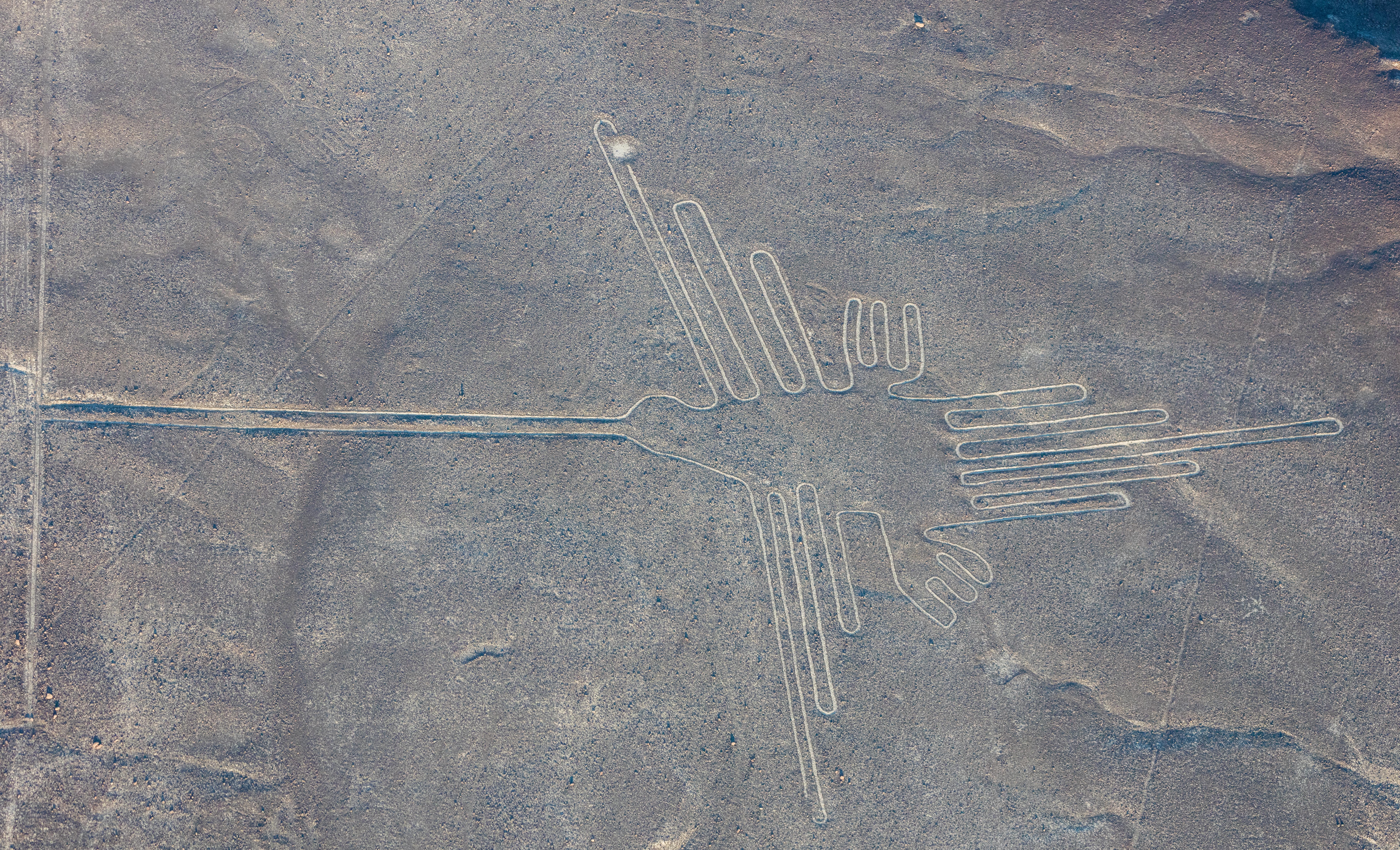
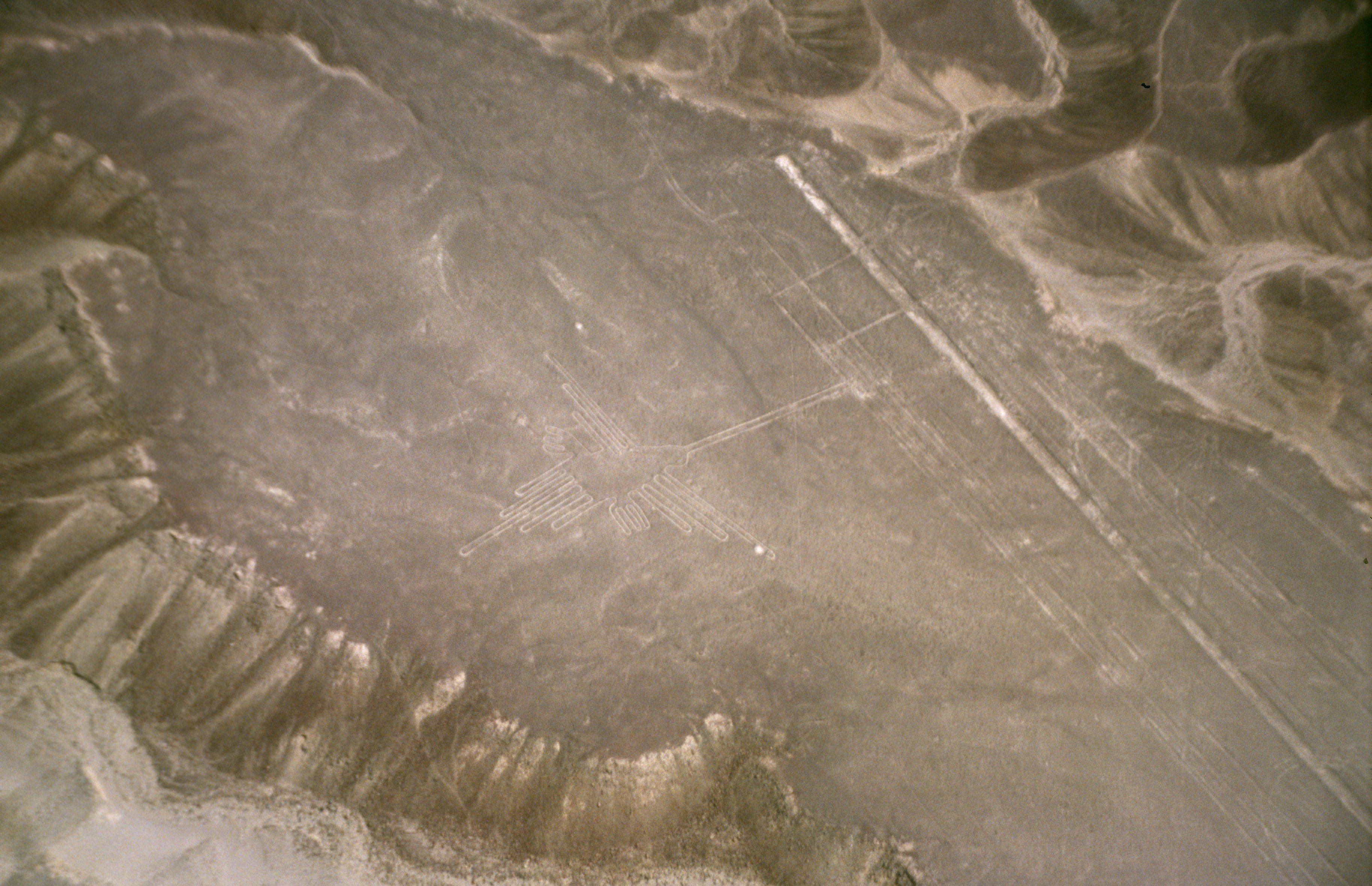
The hummingbird is 93 metres long — invisible from ground level, perfectly legible from a thousand feet. Created by removing dark, iron-oxide-coated pebbles to expose the lighter subsoil beneath. No paint, no construction material. Just subtraction. The dry, windless climate preserved the lines for two thousand years.
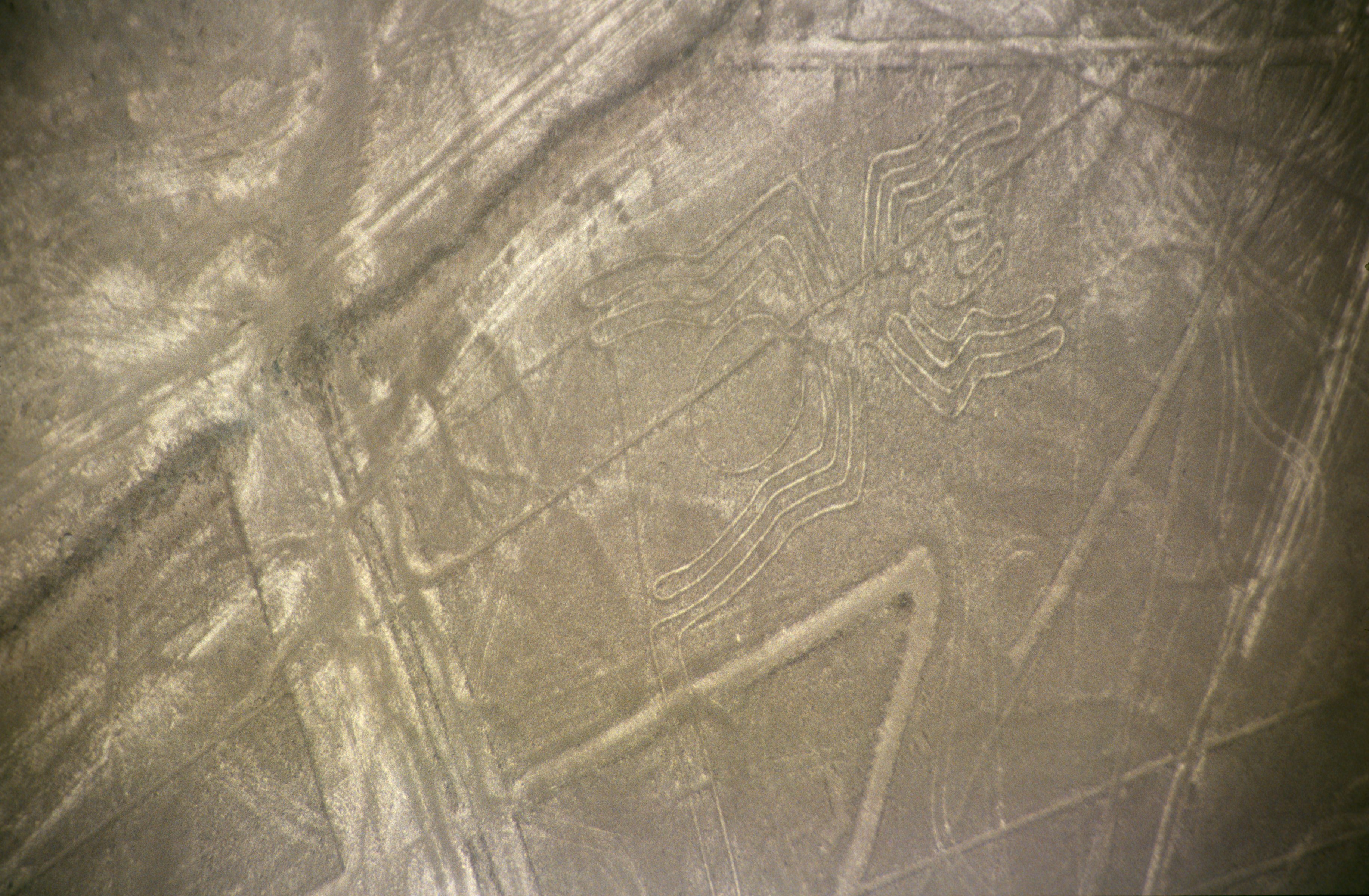
Anatomical Precision
The spider is 47 metres of exact biological detail — identified as a member of the genus Ricinulei, a species found only in the Amazon rainforest, hundreds of kilometres away. Each leg, each body segment is precisely proportioned. Astronomer Phyllis Pitluga argued it represents an anamorphic diagram of Orion.
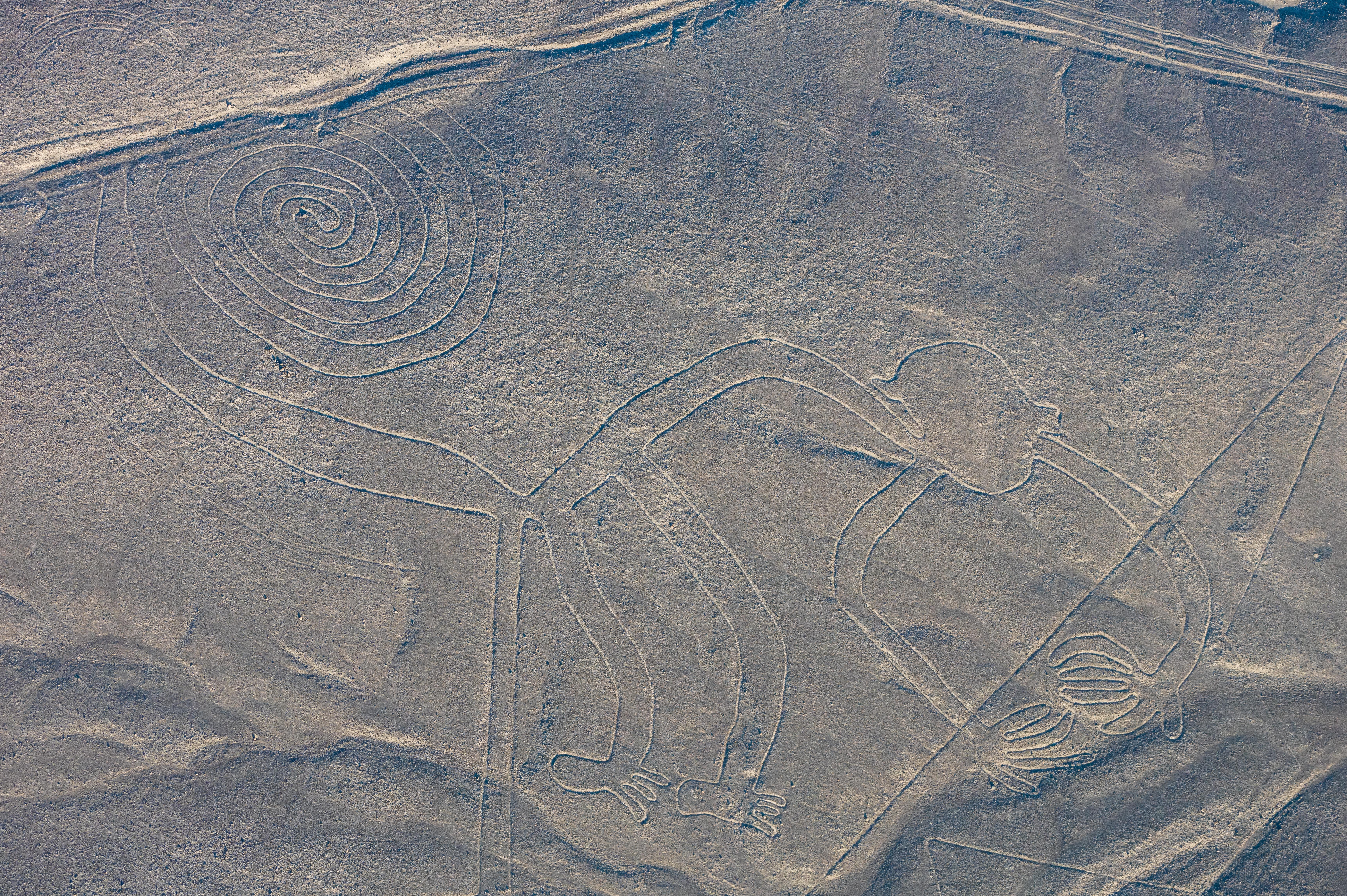
Nine Coils
The monkey stretches 93 metres across the desert, its tail coiling into a perfect nine-loop spiral. Nine fingers on each hand. Created using only wooden stakes, cords, and human labour — researcher Joe Nickell proved a small team could reproduce even the largest figures in days, with no aerial supervision required.
Two Thousand Years
The Builders
The Nazca civilisation begins creating geoglyphs on the pampa. Using wooden stakes and cords, workers scrape away the dark desert surface to expose lighter subsoil — lines that will survive for millennia in the windless, rainless climate.
The Discovery
American historian Paul Kosok flies over the pampa and sees the figures for the first time from the air. On the winter solstice, he observes lines converging at the sunset point and calls Nazca "the largest astronomy book in the world."
The Lady of the Lines
German mathematician Maria Reiche begins her fifty-year mission to study and protect the lines. She sweeps the desert by hand, measures every figure, and fights anyone who threatens her geoglyphs — including the Peruvian government.
Chariots of the Gods
Swiss hotelier Erich von Däniken publishes his alien landing strip theory. The book sells 30 million copies and transforms the Nazca Lines into a global pop-culture phenomenon — and an enduring archaeological headache.
UNESCO Protection
The Nazca Lines are designated a UNESCO World Heritage Site — recognised as "a unique and magnificent artistic achievement unrivalled anywhere in the prehistoric world."
Key Figures

Maria Reiche
German mathematician who devoted fifty years to studying and protecting the Nazca Lines. She swept the desert by hand, measured every figure, and fought governments, farmers, and tourists to preserve the site. Her advocacy secured the 1994 UNESCO designation.
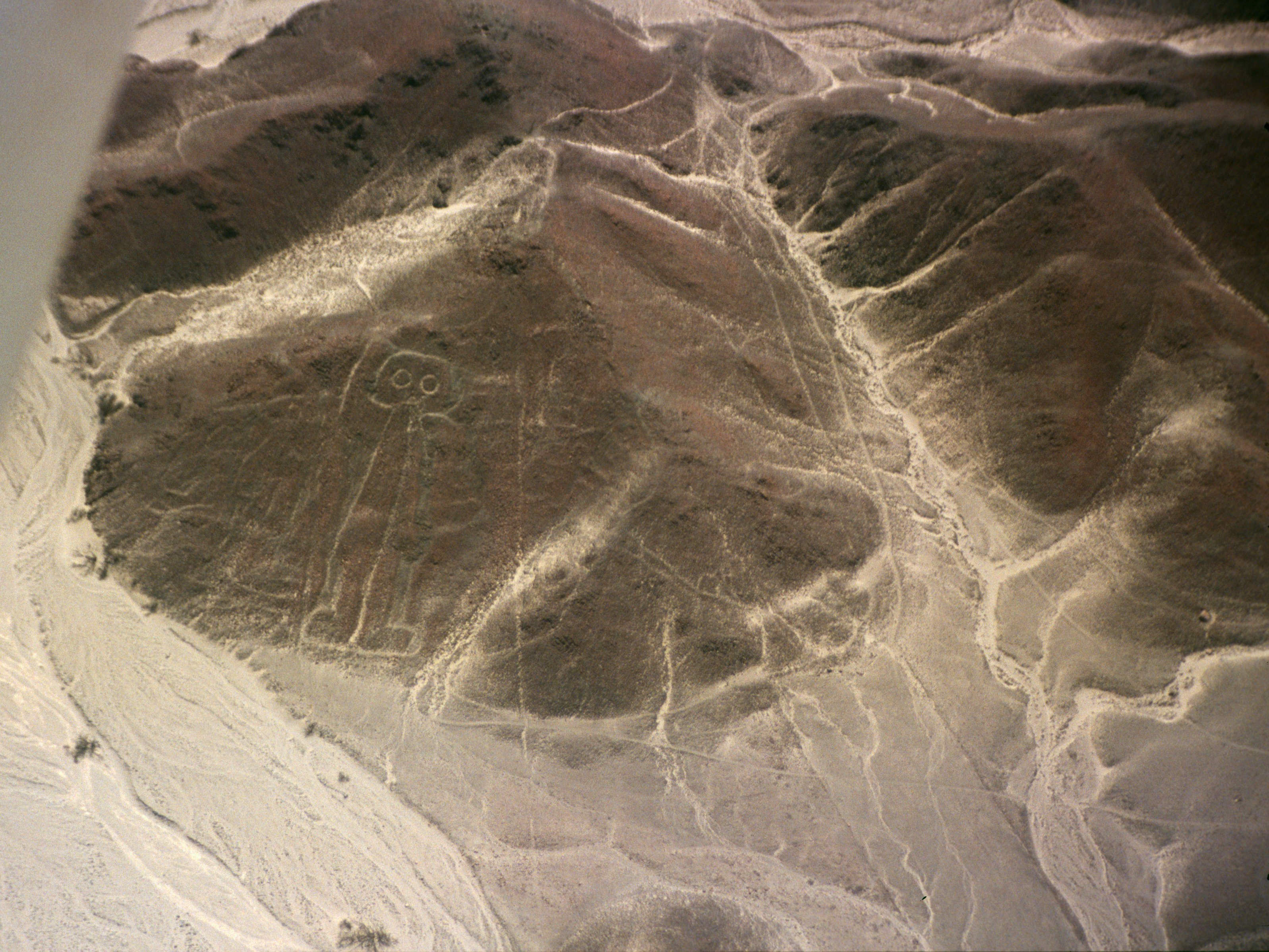
The "Astronaut"
A 30-metre humanoid figure etched into a hillside — one hand pointing up, one down, with large round eyes. It became von Däniken's star witness for alien contact. Archaeologists identify it as a ritual figure, possibly a shaman or deity, predating spaceflight by two millennia.
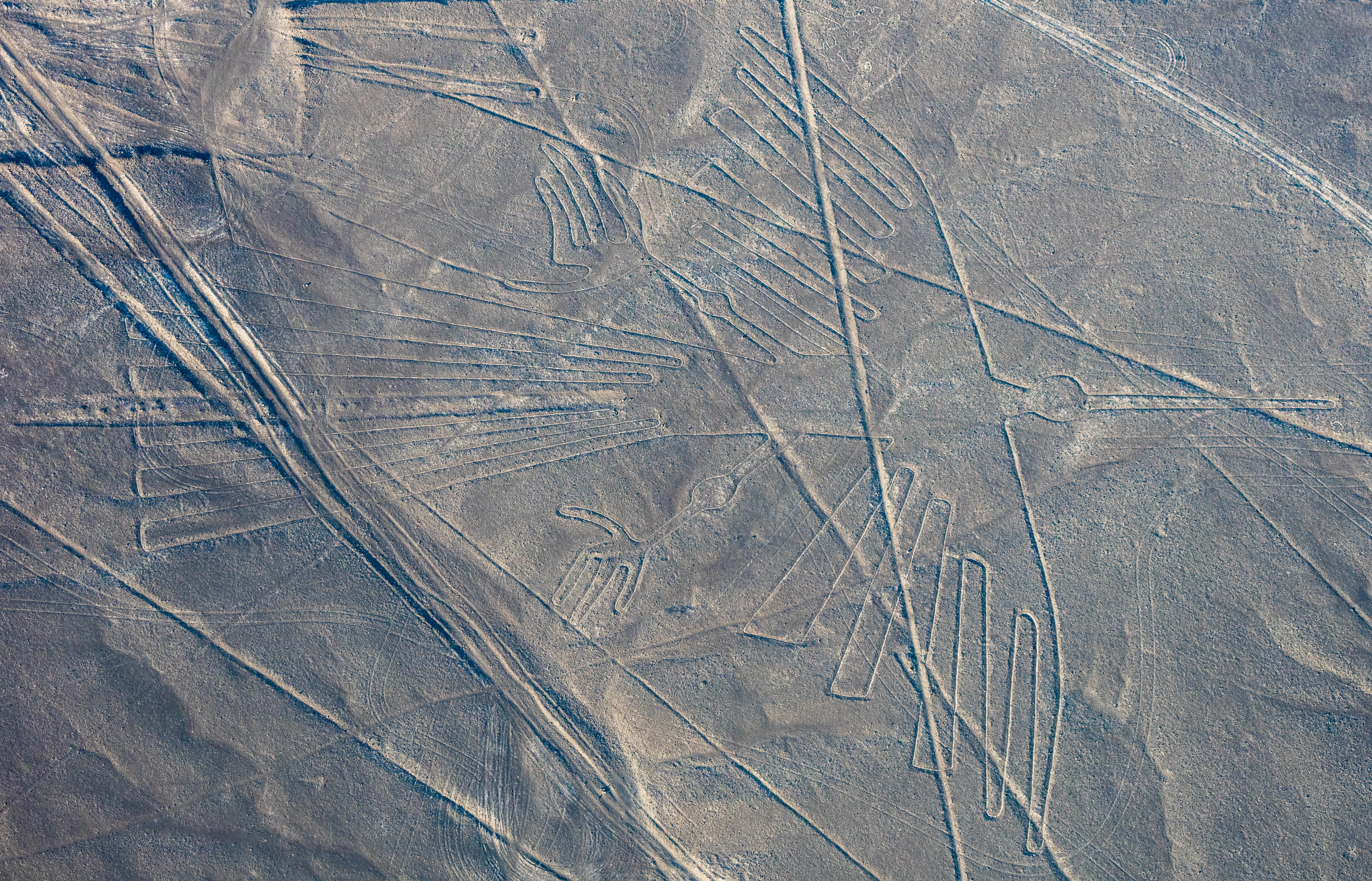
The Desert Remembers
The hummingbird does not answer. It never has. It just lies there in the red dust, wings spread, beak pointed, waiting for someone who can read the message.
Two thousand years. Eight hundred lines. A civilisation's last word, written in dirt and silence.
Get the Full Book
The complete story of the desert, the lines, and the woman who gave her life to save them.