
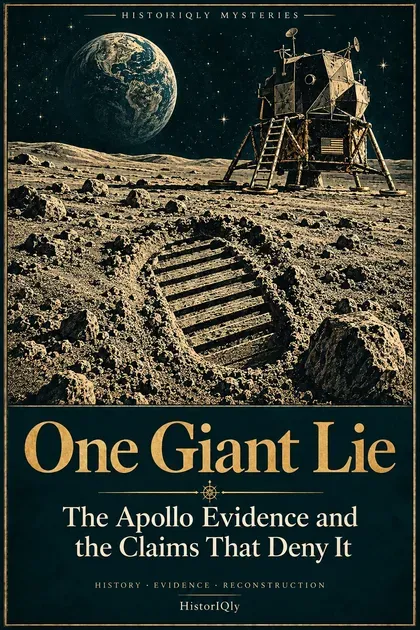
Get the full EPUB
The EPUB is part of the HistorIQly Plus library. The case file on this page stays free to read.
This EPUB is already in your library. The case file on this page stays free to read.
Download EPUBPlus includes every book in the library. See what Plus includes
Every book in the library is yours to download.
All EPUBs are in English. Translations are coming.
On July 20, 1969, 600 million people watched Neil Armstrong step onto the surface of the Moon. It was the greatest technological achievement in human history. Within seven years, a former publications analyst with no engineering credentials would publish a self-printed pamphlet claiming it never happened. The conspiracy has outlived the moonwalkers.
It took a $25 billion programme, roughly 400,000 workers, and the full resources of a superpower to reach the Moon. It took one man with a typewriter to convince millions it was all a lie.
1969
Apollo 11 lands on the Moon. Twelve men would walk on the lunar surface across six missions between 1969 and 1972. Every mission was independently tracked by observatories worldwide — including the Soviet Union.
382 kg
Lunar samples returned, verified by scientists worldwide — including Soviet researchers.
~11%
Of Americans who doubt the landings, according to 2019 polling. Among 18-24 year olds: 18%.
400K+
Engineers, scientists, and contractors worked on Apollo. Not one has ever produced evidence of fraud.
The Evidence
The Waving Flag
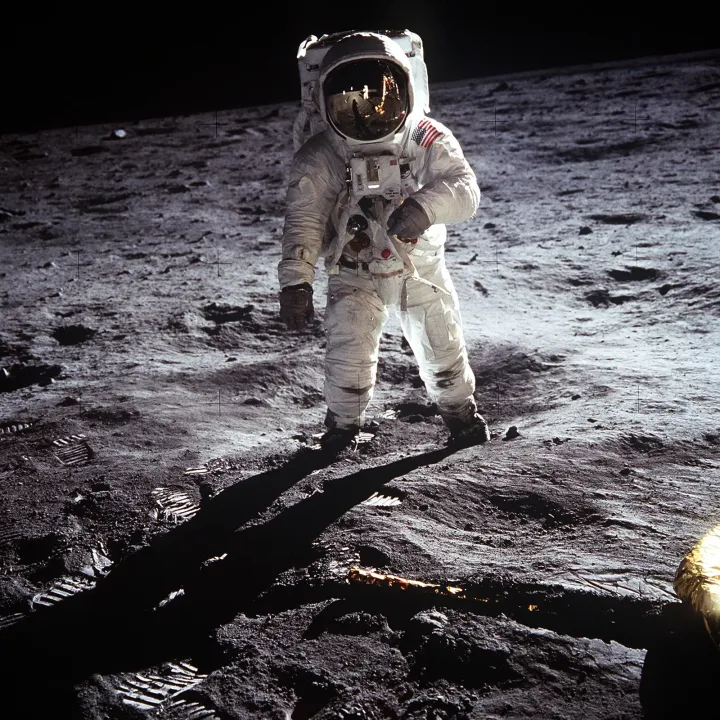
The flag appears to ripple in a vacuum. Conspiracy theorists call this proof of wind in a studio. The real explanation: a horizontal support rod held the flag open. Packing and handling left creases, and the horizontal rod did not fully extend. In subsequent photos where no one is touching the flag, it hangs perfectly still.
No Stars, No Crater
Two of the most persistent claims: no stars visible in the lunar sky, and no blast crater under the Lunar Module. The camera exposure was set for the brilliant sunlit surface — stars were too dim to register, just as they are invisible in daytime photos on Earth. The LM used a throttleable descent engine. Its spreading exhaust disturbed surface dust; maximum thrust alone does not predict a deep crater.
Laser Retroreflectors
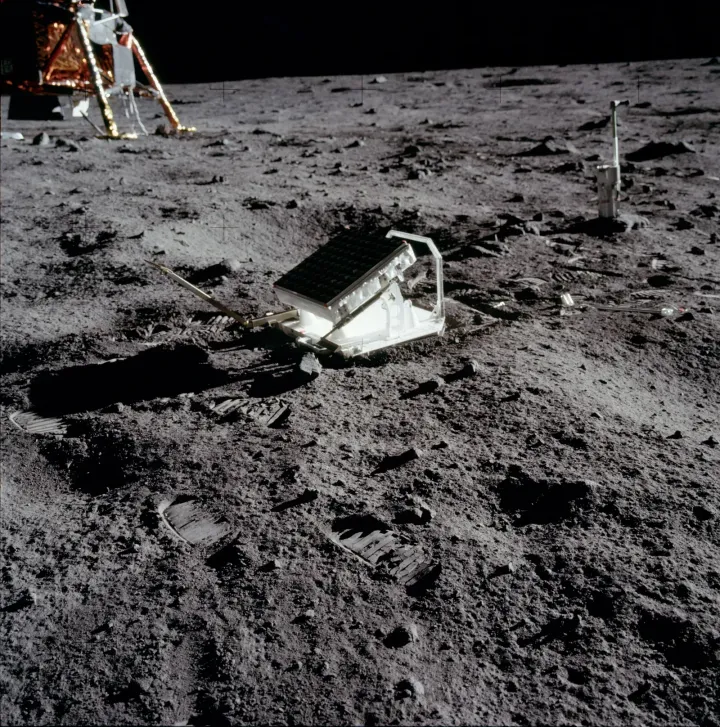
Apollo 11, 14, and 15 each left retroreflector arrays on the lunar surface. Observatories worldwide bounce lasers off them daily, measuring the Earth-Moon distance to within millimetres. The McDonald Observatory in Texas, the Observatoire de la Côte d'Azur in France, and others have independently verified these reflectors for over fifty years. They are there. Someone put them there.
The Conspiracy That Would Not Die
Apollo 11
Neil Armstrong and Buzz Aldrin become the first humans to walk on the Moon. Michael Collins orbits above. 600 million people watch live on television.
Apollo 17
Eugene Cernan becomes the last human to walk on the Moon. Twelve men in total. The programme ends — not because it failed, but because the funding ran out.
The Book
Bill Kaysing, a former publications analyst at Rocketdyne, self-publishes 'We Never Went to the Moon.' The modern conspiracy theory is born.
Prime Time
Fox TV broadcasts 'Did We Really Land on the Moon?' to 15 million viewers. The broadcast brings hoax allegations to a large audience, often without the context needed to assess their technical claims.
LRO Evidence
NASA's Lunar Reconnaissance Orbiter photographs all six Apollo landing sites from orbit, showing descent stages, rover tracks, and astronaut footpaths.
Key Figures
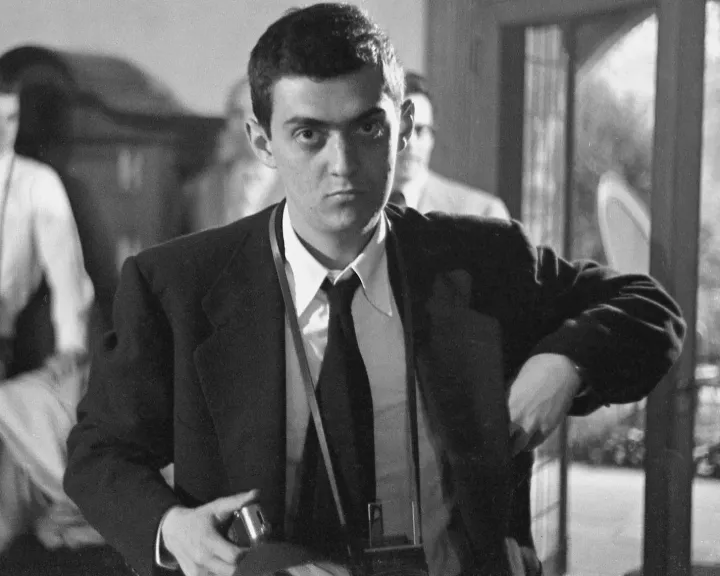
Stanley Kubrick
The most entertaining theory: NASA hired the director of 2001: A Space Odyssey to film the fake landings. In 2002, Bart Sibrel confronted Buzz Aldrin with the accusation. Aldrin, then 72 years old, punched him in the face. No charges were filed.
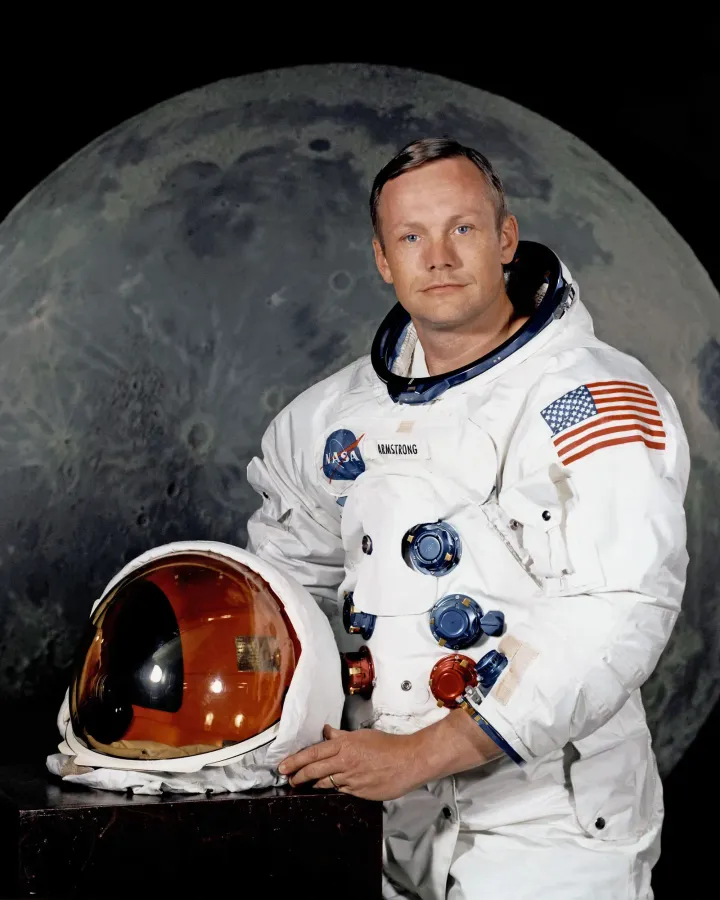
Neil Armstrong
First human to walk on the Moon. A former Navy pilot and test pilot who flew the X-15 to the edge of space. Armstrong rarely discussed the conspiracy theories publicly, saying simply: 'People love conspiracy theories. It's just human nature.'
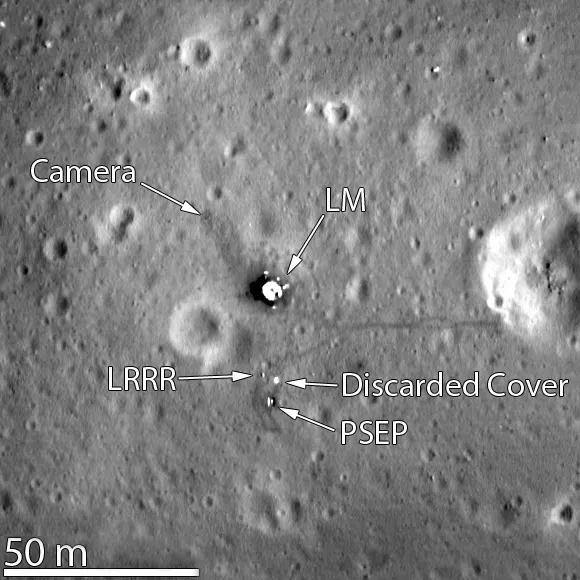
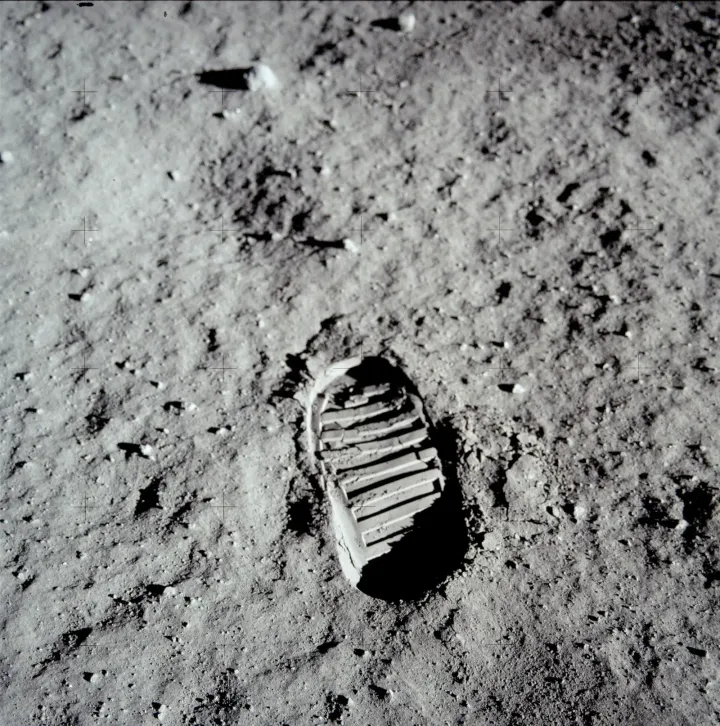
The Bootprints Are Still There
The Moon has no weather. No wind or rain erases the paths, but impacts and space weathering gradually alter the surface. Orbital images show the astronauts' trails of disturbed soil, rather than resolving individual bootprints.
The conspiracy theory will outlast us all. But so will the bootprints.
Get the Full Book
Explore the Apollo missions, the evidence for the landings and the claims behind the hoax theory.