
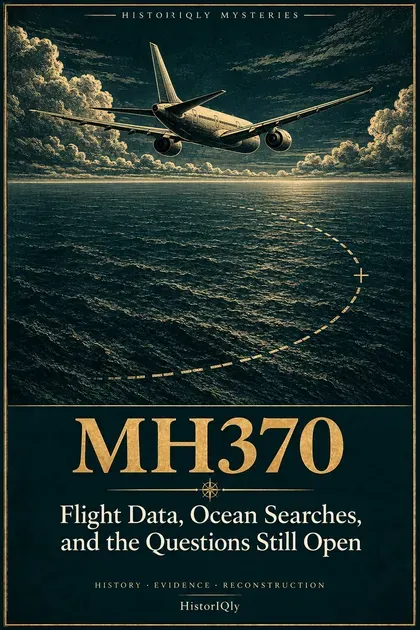
Get the full EPUB
Drop your email and the EPUB downloads straight to your device. We'll also ping you when the next case file lands — unsubscribe any time.
Your email is already on file — enjoy the read.
Download the EPUBAt 12:41 a.m. on March 8, 2014, a Boeing 777 carrying 239 people left Kuala Lumpur for Beijing. The last voice transmission came at 1:19 a.m.: "Good night, Malaysian Three Seven Zero." Transponder replies ceased shortly afterward. Radar and satellite records would reveal that the aircraft continued flying for hours.
The Australian-led underwater search examined more than 120,000 km² of seabed before its suspension in January 2017. Later searches by Ocean Infinity returned to the southern Indian Ocean. Recovered debris links the missing aircraft to that ocean, but the main wreck remains unlocated in the reports reviewed for this edition.
7h 38m
The final satellite exchange came seven hours and thirty-eight minutes after takeoff. Radar recorded a turn back across the Malay Peninsula; satellite analysis supports a later flight south. No distress call was recorded.
7 Arcs
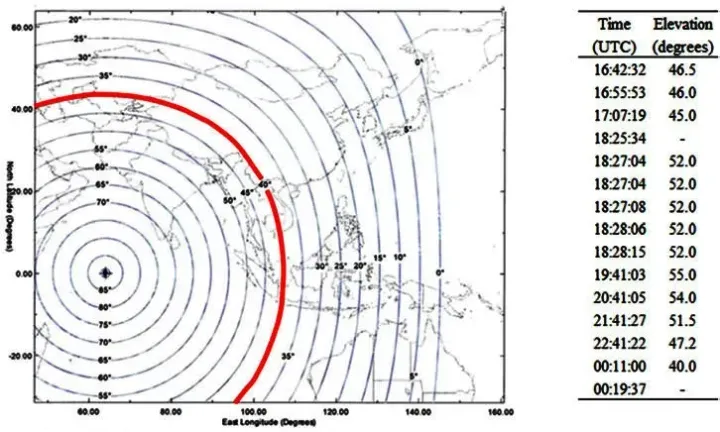
Satellite exchanges provided estimated distances from the aircraft to an Inmarsat satellite. Combined with frequency measurements, they helped investigators reconstruct possible routes beyond the last radar contact.
120,000+ km²
Seabed examined in the Australian-led underwater search before its January 2017 suspension. The main wreck was not located.
Debris
Confirmed and other likely aircraft parts were recovered around the western Indian Ocean. The flaperon was traced to MH370. The cause of the disappearance remains undetermined.
The Evidence
Satellite Handshakes
Timing measurements from the final satellite exchange at 8:19 a.m. defined the Seventh Arc, a band of possible aircraft positions. Frequency data were consistent with a rapid descent. Neither measurement supplied an exact impact point.
The Deep Search
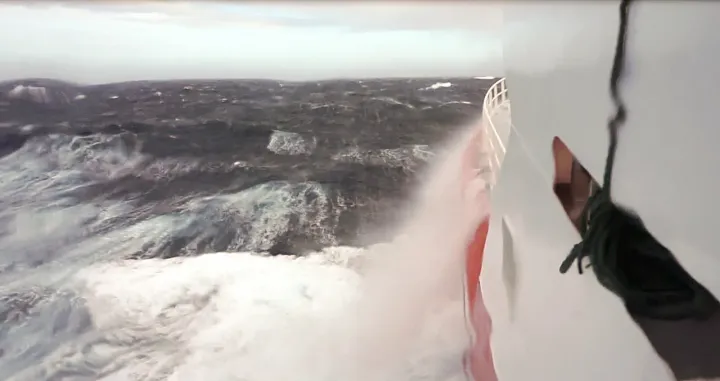
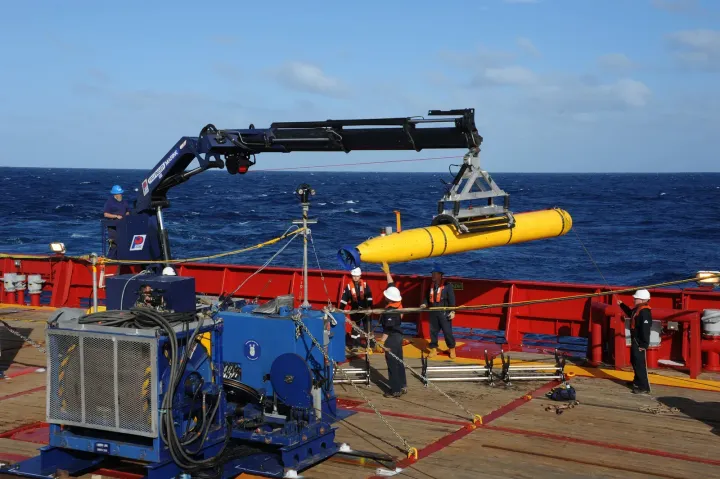
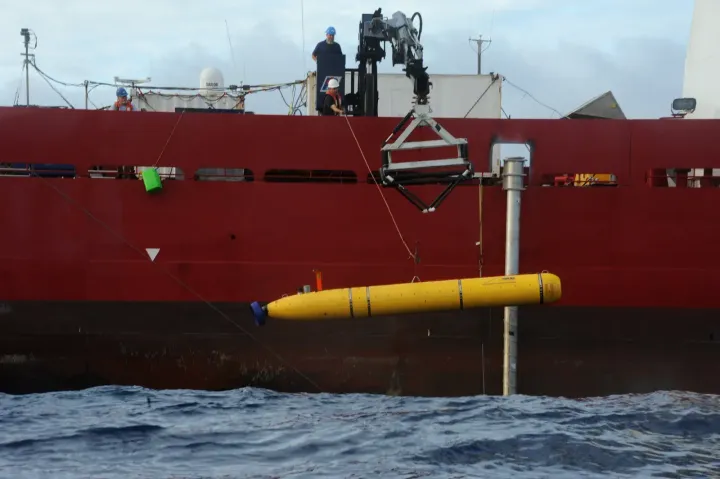
Deep-tow sonar and autonomous underwater vehicles examined more than 120,000 km² during the Australian-led search. Broad seabed mapping helped crews navigate mountains and ridges; closer sonar surveys looked for wreckage. Ocean Infinity later conducted separate campaigns. These different surveys cannot simply be added into a single area searched.
The Flaperon
A barnacle-covered wing panel was found on Réunion Island on July 29, 2015. French investigators confirmed in September that it was MH370’s right flaperon. Other parts recovered around the western Indian Ocean added physical evidence to the satellite reconstruction, without identifying the cause.
Into the Void
Last Contact
At 1:19 a.m., the captain makes the last recorded voice transmission. Transponder replies cease shortly afterward. Primary radar continues to record an aircraft assessed as MH370 turning back across the Malay Peninsula.
Ended in the Indian Ocean
On March 24, Prime Minister Najib Razak announces the conclusion that MH370 ended in the southern Indian Ocean, based on satellite analysis. Australia had begun coordinating the southern search on March 17.
The Flaperon
The right flaperon is found on Réunion Island on July 29. French investigators confirm its link to MH370 in September using identifying records.
Search Suspended
After examining more than 120,000 km² of seabed, Australia, Malaysia, and China suspend the underwater search. The main wreck has not been found.
Renewed Search, Dated Results
Malaysia’s March 8, 2026 update records 28 operational days and 7,571 km² surveyed in the defined area across two phases, ending January 23. No main wreck was located. AP reported on June 29 that the contract had been extended through June 2027; that announcement does not establish the outcome of any later search.
Key Figures
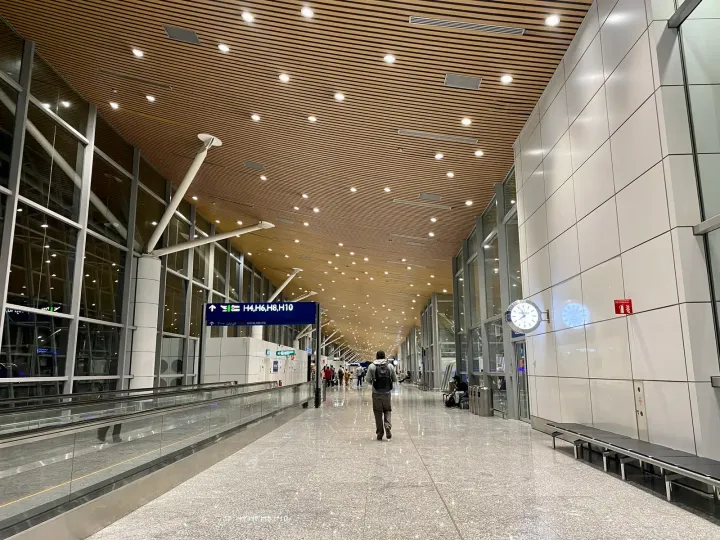
Zaharie Ahmad Shah
Age 53. An experienced Boeing 777 captain. Investigators examined his home flight simulator, but the safety report did not establish a rehearsal of the disappearance or determine who was responsible.
Voice370
Voice370 represents relatives campaigning for answers and a continued search. Their advocacy has kept the missing passengers and crew at the centre of a story often dominated by flight models and competing theories.
Good Night
The recovered parts belong to an aircraft whose final location remains unknown in the records reviewed here. Its flight recorders have not been recovered. For the families of the 239 people aboard, a search result could answer questions that satellite calculations alone cannot resolve.
The last radio words survive alongside a different kind of record: radar returns, satellite exchanges, and fragments carried ashore. Together they describe much of the flight’s outline, but leave its central events unexplained.
Get the Full Book
Explore the flight evidence, the satellite analysis, the ocean searches, and the families’ continuing demand for answers.