The Knights Templar
The Warrior Monks Who Shook the World
In the year 1119, nine penniless knights knelt before the King of Jerusalem and swore to protect Christian pilgrims on the most dangerous roads in the world. Two centuries later, they commanded a banking empire, an international army, and the fear of kings and popes alike. Then, at dawn on Friday the thirteenth, it all came crashing down.
This is the true story of the warrior monks who shook the world — from the Temple Mount to the stake.
9 Knights
Hugues de Payens and eight companions established the order on the Temple Mount in Jerusalem. They were so poor they shared horses — two men to a mount. Within decades, Bernard of Clairvaux's endorsement transformed them into the most powerful military order in Christendom.
20,000
Members at peak — but only ~2,000 were actual knights in white mantles.
Fri 13th
October 13, 1307 — 600+ Templars arrested simultaneously across France.
33 Days
Between Molay's execution and Pope Clement V's death. Philip IV died 8 months later.
The Evidence
Two Knights, One Horse
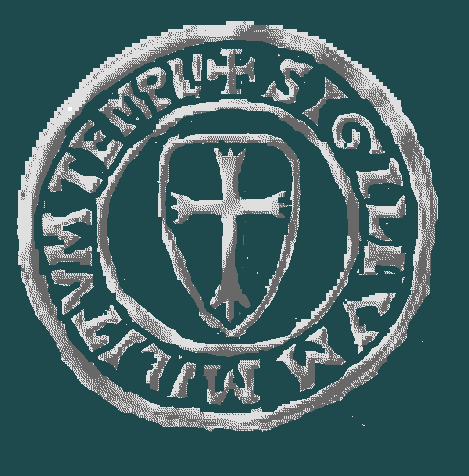
The official Templar seal depicted two armoured knights riding a single horse — a symbol of the order's founding poverty. The Latin inscription reads Sigillum Militum Xpisti: Seal of the Soldiers of Christ. Whether the image was literal or allegorical, it became the most recognizable emblem of the medieval military orders.
The Round Church
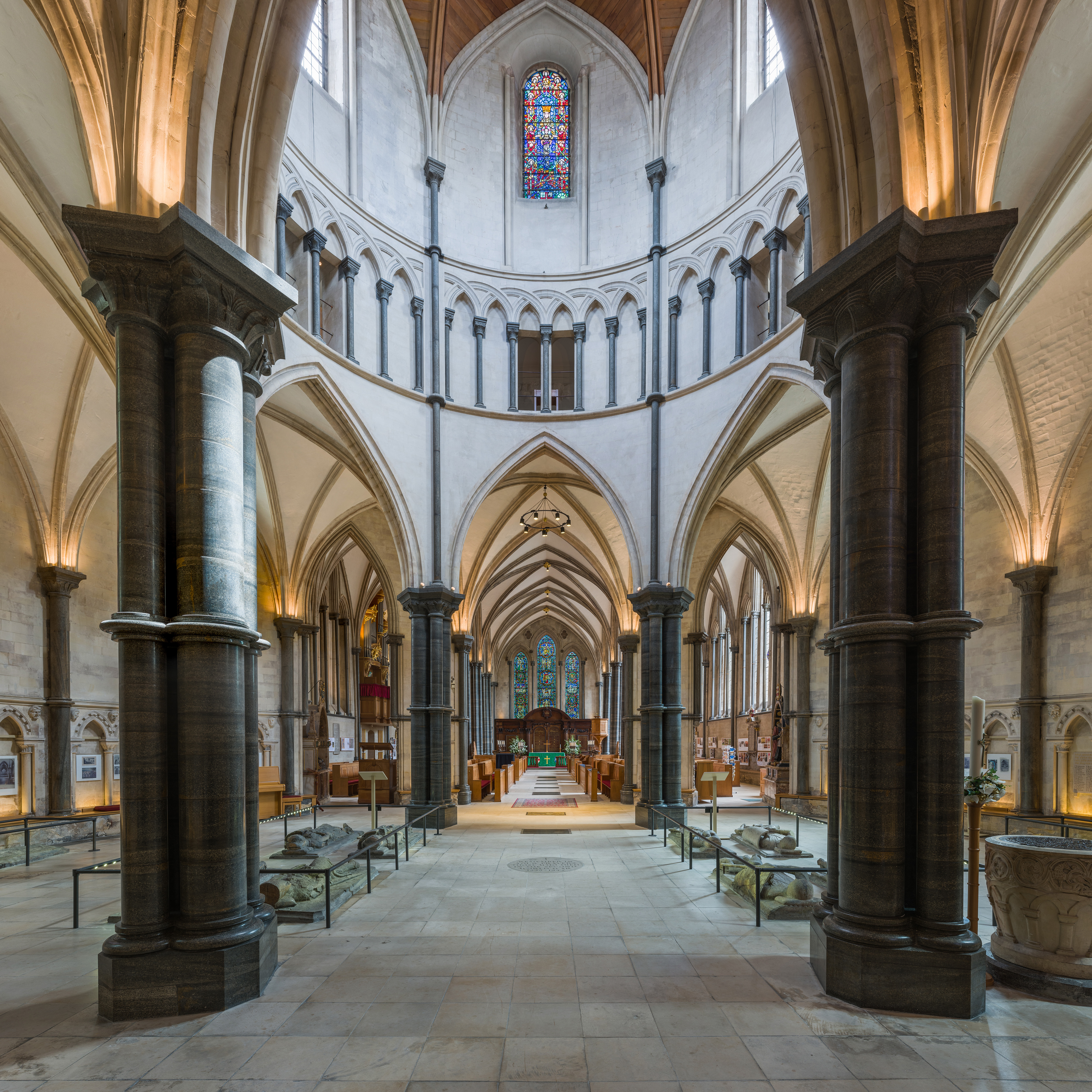
Consecrated in 1185, the Temple Church in London was the English headquarters of the Knights Templar. Its circular nave echoes the Church of the Holy Sepulchre in Jerusalem. Stone effigies of medieval knights still lie on its floor, and its Purbeck marble columns survived German incendiary bombs in 1941.
The Final Confession
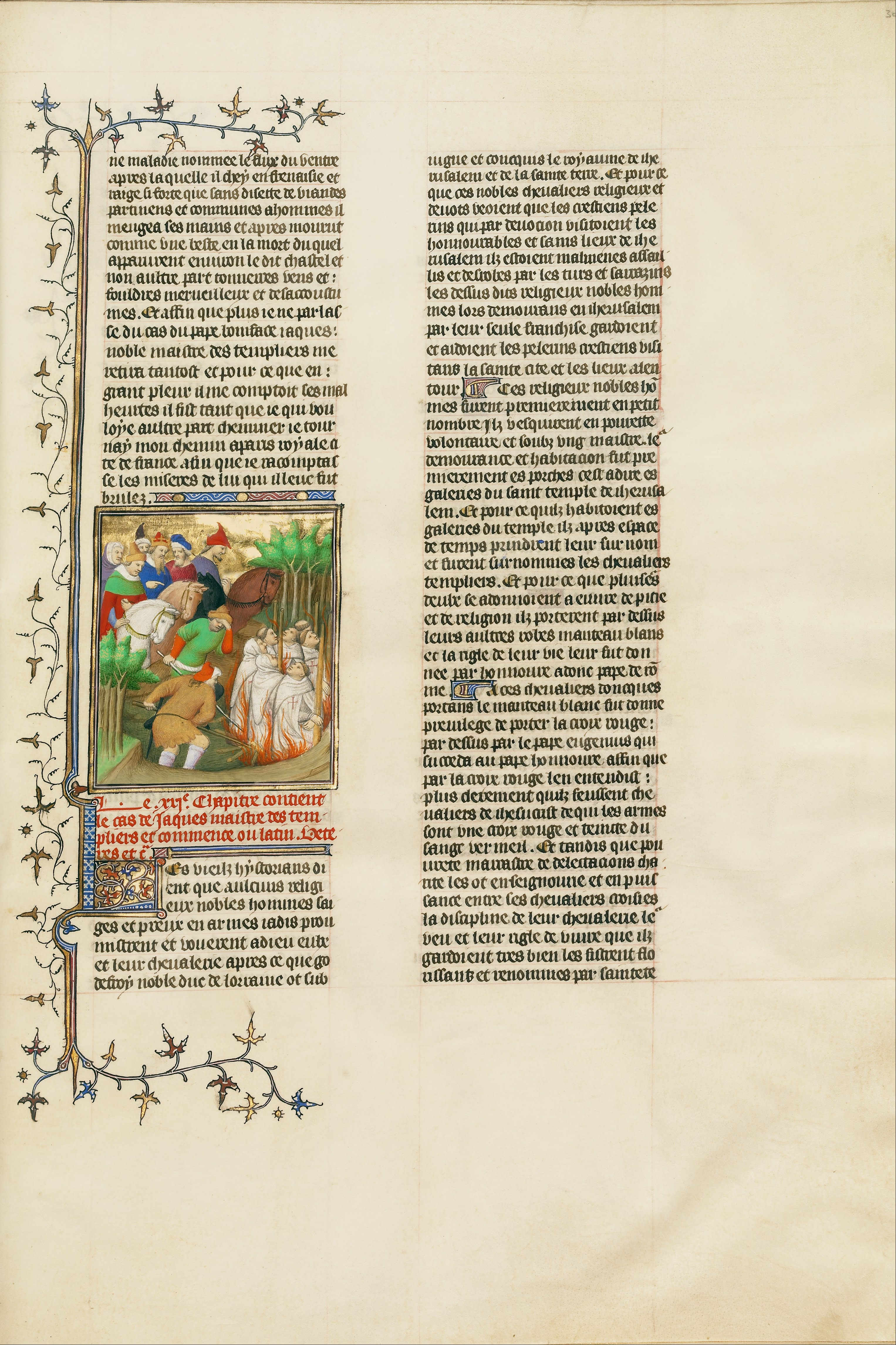
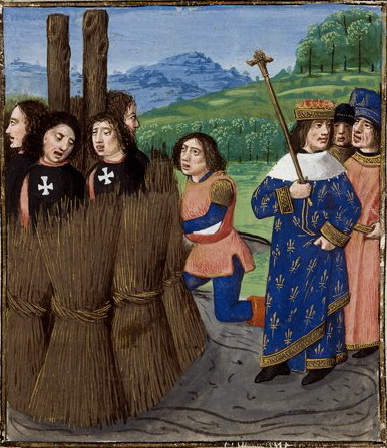
On March 18, 1314, Jacques de Molay was brought to Notre-Dame for sentencing. Instead of accepting life imprisonment, he retracted his confession and declared the order innocent. Philip IV ordered him burned at the stake that same evening. The Chinon Parchment, discovered in 2001, proved the Pope had secretly absolved the Templars years earlier.
From Temple Mount to the Stake
Nine Poor Knights
Hugues de Payens proposes a monastic military order to King Baldwin II. Nine knights are granted headquarters on the Temple Mount — the former Al-Aqsa Mosque — giving the order its name.
Montgisard
Eighty Templar knights lead a devastating charge that routs Saladin's army of 26,000. The sultan barely escapes on a camel. It is one of the most remarkable victories of the Crusading era.
The Disaster at Hattin
The Crusader army is annihilated. Saladin orders the execution of all captured Templars and Hospitallers. Jerusalem falls. The order's headquarters on the Temple Mount is lost forever.
Friday the Thirteenth
At dawn on October 13, Philip IV's soldiers simultaneously arrest every Templar in France. Jacques de Molay, the last Grand Master, is seized at the Paris Temple. Confessions are extracted under torture.
The Curse
Molay burns at the stake on the Île aux Juifs, cursing king and pope. Both are dead within the year. The Capetian dynasty collapses within fourteen years, triggering the Hundred Years' War.
Key Figures
Philip IV of France
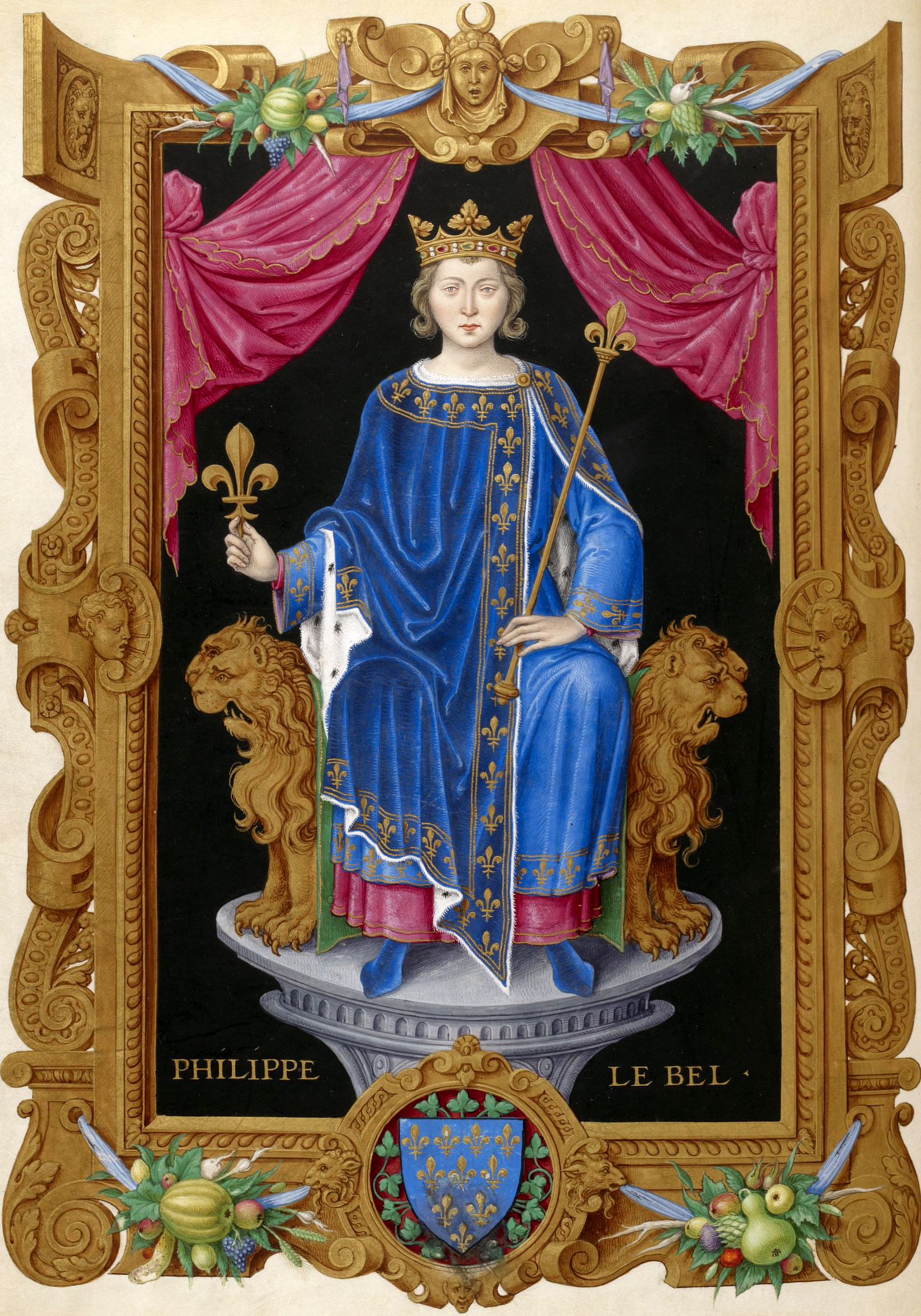
Called "the Fair" for his striking looks, not his character. Deeply in debt to the Templars, he engineered their destruction through his agent Guillaume de Nogaret. He died of a stroke eight months after Molay's execution — fulfilling, some said, the Grand Master's curse.
Jacques de Molay
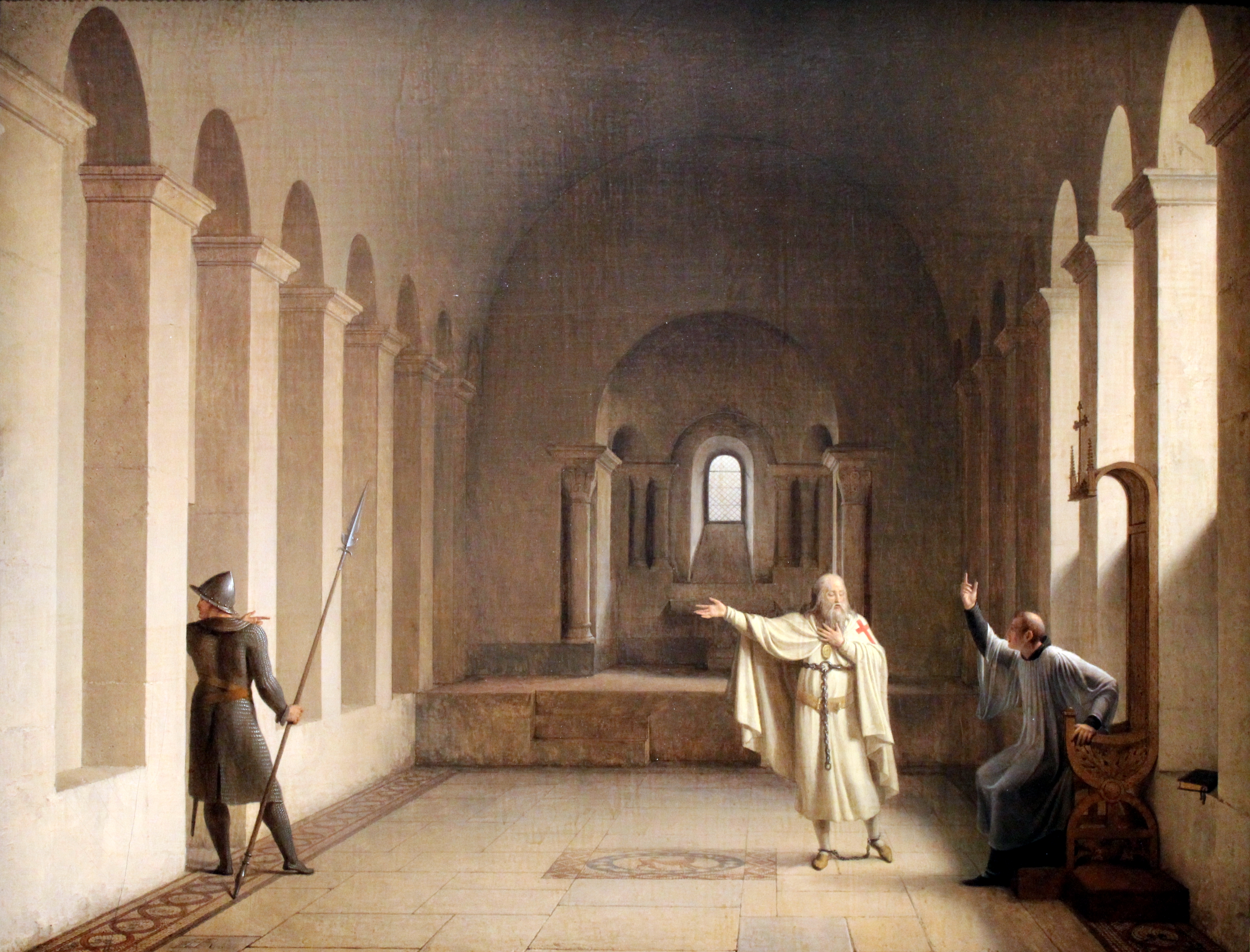
The 23rd and final Grand Master. He confessed under torture, then dramatically retracted before a crowd at Notre-Dame, declaring the order innocent. Burned at the stake on March 18, 1314, he cursed his persecutors with his dying breath.
The Verdict Arrives
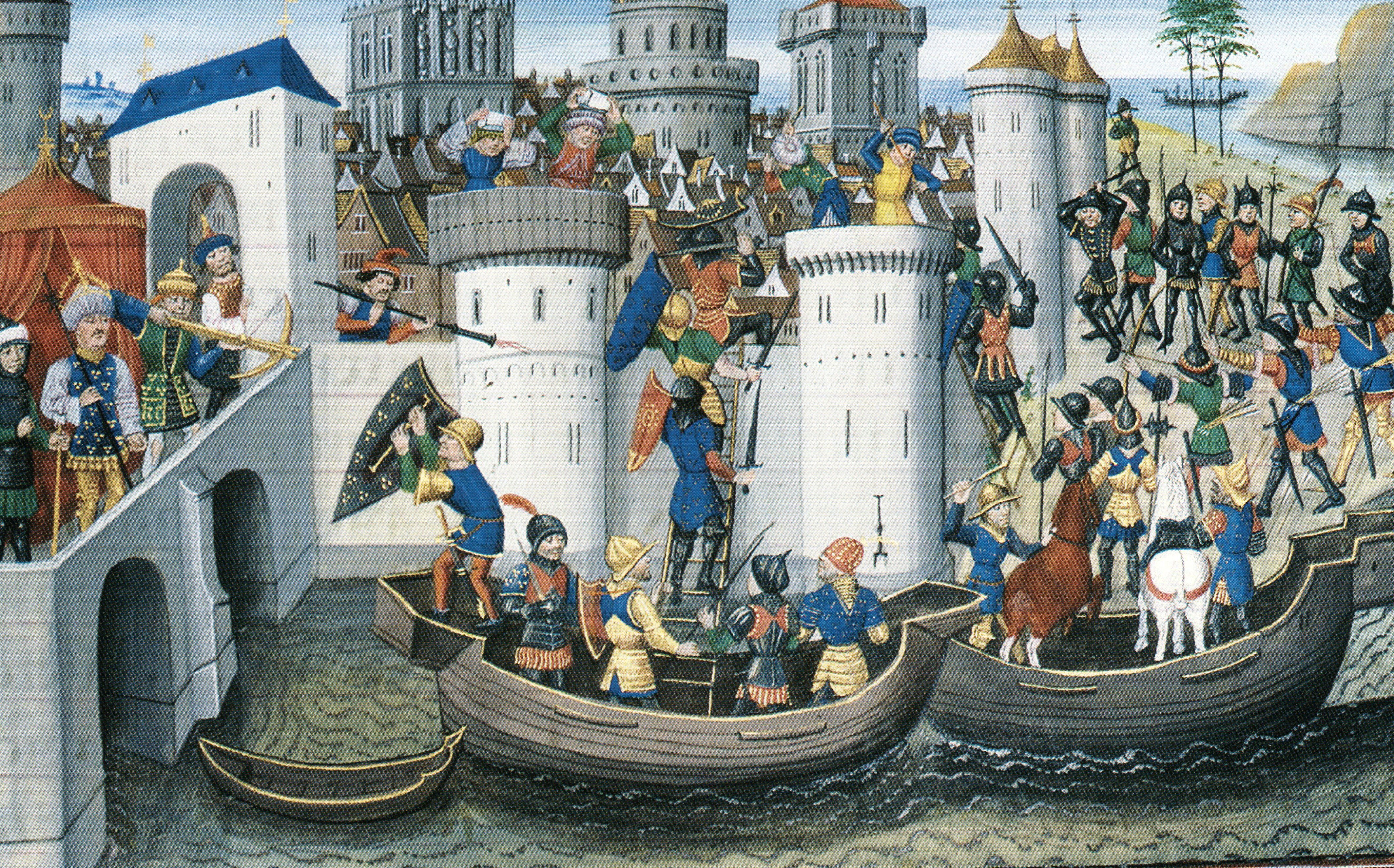
They guarded pilgrims. They fought battles that should have been unwinnable. They invented banking. They built fortresses that still stand. And they were destroyed — not by their enemies on the battlefield, but by a king who owed them money and a pope who lacked the courage to stop him.
In 2001, a piece of parchment was found in the Vatican archives proving what Molay had said from the flames: the Templars were innocent.
Get the Full Book
The complete story of the warrior monks — from the Temple Mount to the stake, from the Crusades to the curse.