
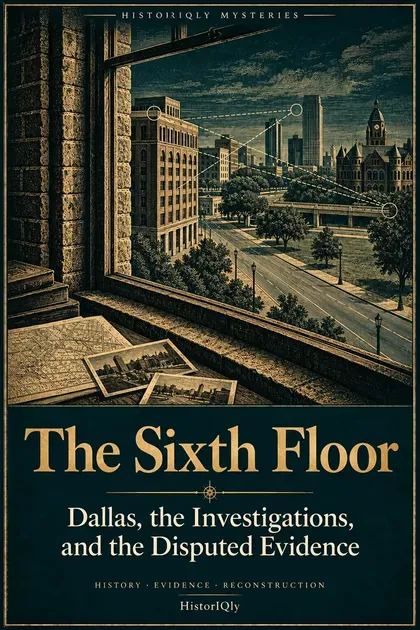
Get the full EPUB
Drop your email and the EPUB downloads straight to your device. We'll also ping you when the next case file lands — unsubscribe any time.
Your email is already on file — enjoy the read.
Download the EPUBAt 12:30 p.m. on November 22, 1963, three rifle shots echoed through Dealey Plaza in Dallas, Texas. President John F. Kennedy was dead within the hour. Within two days, the suspected assassin was also dead — murdered on live television.
The evidence against Oswald, the later conspiracy finding, and the scientific review that challenged its basis.
3
The Warren Commission attributed three shots to Oswald. Exact timing depends on the reconstruction; the HSCA's additional-shot evidence was later challenged.
265 ft
From the sixth-floor window to the presidential limousine at the moment of the fatal shot.
Records
A large public archive, with further releases in 2025 and January 2026. Publication dates and declassification dates are not always the same.
4
Warren Commission, Shaw trial, HSCA and ARRB: different proceedings with different mandates. The ARRB pursued disclosure, not a verdict on the assassination.
The Evidence
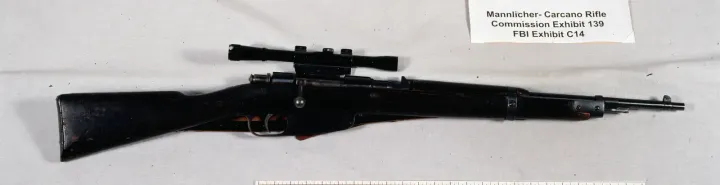
The Murder Weapon
A 6.5mm Mannlicher-Carcano rifle, serial number C2766, purchased by mail order from Klein's Sporting Goods in Chicago under the alias 'A. Hidell.' Oswald's palm print was found on the barrel. Three spent shell casings lay on the floor beside the sixth-floor window.
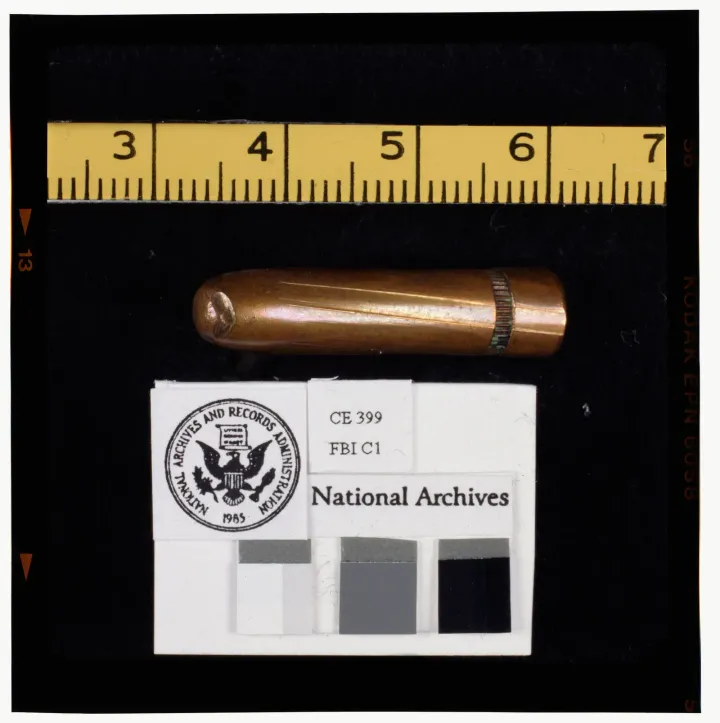
The Single Bullet
Commission Exhibit 399 was recovered in the Parkland stretcher area and matched to the rifle. Its condition and custody became disputed parts of the proposed common-bullet path through Kennedy and Connally.
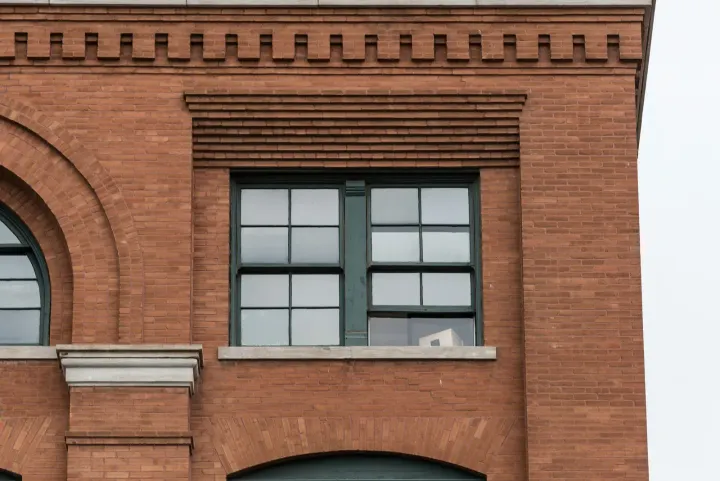
The Sniper's Nest
Boxes near the southeast window formed the firing position identified by investigators. Films, measurements and reconstruction addressed the view toward Elm Street, including the changing obstruction from a tree.
The Assassination That Changed America
The Defector
Oswald travels to the Soviet Union, settles in Minsk and marries Marina. They return to the United States in 1962 after embassy arrangements; the FBI interviews him after his return.
12:30 PM
Three shots ring out as the presidential motorcade passes through Dealey Plaza. Kennedy is struck in the back and the head. Governor Connally is hit. The limousine races to Parkland Memorial Hospital.
Death
Kennedy is pronounced dead at Parkland at 1 p.m. Johnson takes the oath aboard Air Force One later, at 2:38 p.m., with Jacqueline Kennedy and Lady Bird present.
Silenced
Oswald is arrested at the Texas Theatre after Officer J.D. Tippit is killed in Oak Cliff. Two days later, Ruby shoots Oswald during a jail transfer.
The Warren Report
The Warren Commission concludes that Oswald fired the fatal shots and finds no evidence of conspiracy. Critics examine its methods and supporting volumes.
Probable Conspiracy
The HSCA finds probable conspiracy, relying chiefly on disputed acoustic evidence. A National Research Council review in 1982 rejects the alleged gunshot identification.
Key Figures
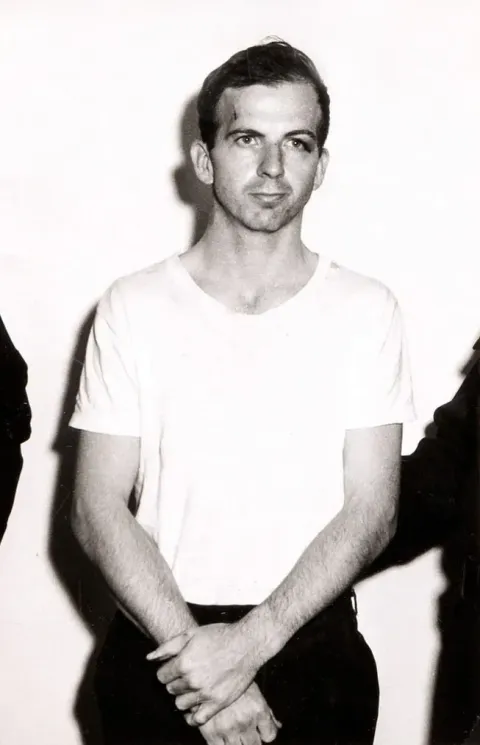
Lee Harvey Oswald
Former Marine, Soviet defector, self-proclaimed Marxist. Employed at the Texas School Book Depository. The Warren Commission named him the lone assassin. He denied the killings and called himself a patsy before reporters. Ruby killed him before trial.
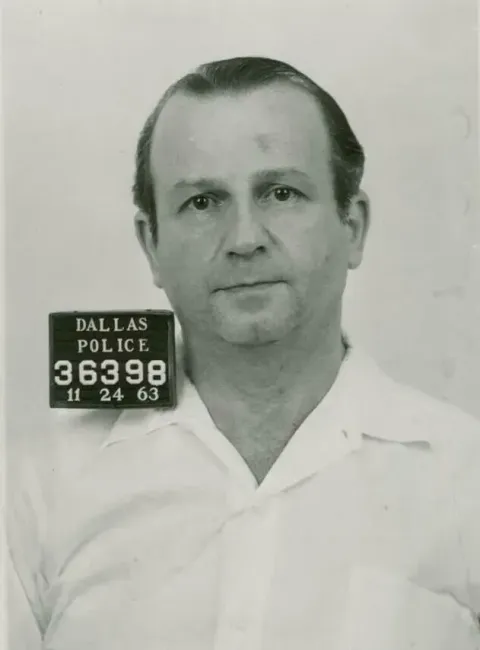
Jack Ruby
Dallas nightclub owner whose police friendships and criminal contacts were investigated. He killed Oswald in police headquarters. His conviction was reversed on appeal in 1966; he died in 1967 before retrial.
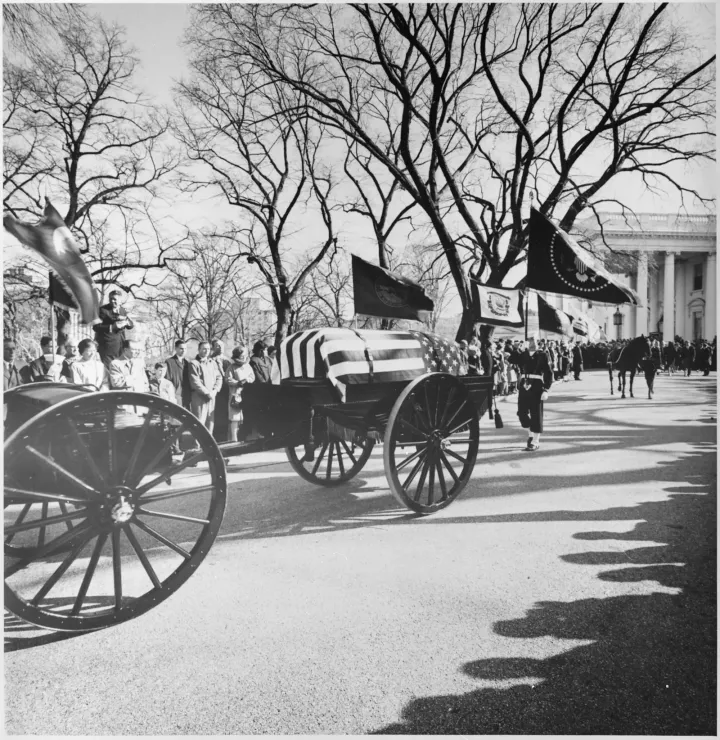
The Shadows That Remain
The Warren Commission and HSCA agreed that Oswald fired the shots that struck Kennedy. Their difference over an additional gunman depended heavily on acoustic evidence subsequently rejected by the National Research Council panel.
The National Archives has published a large collection, with further releases in 2025 and January 2026. The remaining questions require specific evidence, not an assumption that every unreleased file conceals a solution.
Get the Full Book
From Dealey Plaza to the Warren Report and later reviews, follow the evidence, the disagreements and the expanding public archive.