
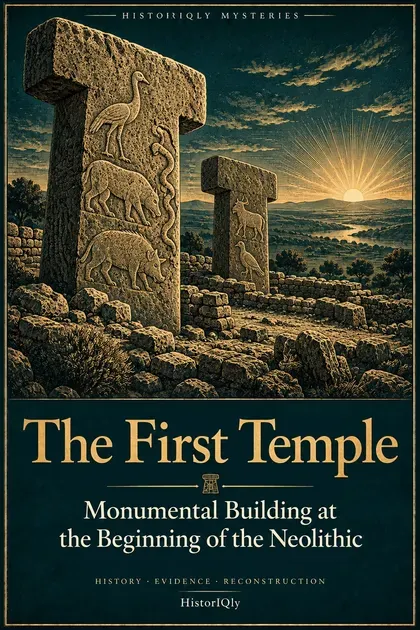
Get the full EPUB
Drop your email and the EPUB downloads straight to your device. We'll also ping you when the next case file lands — unsubscribe any time.
Your email is already on file — enjoy the read.
Download the EPUBAt Göbekli Tepe in southeastern Turkey, early Neolithic communities raised monumental stone buildings during the long transition toward farming. Excavations have changed our understanding of their cooperation, food processing, and settlement. The remains require a more complex account than a temple built by people with no domestic life.
The site is much older than Stonehenge and the Egyptian pyramids. Its functions and development remain subjects of research. Interpretations have changed as more of the settlement has been excavated.
9600 BCE
Built centuries before the first farm. Klaus Schmidt's verdict: "First came the temple, then the city." Religion drove agriculture — not the other way around.
200+
T-shaped monoliths, some weighing 50 tons. Most still buried.
20+
Circular stone rings detected by geophysical survey. Only four fully excavated.
10,000 yrs
Deliberately buried around 8000 BCE. Rediscovered in 1994 by Klaus Schmidt.
The Evidence
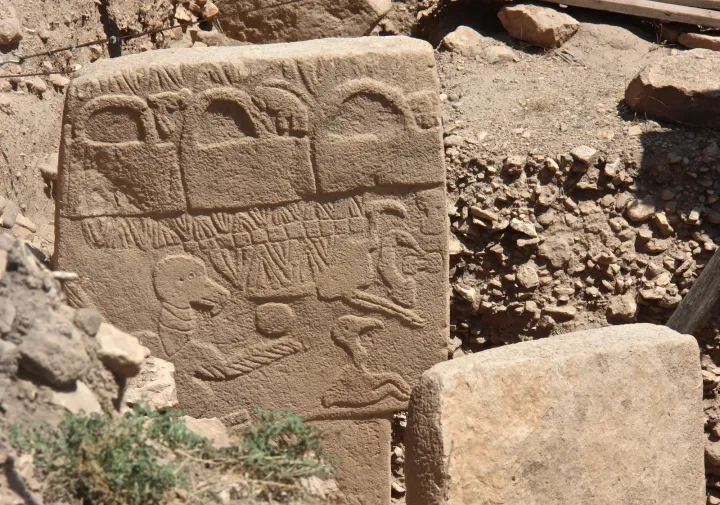
The Vulture Stone
The most densely carved pillar at the site. A vulture clutches a round object — a sun, an egg, or a severed head. Below it, a scorpion rears its tail. Below that, a headless human figure stands in crude profile. Above them all, three mysterious "handbag" shapes hang in a row. Some researchers believe this 11,000-year-old stone encodes a solar calendar.
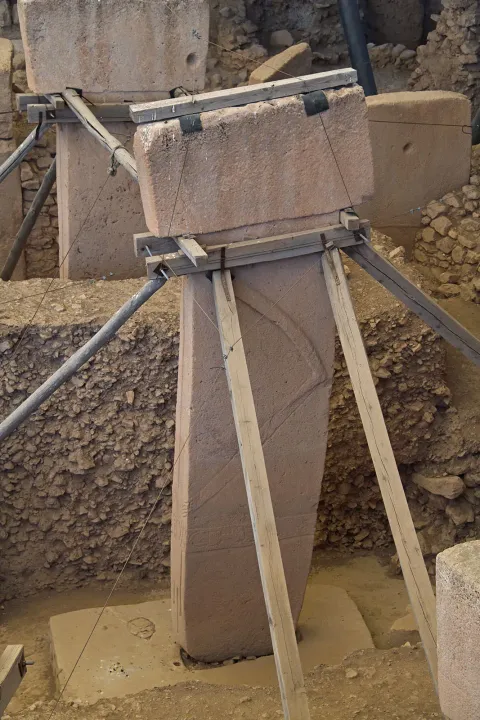
Stone Ancestors
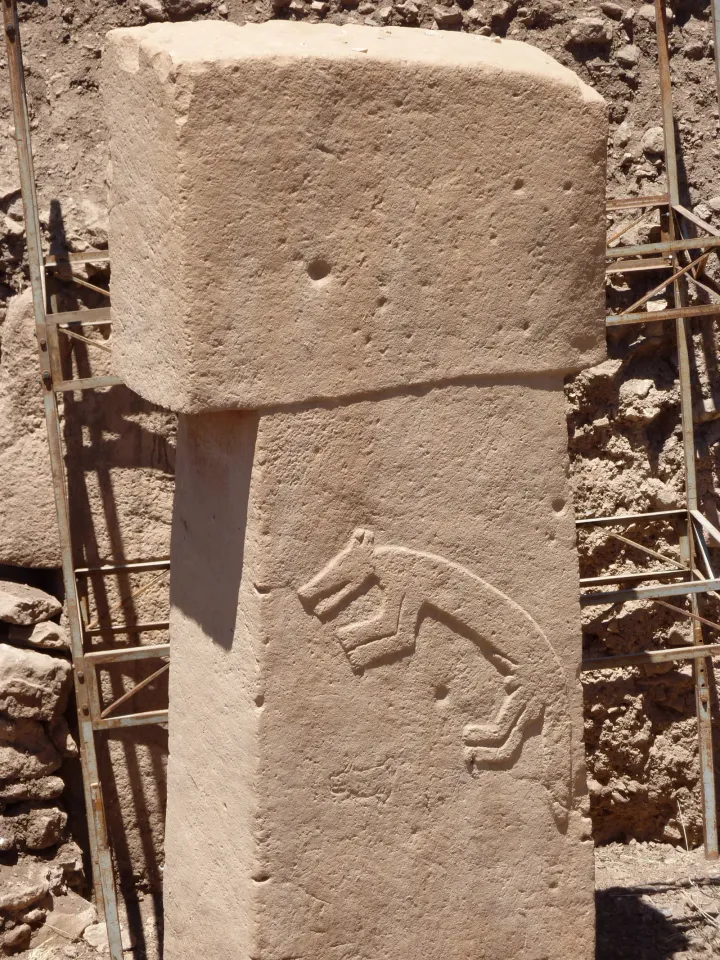
The central pillars stand 5.5 metres tall. Their T-shape is not decorative — it represents a stylised human form. Arms run down the sides in low relief. Hands reach toward the belly. Belts are carved at the waist. Fox-skin loincloths hang from the belt. The pillars are people — or gods, or ancestors, or something that defied easy categorisation eleven millennia ago.
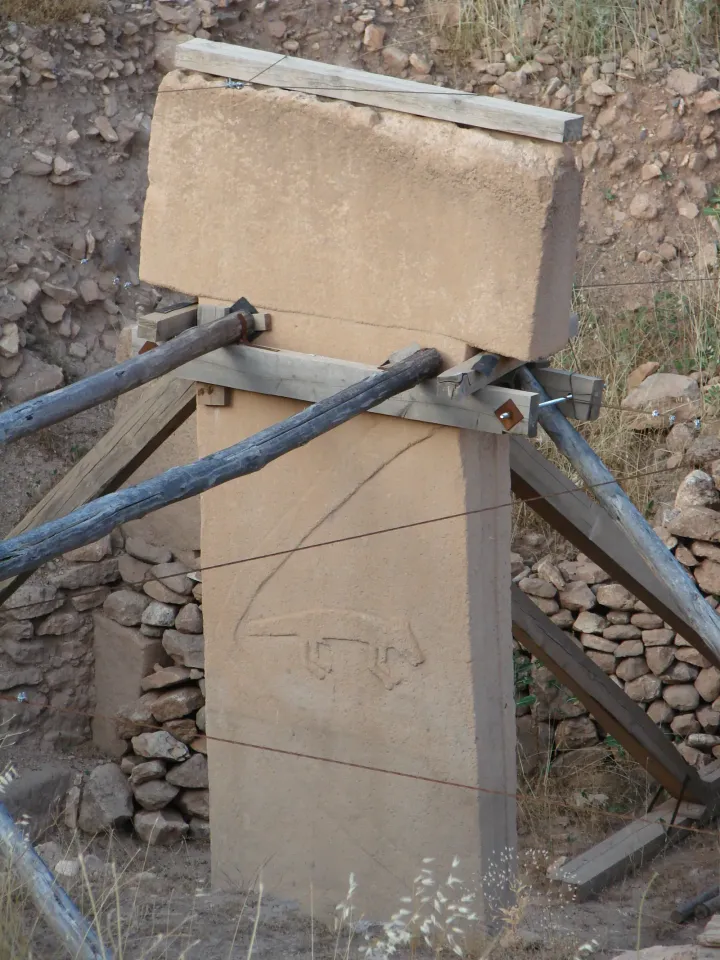
The Animal Code
Each enclosure is dominated by a different predator: snakes in A, foxes in B, boars in C, vultures in D. The carved animals are overwhelmingly dangerous and wild — not the gazelle and aurochs the builders ate. Clan markers? Cosmological symbols? A language carved in stone that no one alive can read.
Before Everything
Construction Begins
Hunter-gatherers quarry massive limestone pillars and erect them in circular enclosures on a hilltop near Şanlıurfa. Enclosure D — the oldest — features pillars weighing up to 20 tons, carved with vultures, foxes, and scorpions.
Agriculture Begins
The first domesticated einkorn wheat appears at Karacadağ — a mountain just 30 km from Göbekli Tepe. The oldest temple and the oldest farm, side by side. Coincidence or cause?
The Burial
The enclosures are deliberately filled with earth, stone, animal bones, and thousands of discarded flint tools. The site is sealed and hidden. No one returns for ten thousand years.
Mistaken Identity
Archaeologist Peter Benedict surveys the site and mistakes the protruding pillar tops for Islamic gravestones. The site is catalogued as a "small cemetery" and forgotten for three decades.
Schmidt Arrives
German archaeologist Klaus Schmidt, who had previously worked at the flooded site of Nevalı Çori, recognises the stones for what they are. "Within the first minute," he would later say, "I knew I would spend the rest of my life working here."
UNESCO Recognition
Göbekli Tepe is designated a World Heritage Site — "one of the first manifestations of human-made monumental architecture." Schmidt's dream, realised four years after his death.
Key Figures
Klaus Schmidt
German archaeologist who recognised the site's significance in 1994 and led excavations until his death in 2014. His famous verdict — "First came the temple, then the city" — rewrote the origin story of civilisation.
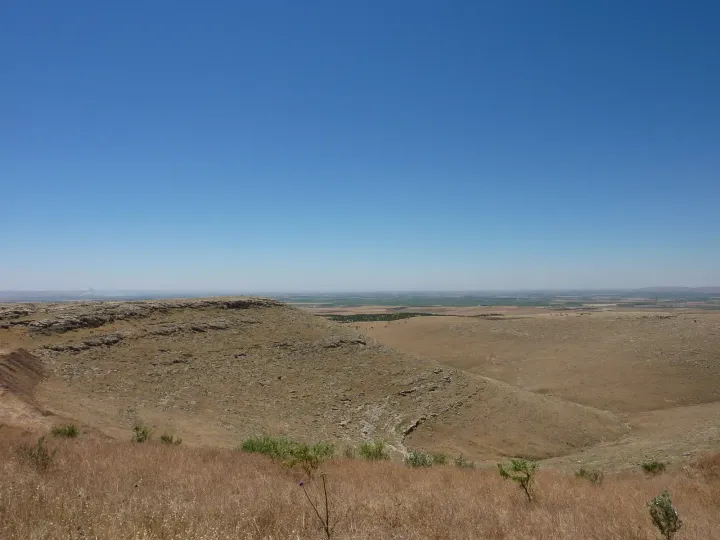
The Harran Plain
The arid steppe of southeastern Anatolia, where Göbekli Tepe overlooks the headwaters of the Euphrates. Eleven thousand years ago, this landscape was greener, wetter, and teeming with the wild game that fed the temple builders.
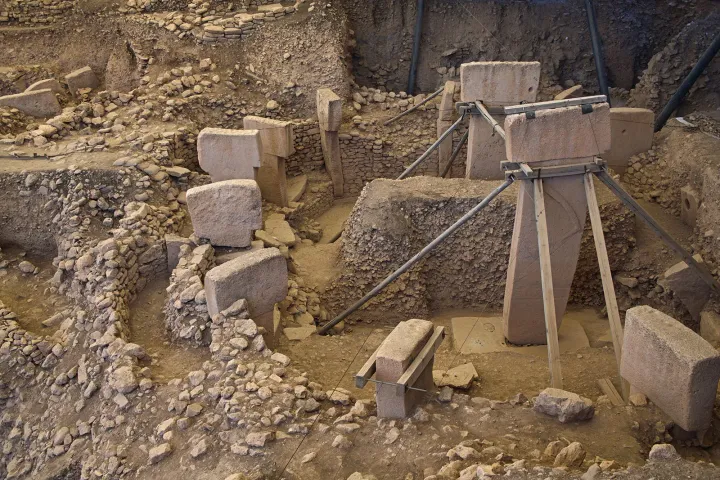
First Came the Temple
For a century, we believed agriculture gave rise to civilisation. Göbekli Tepe suggests the opposite: belief built the world.
And the story is barely begun. Two hundred pillars are still in the ground. Sixteen enclosures remain unexcavated. At the current pace, full excavation will take another 150 years.
Get the Full Book
The complete story of the hill, the archaeologist, the buried temple, and the question that changed everything.