
The Gladiator's Thumb
How a Painting Rewrote Roman History
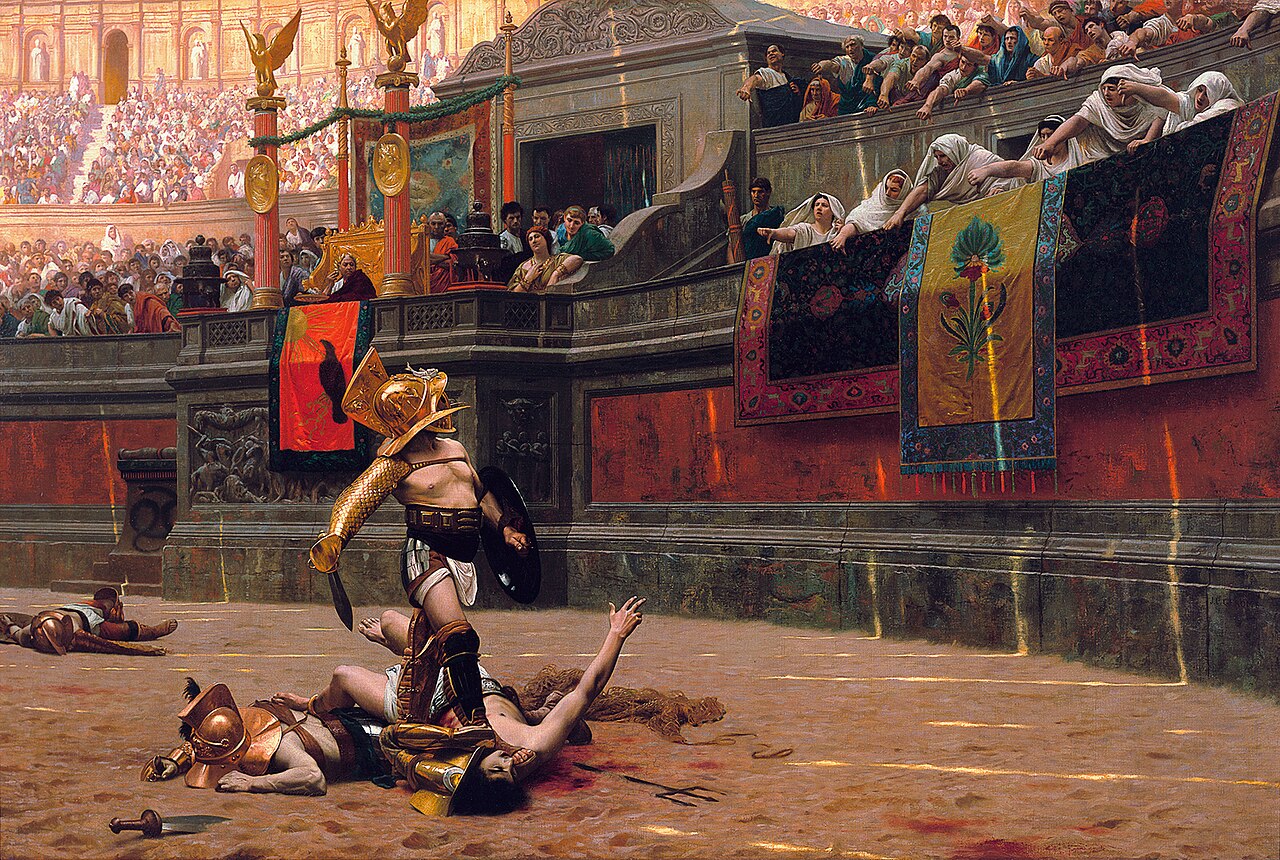
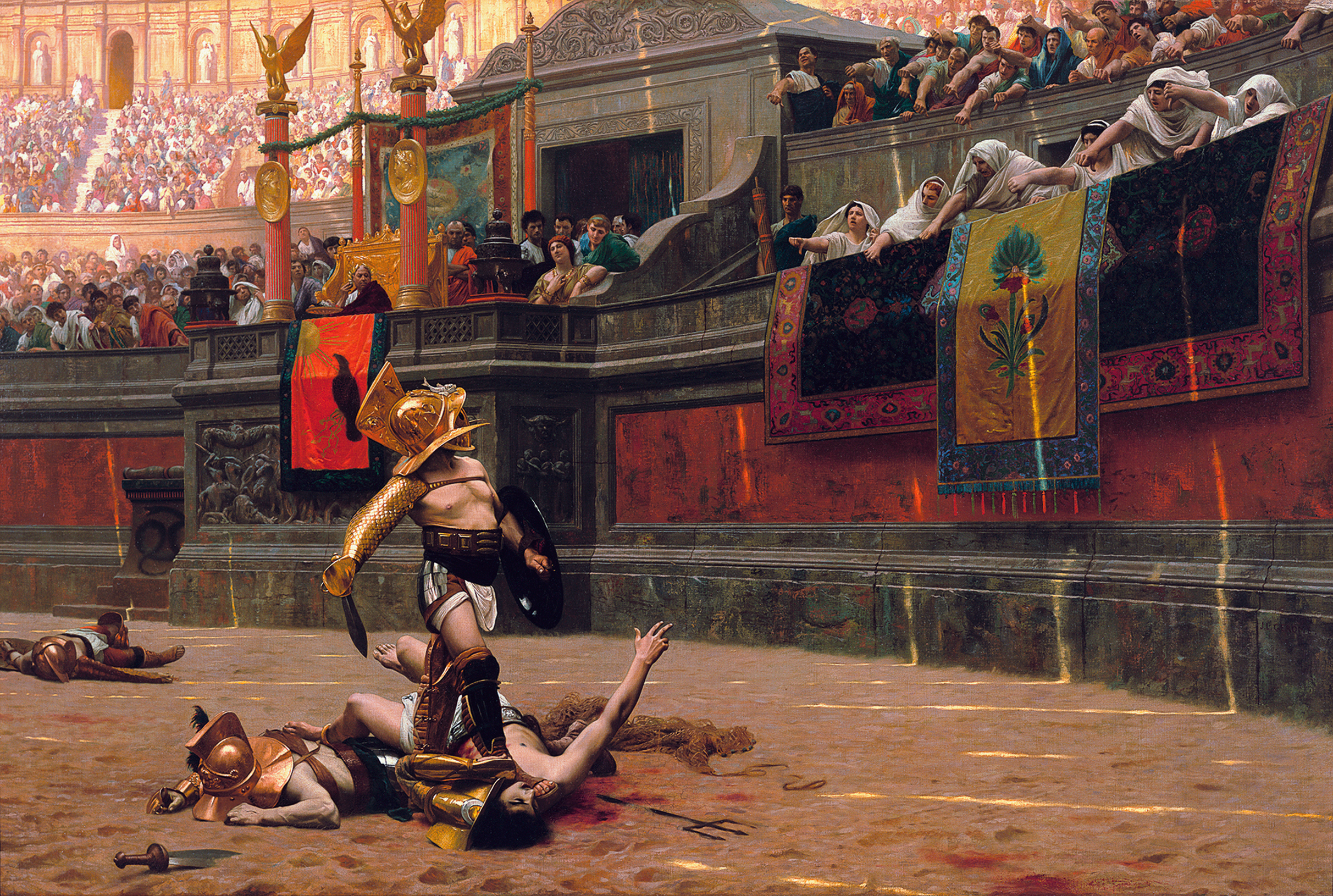
In 2000, Ridley Scott saw a postcard of a painting and decided to make Gladiator. The painting was Jean-Léon Gérôme's 1872 masterpiece Pollice Verso — Vestals in white robes, thumbs turned down, condemning a man to death. It won Scott the Best Picture Oscar. It also planted a historical myth seen by over 200 million people.
The Roman crowd never used a thumbs-down to signal death. Not once, in any surviving text, mosaic, fresco, or stone relief, does a downward thumb appear as a death signal. The gesture was invented by a French academic painter — and the real Roman death gesture was almost certainly something else entirely.
1872
Jean-Léon Gérôme completes Pollice Verso. The painting depicts Vestal Virgins with thumbs turned downward condemning a gladiator. It is purchased for 80,000 francs by an American magnate and exhibited in New York. Within a generation the image is the world's definitive picture of Roman cruelty.
~20%
Per bout in the early Imperial period. Hollywood's every-fight-ends-in-death image is wrong. Gladiators were expensive professional athletes. Killing one unnecessarily was an economic loss.
5
Latin texts describe a thumb gesture at the games. None specifies the direction. The word used — verso — means only "turned." Every direction is the scholars' inference.
0
Surviving ancient images clearly showing thumbs-down as a death signal. Thousands of Roman gladiatorial mosaics, frescoes, and reliefs survive. Not one shows the Gérôme gesture.
The Evidence
The Painting
Jean-Léon Gérôme's Pollice Verso (1872) is the most influential historical painting about Roman gladiatorial games ever made — and the source of the thumbs-down myth. Gérôme was obsessively accurate: the armor, architecture, and Vestal Virgin positioning are all archaeologically correct. His thumb gesture, however, has no ancient basis. He may have misread Juvenal's "verso pollice" as meaning downward when it simply means "turned." A 26-page scholarly rebuttal appeared in 1879. Nobody read it.
The Absent Gesture
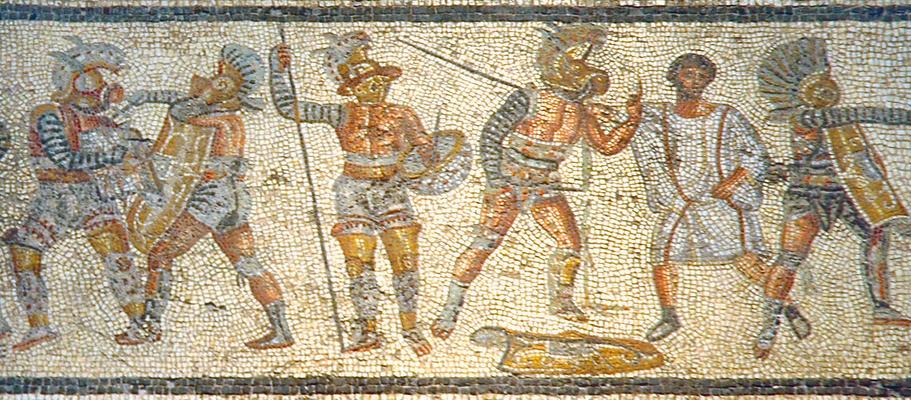
Discovered in 1913 at a Roman villa near Zliten in Libya, the Zliten Mosaic is one of the most detailed surviving documents of Roman gladiatorial combat. It depicts named fighters, referees, animal hunts, and arena officials in extraordinary detail. A referee is shown restraining a victorious fighter while both look toward a source of judgment. But the crowd's thumb gesture — the one Gérôme painted so dramatically — is absent. In thousands of surviving Roman gladiatorial images, not one clearly depicts a downward thumb as a death signal.
The Score Sheet
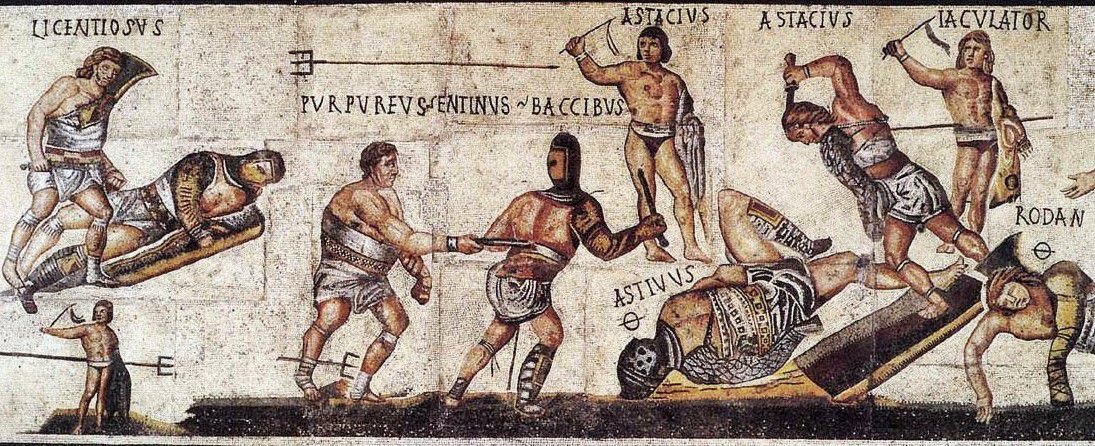
The walls of Pompeii — sealed by Vesuvius in 79 AD — are covered with gladiatorial graffiti recording fight outcomes in numerical codes: V for vicit (won), M for missus (released with mercy), and P for periit (died). These records confirm that mercy — the missio — was a routine outcome, not an exception. Gladiatorial combat was a professional sport with a complex system for sparing lives. The gesture that decided those outcomes was real. Its precise form was apparently so obvious to Romans that no one ever thought to draw it.
The Invention of a Gesture
The First Games
Three pairs of gladiators fight at the Forum Boarium in Rome as part of the funeral games for Brutus Pera — a munus, or duty owed to the dead. The gladiatorial tradition is born as a religious obligation, not a bloodsport.
The Colosseum
Emperor Titus inaugurates the Colosseum with 100 days of games. An estimated 9,000 animals are killed. The arena holds 50,000–80,000 spectators. The thumb gesture is in use — and apparently so well understood by everyone present that no one records what it looks like.
Juvenal's "Verso Pollice"
Roman satirist Juvenal writes the phrase verso pollice — "with turned thumb" — in Satire 3. It is the earliest surviving written reference to a thumb gesture at the arena. He says the thumb is turned. He does not say which way. This ambiguity will mislead artists and historians for nineteen centuries.
The Last Games
Christian monk Telemachus enters the Colosseum to stop a gladiatorial bout and is stoned to death by the crowd. Emperor Honorius declares him a martyr and formally abolishes gladiatorial games. The gesture disappears with them.
Gérôme's Error
Jean-Léon Gérôme completes Pollice Verso, depicting Vestal Virgins with thumbs turned downward. The painting is purchased by Alexander Turney Stewart and exhibited in New York. A scholarly rebuttal in 1879 is ignored. The image enters Western visual culture as settled historical fact.
Gladiator
Ridley Scott's Gladiator is directly inspired by Gérôme's painting. It wins the Academy Award for Best Picture and is seen by 200+ million people globally. The thumbs-down death signal is entrenched for the 21st century.
Key Figures
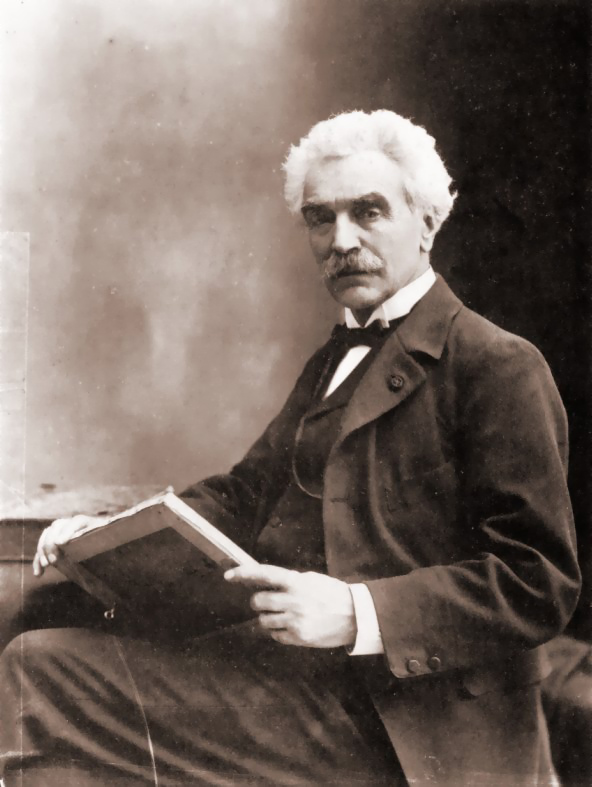
Jean-Léon Gérôme
Born 1824 in Vesoul, France. One of the most celebrated academic painters of the 19th century, famous for his obsessive historical accuracy. He visited Pompeii, studied gladiatorial armour in the Naples museum, and cast bronze figurines before painting a single gladiator. He got the armour exactly right. He got the thumb exactly wrong — and in doing so created the most consequential historical error in the history of Western art.
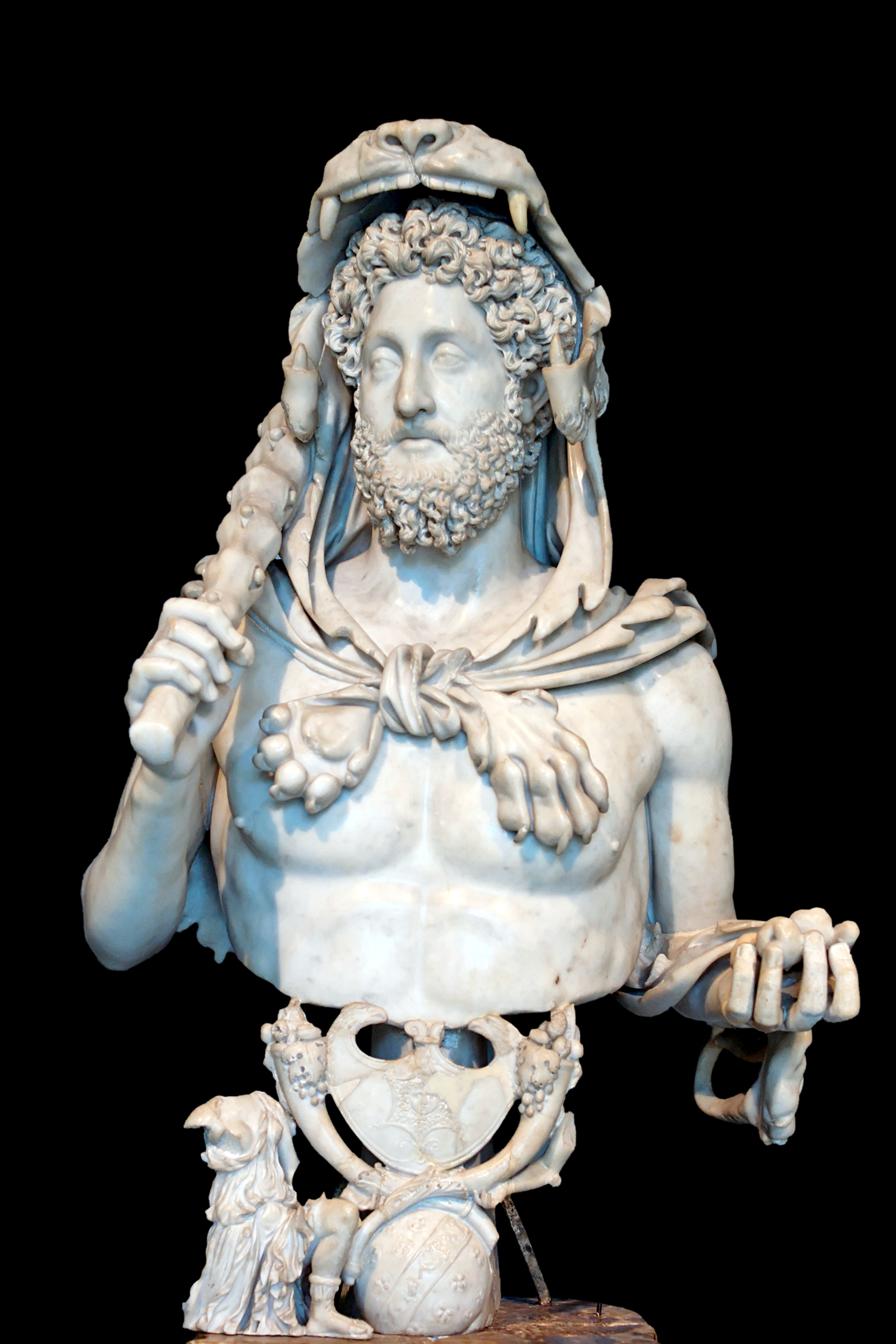
Commodus
Emperor of Rome 177–192 AD and the most infamous patron of gladiatorial games in Roman history. Commodus uniquely fought in the arena himself — as the incarnation of Hercules — deeply scandalising Roman society. As editor at the Colosseum he wielded the life-and-death decision as personal political theatre. He is the implied presence in Gérôme's painting and the explicit villain in Scott's Gladiator, where Joaquin Phoenix's portrayal introduced the false thumb gesture to a new generation of 200 million viewers.
The Gesture Was Real. The Direction Was Wrong.
Anthony Corbeill's landmark 1997 scholarship reaches a conclusion that no Hollywood producer would willingly use: the Roman death signal was almost certainly an extended thumb — what we call thumbs-up. The mercy signal was a thumb pressed into the closed fist — the sheathed sword, the weapon put away.
Gérôme had it exactly backwards. And because his painting was so beautiful and so apparently authoritative, nobody noticed — or nobody who noticed was listened to — for a hundred and fifty years.
The myth persists because images move faster than corrections. But the truth is stranger and more interesting than the myth.
Get the Full Book
The complete story of the arena, the Latin sources, the obsessive painter, and the gesture that historians finally decoded.