Get the full EPUB
Drop your email and the EPUB downloads straight to your device. We'll also ping you when the next case file lands — unsubscribe any time.
Your email is already on file — enjoy the read.
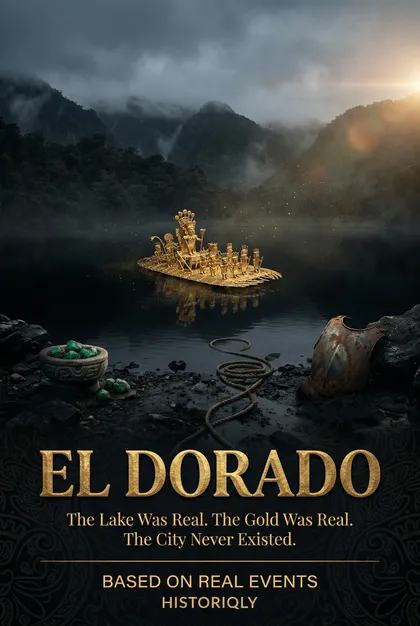
Download the EPUBIt was never a city. It was never a kingdom. It was a man — a Muisca chief who coated himself in gold dust, boarded a raft on a sacred lake, and washed the gold into the water as an offering to the gods. But the Spanish heard "gold" and imagined something else entirely. For three centuries, the legend of El Dorado sent army after army into the jungles of South America.
They were searching for a city paved in gold. What they found was starvation, madness, and death.
Lake Guatavita
A perfectly circular crater lake at 3,000m in the Colombian Andes — where the Muisca chief was coated in gold dust and dove into sacred waters. The ceremony that launched three centuries of madness.
191,000 pesos
Fine gold taken by Quesada from the Muisca — a fortune, but far less than the legend promised.
80 of 220
Spaniards who survived — plus virtually none of the 4,000 indigenous porters.
His Head
Beheaded at Westminster in 1618 after his second failed expedition to find El Dorado.
The Evidence

Lake Guatavita
A perfectly circular crater lake at 3,000m elevation — 500 metres across and 30 metres deep. Multiple attempts to drain it over four centuries recovered some gold, but the vast majority remains sealed in the sediment. Protected by Colombian law since 1965.
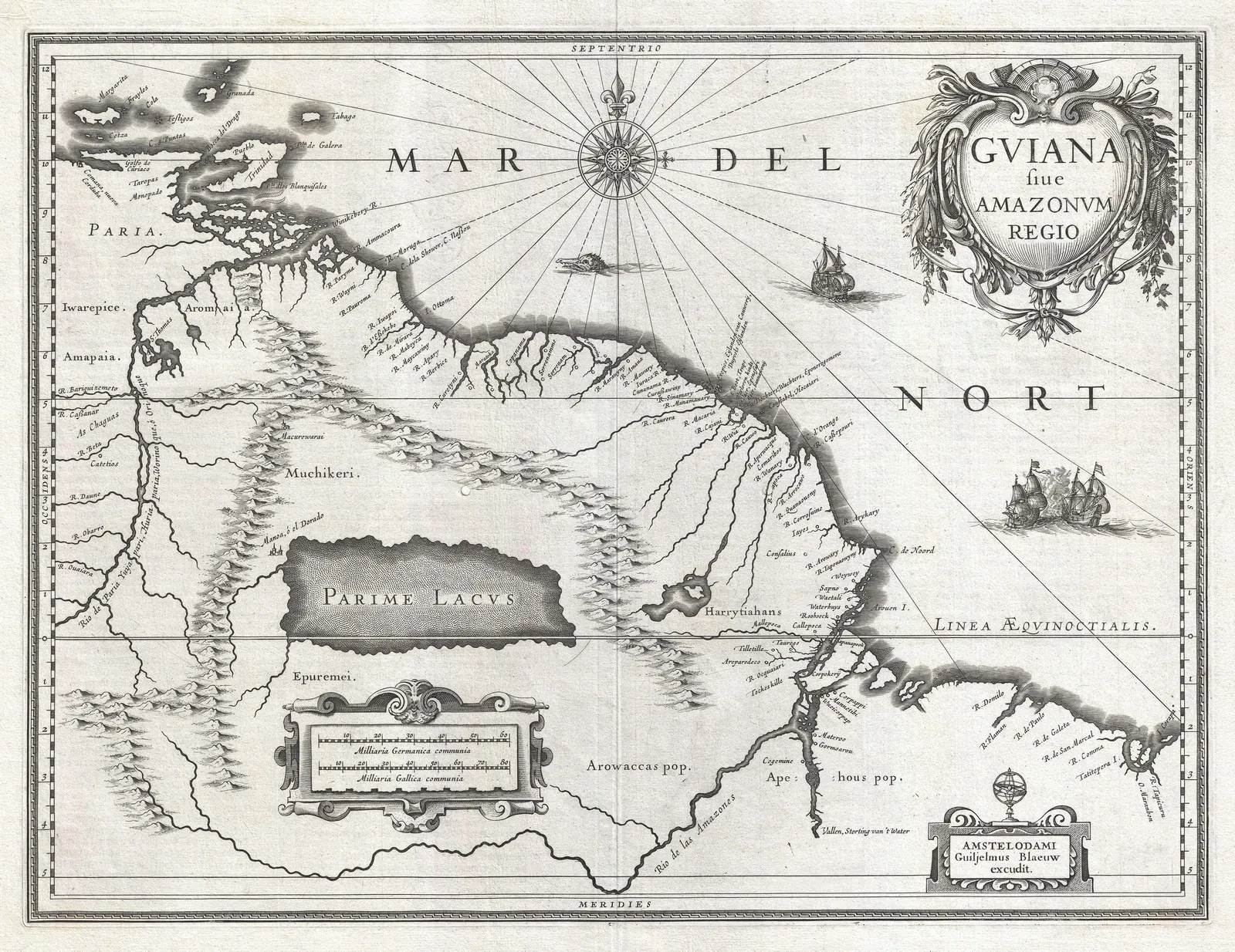
Lake Parime
A mythical inland sea that appeared on European maps for over two centuries — despite never existing. The golden city of Manoa was said to sit on its shores. Cartographers drew it with confident precision, conjuring geography from nothing.

The Tunjos
Small votive figurines cast in tumbaga by the lost-wax technique — created not as ornaments but as offerings to the gods. The Muisca made gold to give it away. The Spanish killed to possess it. The gap between those beliefs cost tens of thousands of lives.
Three Centuries of Obsession
The Conquest
Quesada reaches the Muisca highlands with 166 survivors out of 800. Conquers the Muisca, seizes 191,000 pesos of gold. Founds Bogotá. Three expeditions converge from three different directions.
Into the Amazon
Gonzalo Pizarro leads 220 Spaniards and 4,000 indigenous porters east from Quito. Orellana navigates the entire Amazon — 4,800 km. Virtually all porters die. El Dorado is not found.
The Wrath of God
Lope de Aguirre murders his commander, declares war on the Spanish Crown, kills 40–70 of his own men, murders his teenage daughter, and is shot and dismembered in Venezuela.
Raleigh's Quest
Sir Walter Raleigh sails 400 miles up the Orinoco. Finds no gold. Publishes a bestselling book about it anyway. Spends 13 years in the Tower of London.
The Final Price
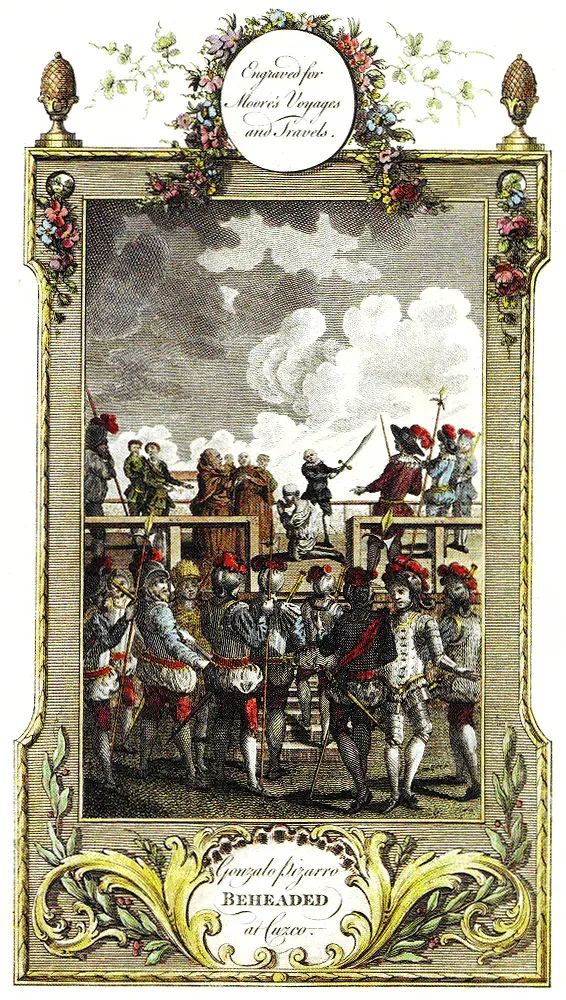
Raleigh's second expedition ends in disaster — his son killed, his lieutenant dead by suicide. Raleigh is beheaded at Westminster. "Strike, man, strike!"
Key Figures
Lope de Aguirre
Small, lame, and burning with resentment. The Basque conquistador who murdered his commander, declared war on King Philip II, killed dozens of his own men, and stabbed his own daughter. He called himself "the Wrath of God, Prince of Freedom." He died as he lived — violently.
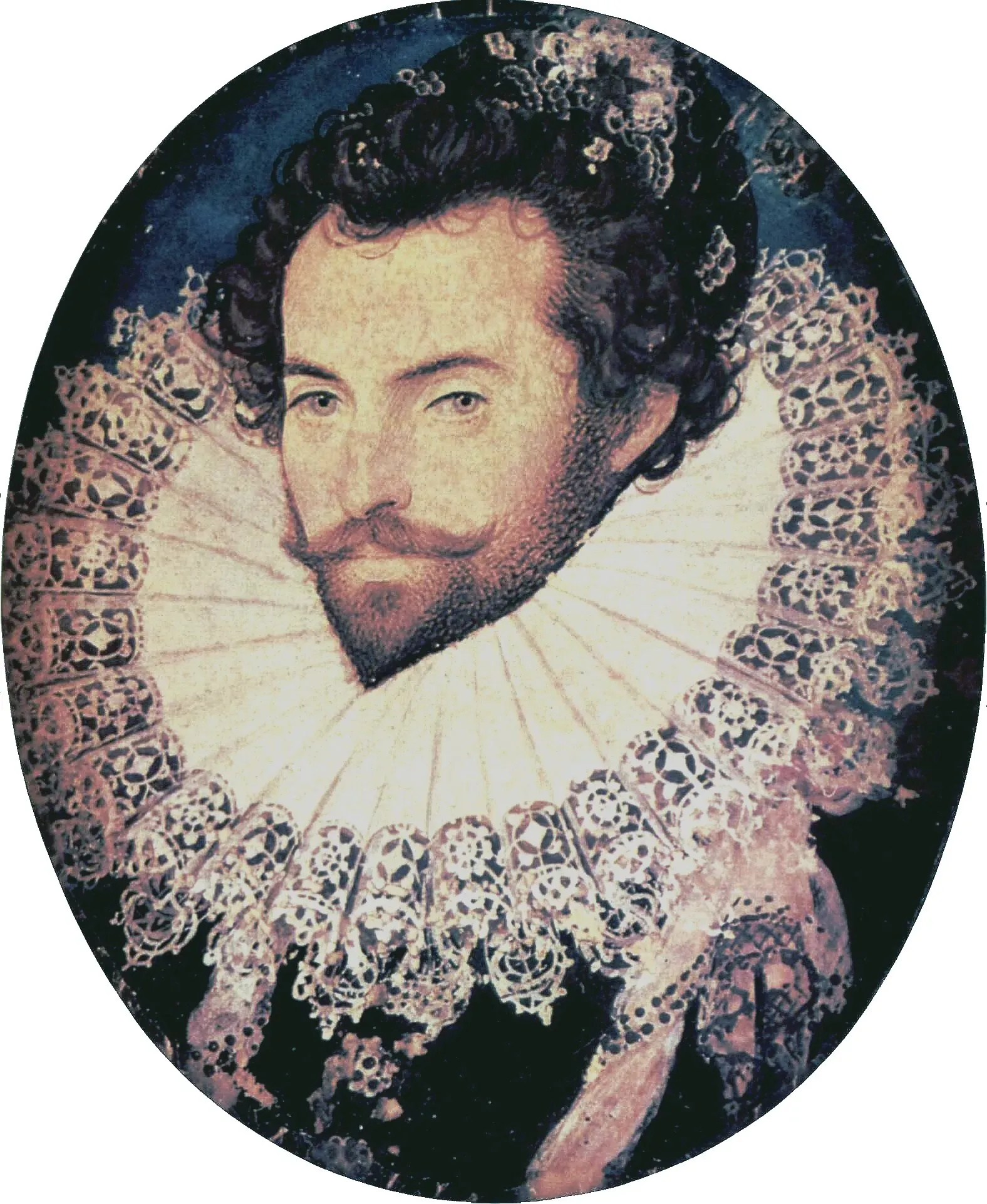
Sir Walter Raleigh
Courtier, poet, soldier, privateer. He wrote of Guiana as "a country that hath yet her maidenhead." He lost his son, his lieutenant, and his head to the pursuit of a golden city that never existed. His wife kept his embalmed head in a leather bag for 29 years.

The Lost Cities Were Real
LIDAR surveys have revealed what the conquistadors never found: vast networks of ancient settlements hidden beneath the Amazon canopy. The lost cities were real — just not golden. Built of earth, wood, and human ingenuity, they were destroyed so thoroughly by disease and conquest that for centuries, nobody knew they had existed.
El Dorado was never a city. It was a ceremony — a man on a raft, giving everything away. The gold was never the point.
Get the Full Book
The complete story of the myth that consumed an empire — from the sacred lake to the scaffold.