The Donation of Constantine
The Forgery That Ruled the Medieval World
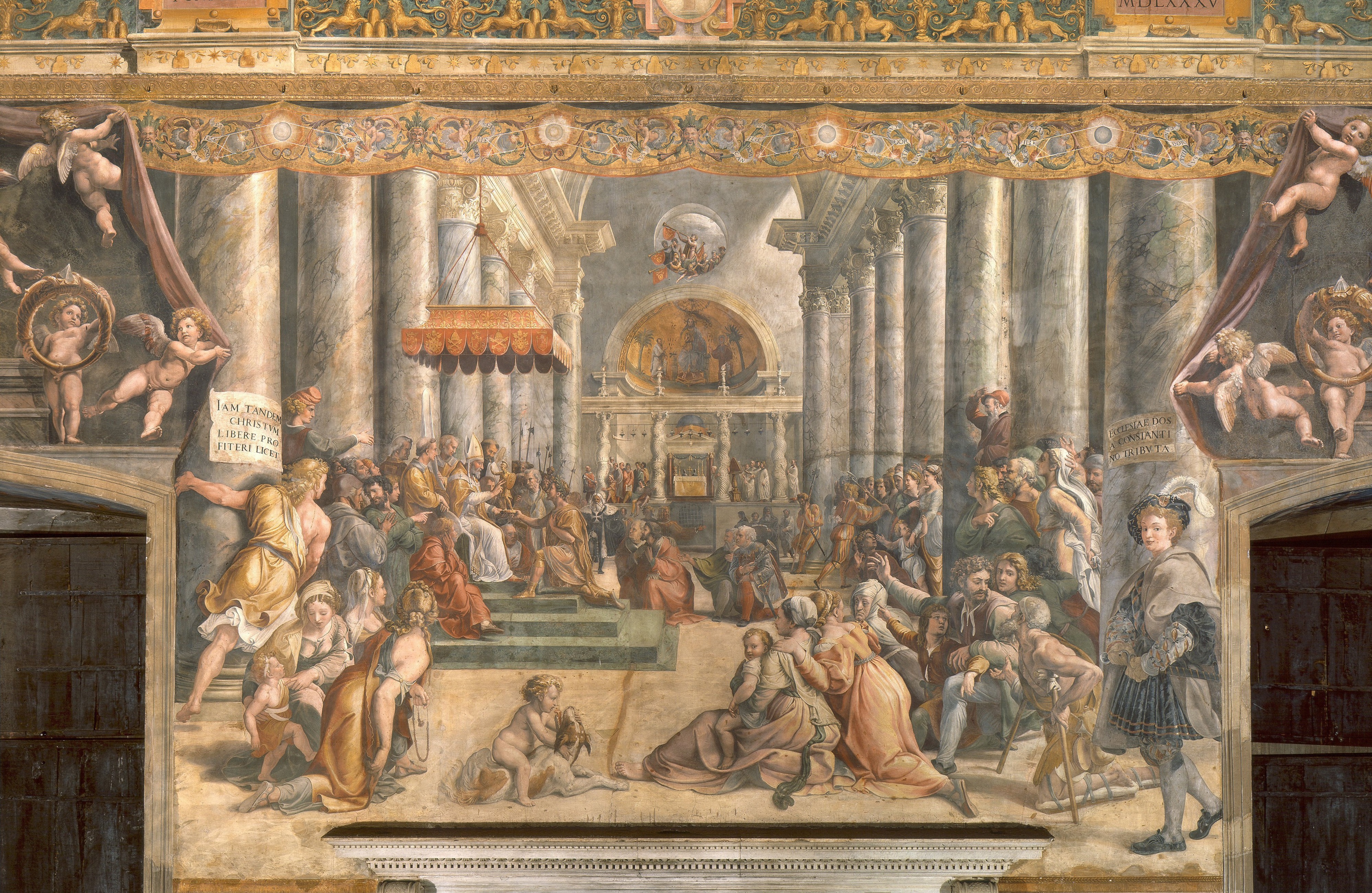
Sometime around 750 AD, an unknown forger in Rome wrote a document claiming that Emperor Constantine had surrendered the entire Western Roman Empire to the Pope. For the next seven hundred years, nobody who mattered questioned it.
It crowned emperors. It deposed them. It split Christianity in two. It was the most consequential forgery in the history of Western civilization — and it was completely fake.
c. 750
An unknown forger in the papal chancery writes a document in the voice of the Emperor Constantine, claiming the first Christian emperor had given "the city of Rome and all the provinces, districts and cities of Italy or of the western regions" to the papacy — four centuries after both men were dead.
700
Years the document was accepted as genuine and used to claim papal sovereignty over kings.
1440
Lorenzo Valla proves the forgery in 30,000 words of devastating philological analysis. The Inquisition investigates him for heresy.
1929
The Catholic Church formally acknowledges the forgery in the Lateran Treaty — 489 years after Valla's proof, 1,179 years after it was forged.
The Evidence
The Propaganda
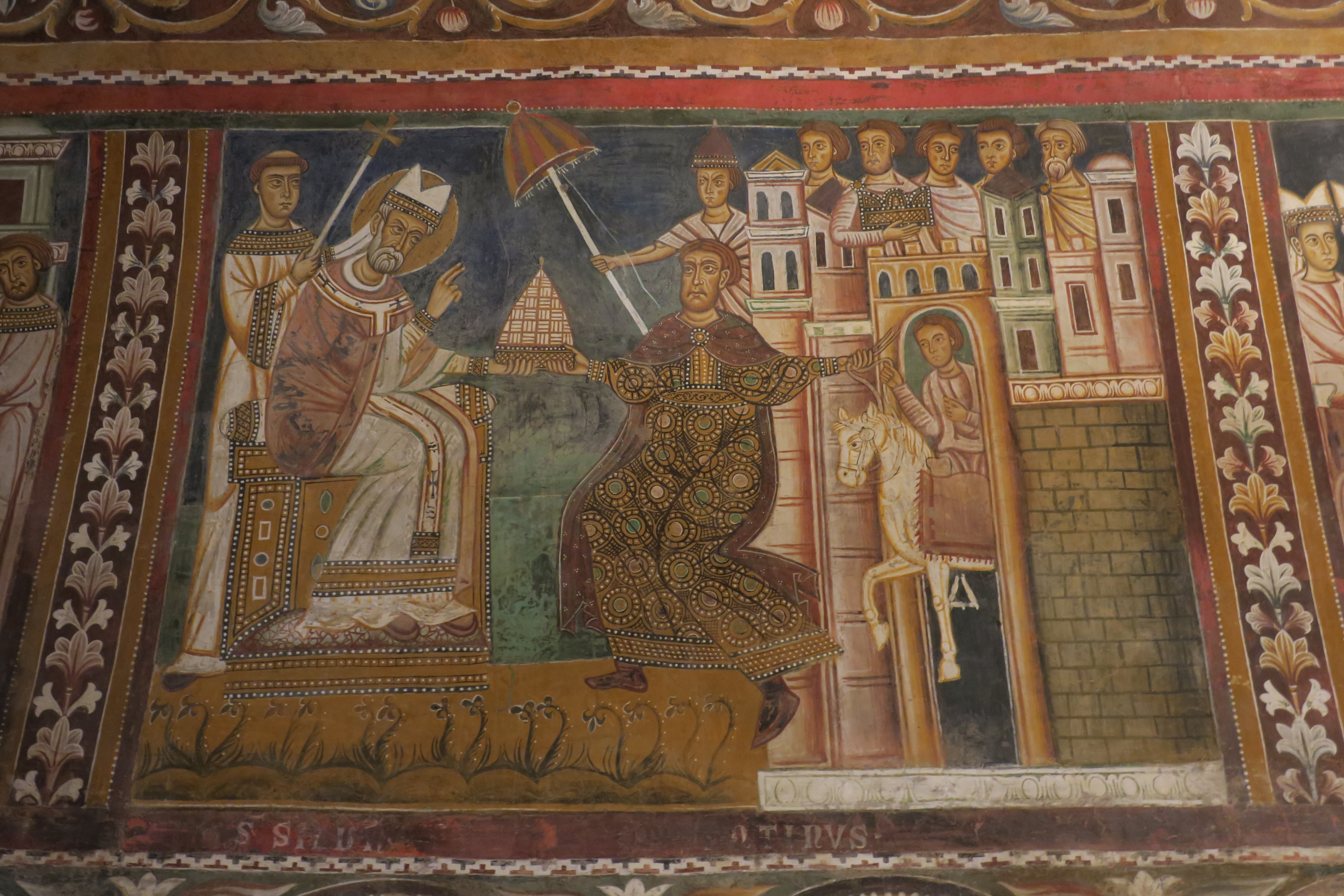
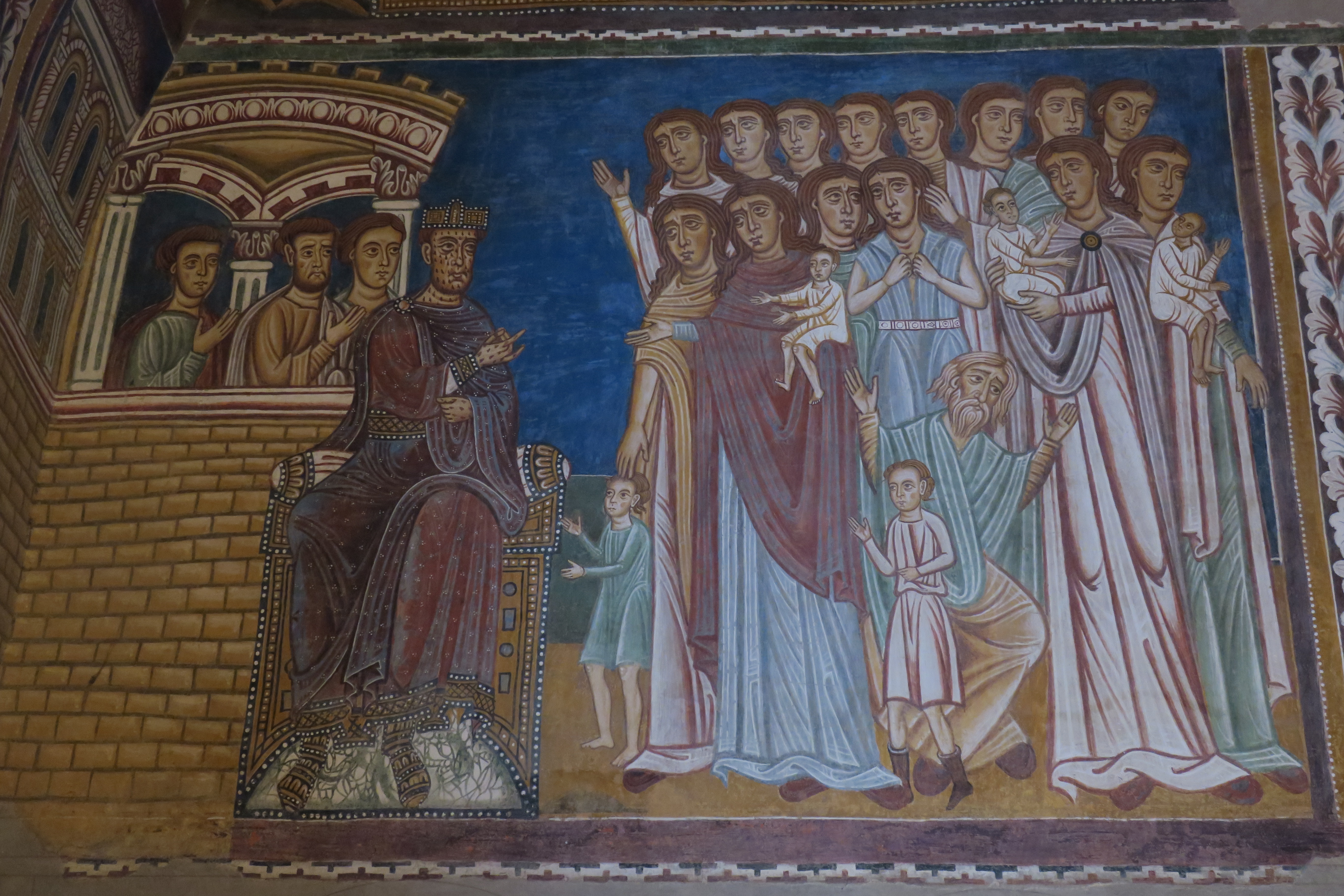
In 1246, Pope Innocent IV commissioned a fresco cycle in the Chapel of San Silvestro depicting Constantine handing the imperial tiara to Pope Sylvester I and — in the central scene — leading the pope's horse by the bridle through Rome. The frescoes were political weapons, painted during a war between the papacy and Holy Roman Emperor Frederick II, to make the Donation's claims visual and undeniable. They remain on the walls today.
The Walk to Canossa
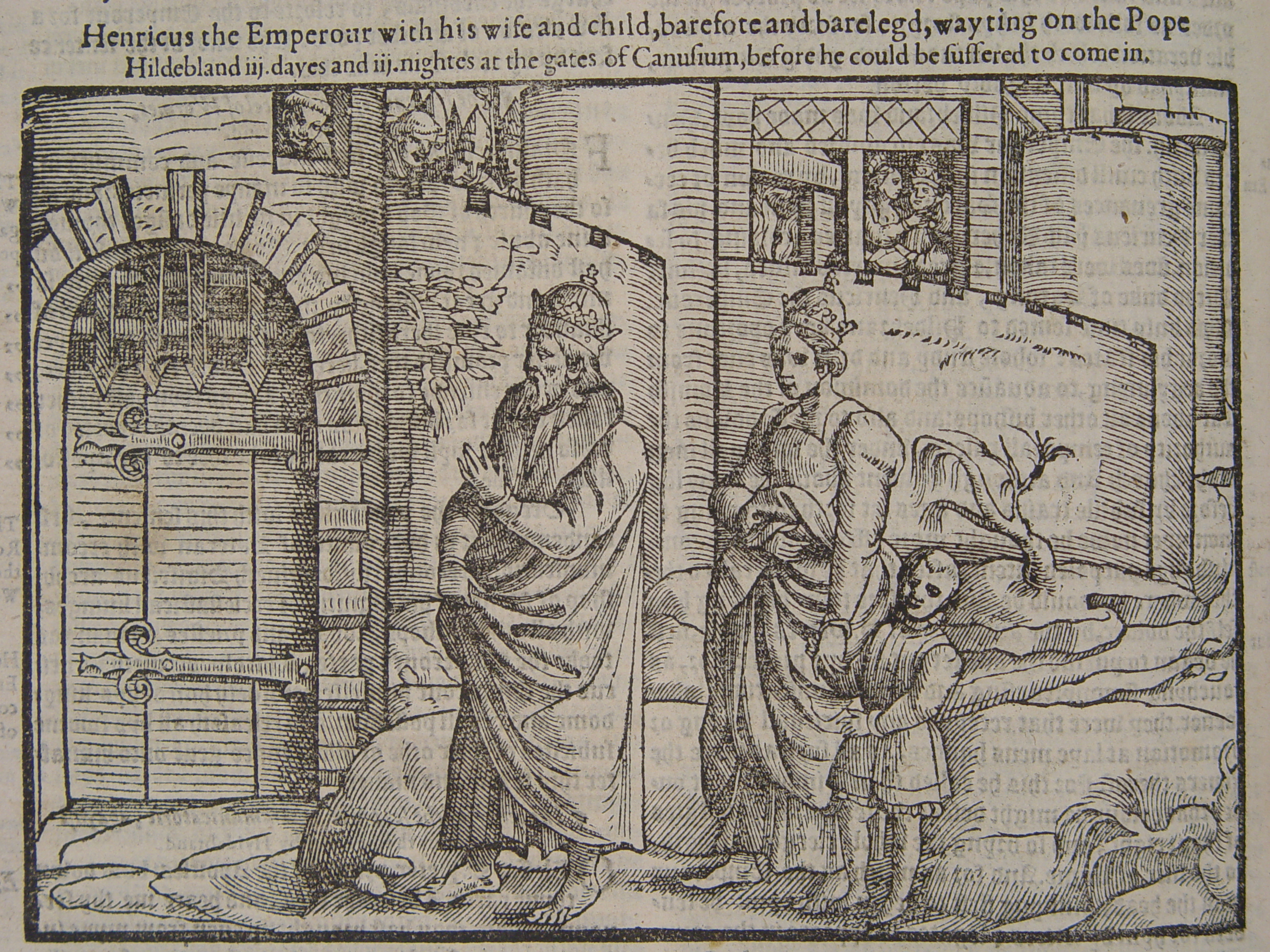
When Pope Gregory VII excommunicated Holy Roman Emperor Henry IV in 1076, he didn't merely exclude him from the sacraments. He released Henry's subjects from their oaths of loyalty, causing a political collapse. In January 1077, Henry stood barefoot in the snow outside the castle of Canossa for three days — waiting for the pope to decide whether to receive him. The political theology that made this possible rested substantially on the Donation of Constantine.
The Anachronisms
Lorenzo Valla's 1440 treatise demolished the document word by word. The key evidence: the document uses satrapas (satraps) as a title for Constantine's officials — a Persian term that never appears in Latin imperial usage in the 4th century. The forger had embedded two mutually contradictory dates (315 AD and 317 AD) by copying from two different sources without noticing the discrepancy. And entire passages were plagiarized from the 5th-century Acts of Sylvester — a source that could not exist in a 4th-century document.
A Thousand Years of Deception
The Forgery
An unknown forger in the papal chancery writes the Donation of Constantine, claiming the emperor handed the entire Western Roman Empire to Pope Sylvester I in 315 AD. It is used immediately to justify the papacy's territorial claims against the Lombards.
The Schism
Pope Leo IX cites the Donation in demanding that Constantinople acknowledge Rome's supremacy. Patriarch Michael I Cerularius refuses. The resulting mutual excommunications create the East-West Schism — a split between Catholic and Orthodox Christianity still unhealed today.
Canossa
Emperor Henry IV stands barefoot in the snow outside the castle of Canossa for three days, waiting for Pope Gregory VII to lift his excommunication. The most powerful secular ruler in Europe, humiliated by a pope whose authority is grounded partly on a forged document.
The Proof
Lorenzo Valla publishes his definitive philological exposure of the Donation. The Inquisition finds him guilty on eight counts of heresy. His patron, Alfonso of Aragon, saves him. The treatise circulates in manuscript for 77 years before anyone prints it.
The Explosion
Ulrich von Hutten prints Valla's treatise the same year as Luther's Ninety-Five Theses. Luther reads it, writes: "Good heavens! What darkness and wickedness is at Rome." The forgery, exposed, becomes one of the most powerful arguments for the Reformation.
The Admission
The Lateran Treaty between the Holy See and Italy formally acknowledges the Donation of Constantine was a forgery. The church receives Vatican City — 44 hectares — in place of the empire it was never actually given.
Key Figures
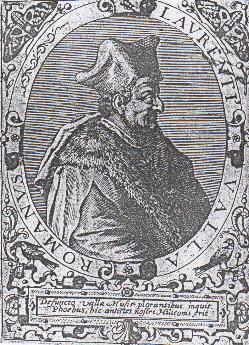
Lorenzo Valla
Italian humanist (1407–1457) who wrote the definitive exposure of the Donation in 1440 while employed by the pope's military enemy. He was investigated by the Inquisition and saved by his patron. Later appointed papal secretary by Pope Nicholas V. The man who destroyed the papacy's greatest legal weapon ended his career working for the papacy.
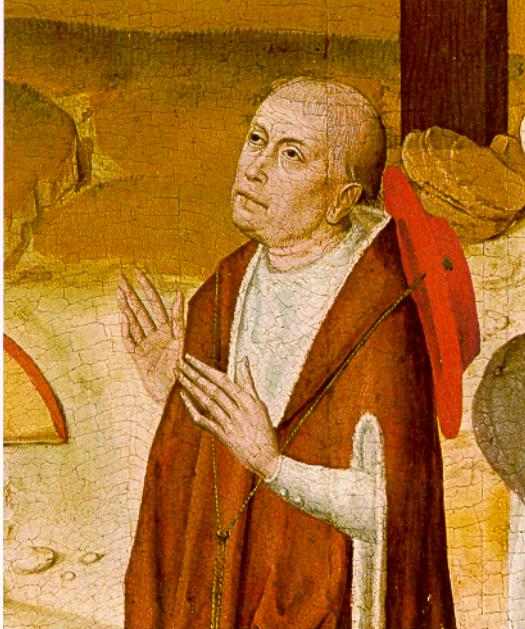
Nicholas of Cusa
German philosopher-cardinal (1401–1464) who in 1433 presented the first sustained scholarly challenge to the Donation, arguing from historical silence and stylistic analysis. He noted that no contemporary source mentioned Constantine's gift and that popes had continued deferring to emperors for four centuries after the supposed donation. He stopped short of calling it a forgery — that took Valla.
The Lie That Built an Empire
The forger who wrote the Donation of Constantine was not merely lying. He was constructing a legal reality — the grammar of a conflict that would last five centuries, shape the map of Europe, and split Christianity into two branches that have never reunited.
The institution that benefited most from the document finally admitted it was fake in 1929. They received 44 hectares instead of an empire. But they received something.
Get the Full Book
The complete story of the forger, the pope, the philosopher who doubted, and the humanist who proved it — 1,200 years of the most consequential fraud in Western history.