The Dark Ages
The Most Persistent Myth in History
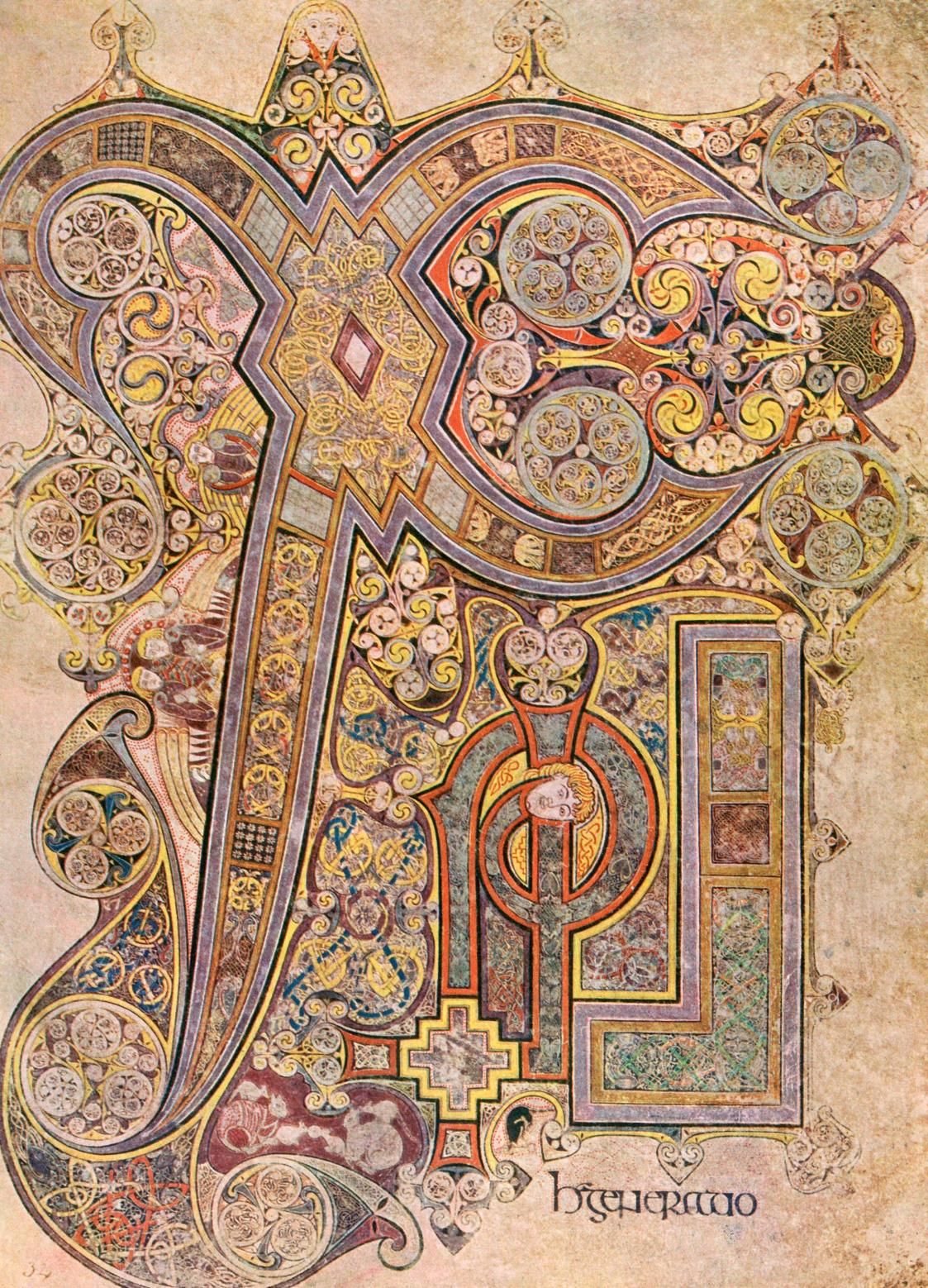
In 830 AD — deep in what we call the Dark Ages — a mathematician in Baghdad invented algebra. Irish monks were producing the Book of Kells, one of the most complex works of art in human history. The Roman Empire was still running, unbroken, from Constantinople. Charlemagne had just issued history's first public education mandate. The term "Dark Ages" was coined 500 years later by a Renaissance poet who needed the period to be dark so his own era could look brighter by contrast.
The academic consensus has been unambiguous for decades: the "Dark Ages" is a myth. Not a simplification — a myth. The term has been expelled from peer-reviewed scholarship. What replaced it is far more interesting than the darkness.
1,000,000
Population of Baghdad during the "Dark Ages" — the world's largest city. London at the same period had around 15,000 people. The Abbasid Caliph's House of Wisdom employed mathematicians, astronomers, and physicians who were doing science Europe wouldn't match for centuries.
1088
Year the University of Bologna opened — the oldest continuously operating university in the world. The university is a medieval invention. Nothing like it existed in ancient Rome or Greece.
2,000+
Decorated initials in a single manuscript created by Irish monks around 800 AD. The "Chartres blue" stained glass formula, perfected in the same era, has never been replicated by modern craftsmen.
37m
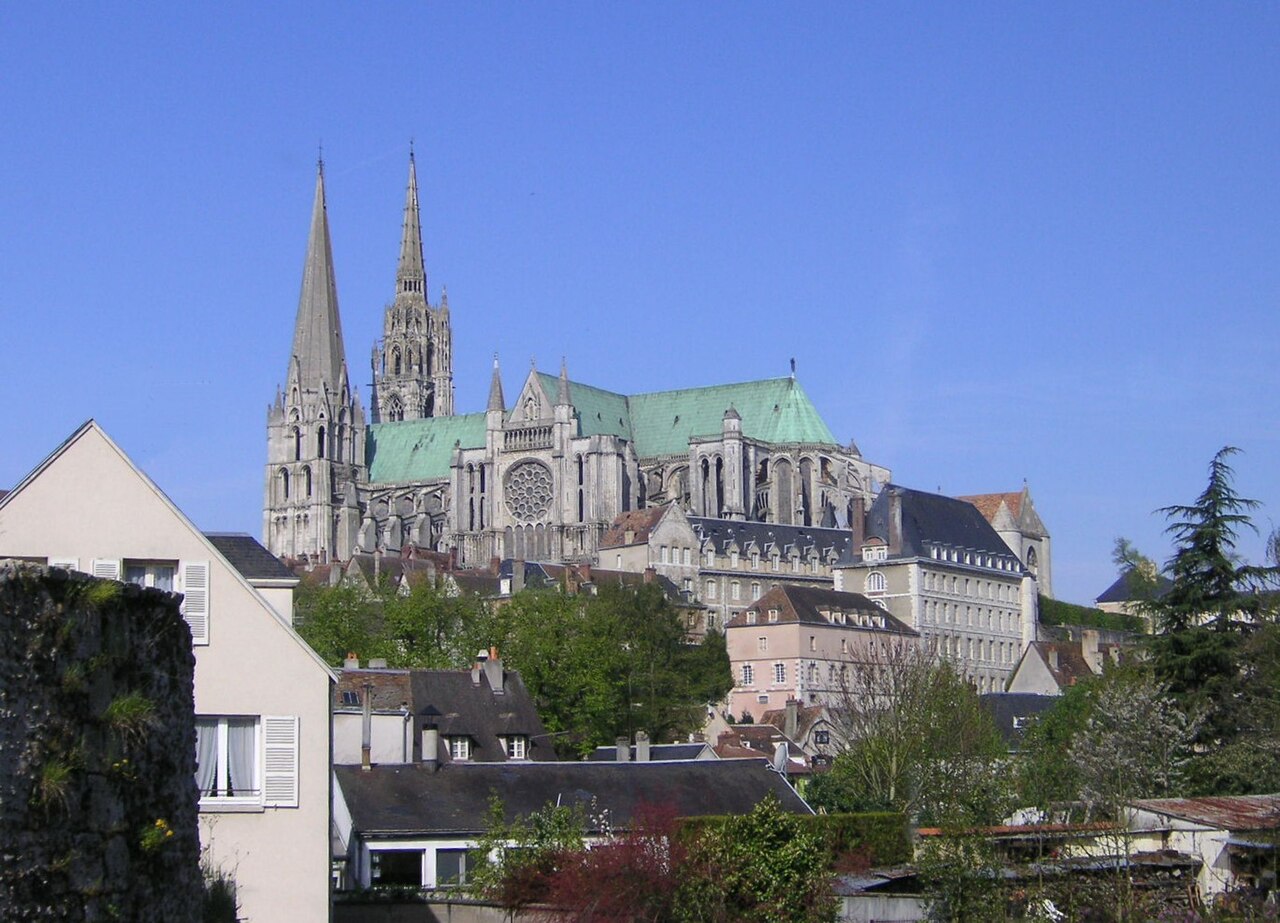
Height of Chartres Cathedral's vault, completed 1220 AD. Built without computers, steel, or modern engineering — and still standing 800 years later. The flying buttress that makes it possible is a medieval invention with no ancient precedent.
The Evidence Against the Myth
The Carolingian Renaissance
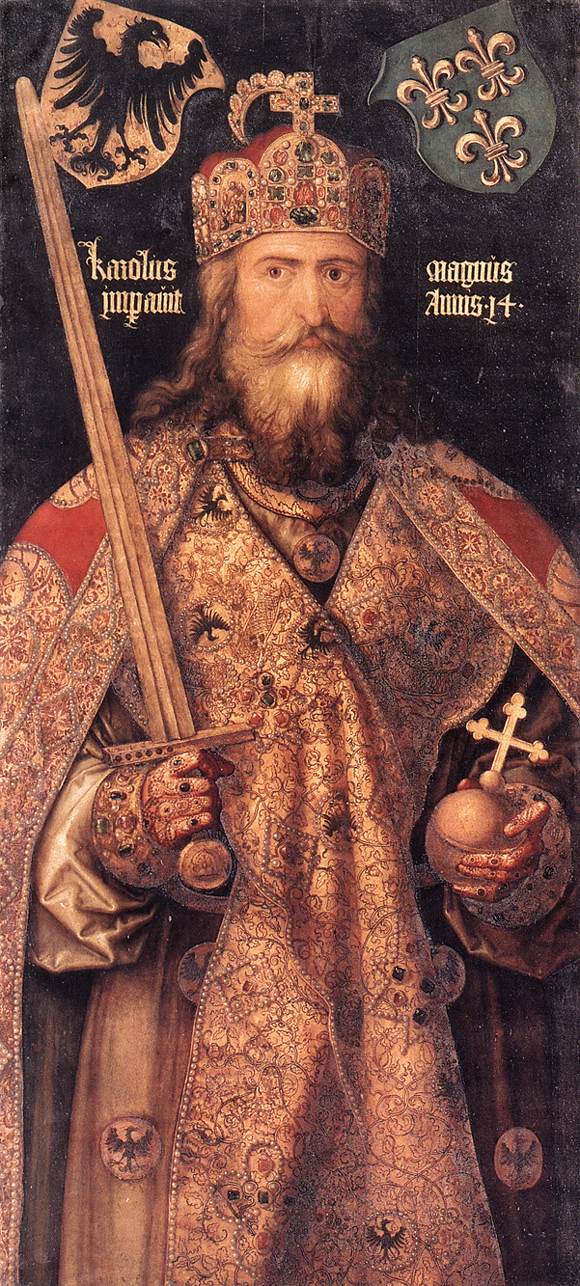
In 789 AD, Charlemagne issued the Admonitio Generalis — history's first public education mandate, requiring schools at every cathedral and monastery in his empire. He recruited the scholar Alcuin of York to run his Palace School, assembled an international circle of poets, theologians, and historians, and commissioned scriptoria that copied most of the classical Latin literature we still read today. The modern lowercase alphabet descends directly from the "Carolingian minuscule" writing system his court developed. The Renaissance scholars who later adopted it thought it was ancient Roman script. It wasn't. It was medieval.
The House of Wisdom
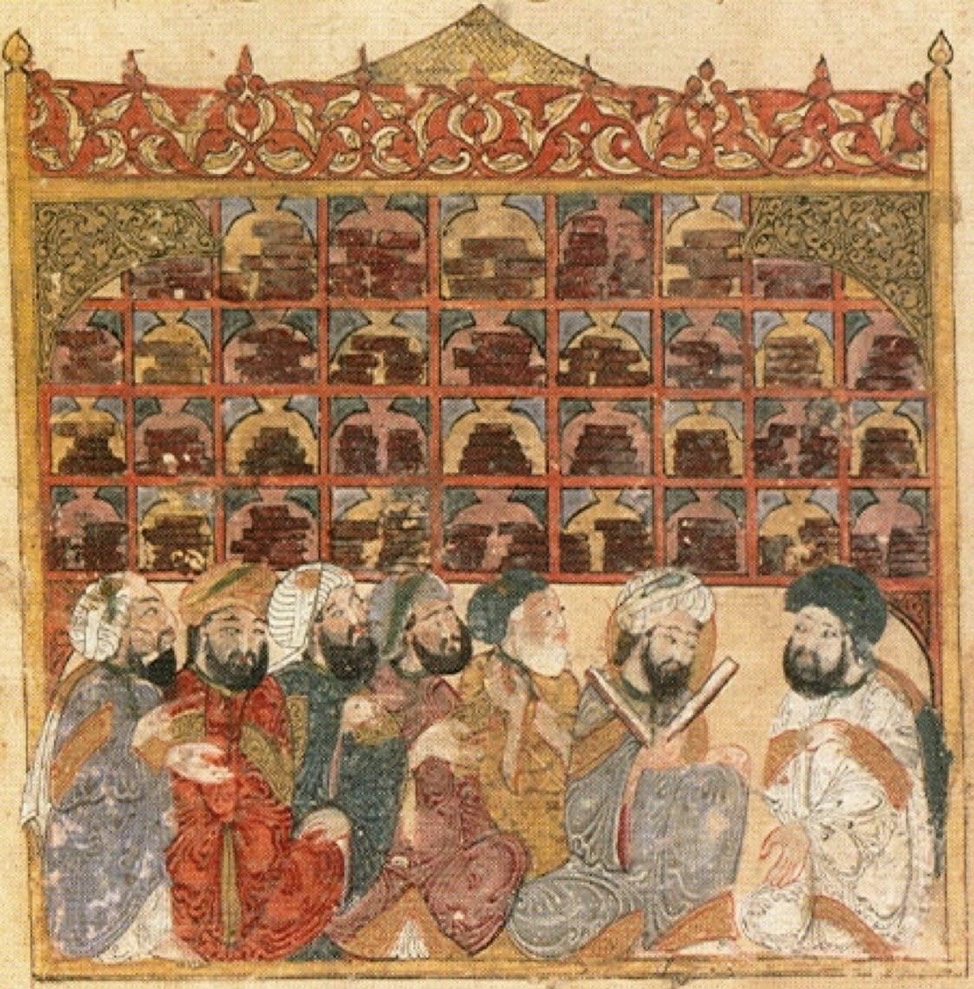
While Western Europe was reorganising after Rome's fall, the Abbasid Caliphate in Baghdad was running the world's greatest research institution. The Bayt al-Hikma — the House of Wisdom — was simultaneously a library, translation bureau, observatory, and academy. Al-Khwarizmi invented algebra there around 820 AD. His name gave us the word "algorithm." Ibn al-Haytham conducted controlled optical experiments that are recognised as a founding moment of the scientific method. Avicenna's Canon of Medicine, completed in 1025, remained the standard medical textbook in European universities until the seventeenth century. The knowledge the Renaissance "rediscovered" had been preserved and extended in Arabic for four centuries before European scholars translated it back into Latin.
Stone Into Sky
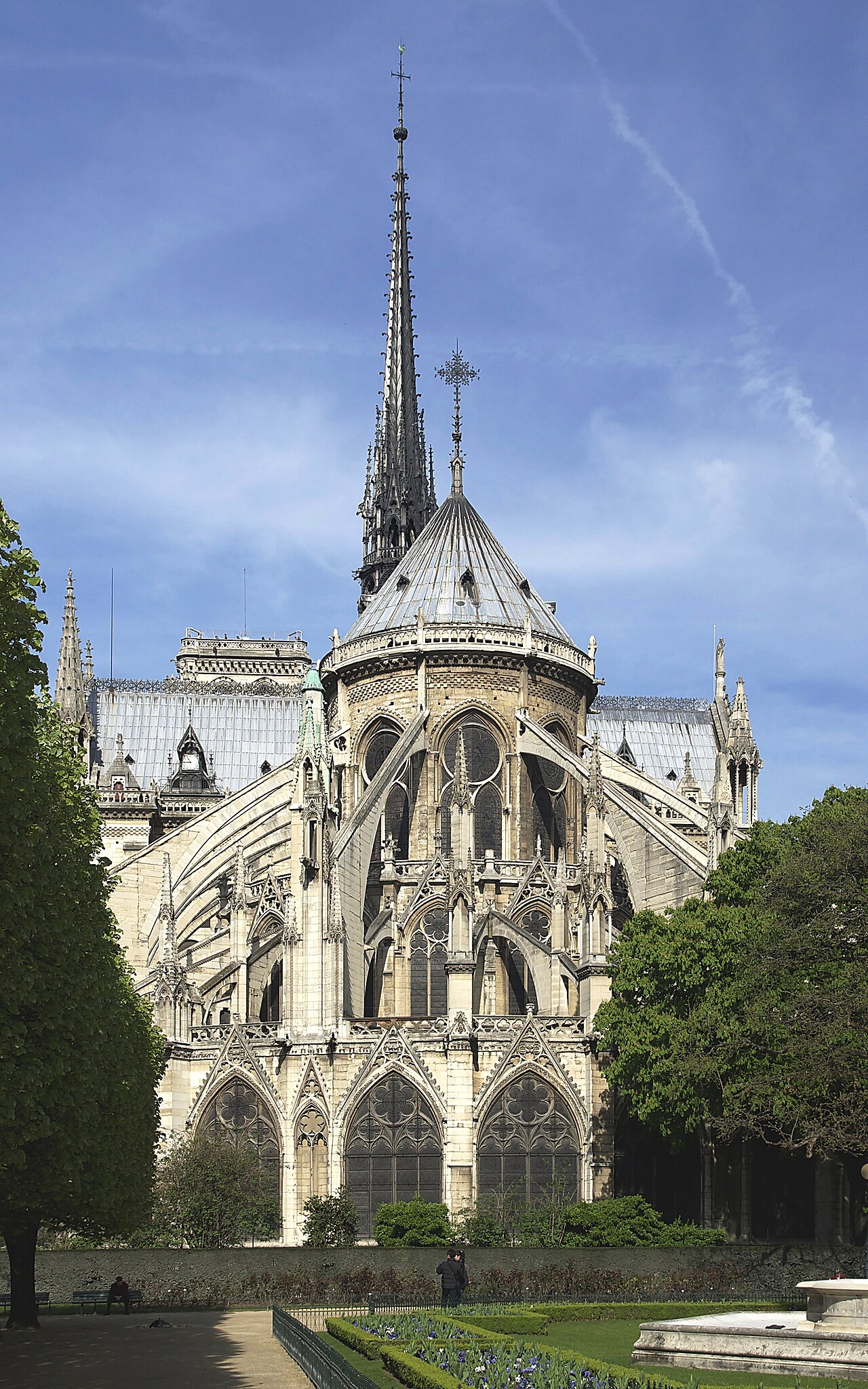
The Gothic cathedral is the most visible refutation of the "Dark Ages" narrative. The flying buttress — invented at Notre-Dame de Paris in the late twelfth century — transfers the outward thrust of a stone vault over the aisle roofs to external piers, freeing the interior walls to become screens of stained glass. Chartres Cathedral, largely rebuilt after 1194 and complete by 1220, has 176 windows covering 2,600 square metres. Cologne Cathedral, begun in 1248, rose 157 metres — briefly the world's tallest structure. These buildings required sophisticated understanding of structural geometry and materials science. They were built without computers, without steel, and without load-testing equipment. They have stood for 800 years.
A Timeline of the "Darkness"
Rome "Falls"
Odoacer deposes the boy emperor Romulus Augustulus. The Eastern Empire in Constantinople continues unbroken, preserving Roman law, Greek manuscripts, and classical civilisation for another 977 years.
The Irish Mission
Columba founds Iona monastery (563). Columbanus founds Luxeuil, Bobbio, and dozens of monasteries across Gaul and Italy — each a centre of manuscript production and learning. Irish monks are operating a continental intellectual network.
Manuscript Masterpieces
The Lindisfarne Gospels are produced at Holy Island (c. 715–720). The Book of Kells, with over 2,000 decorated initials, is created at Iona (c. 800). These are among the most sophisticated artworks ever made.
The House of Wisdom
Harun al-Rashid and al-Ma'mun establish and expand the Bayt al-Hikma in Baghdad — the world's largest city, population 1 million. Al-Khwarizmi writes the book that gives algebra its name (c. 820).
Charlemagne's Renaissance
Alcuin of York arrives at Aachen. The Admonitio Generalis mandates schools across the empire (789). Carolingian minuscule becomes Europe's standard script — the ancestor of our modern lowercase alphabet.
The First University
Bologna opens — the oldest continuously operating university in the world. Paris follows c. 1150-1200. Oxford c. 1167. Cambridge 1209. By 1300, Europe has 15 universities. The university is a medieval invention.
Chartres Rebuilt
After a fire, Chartres Cathedral is reconstructed. Its 176 stained-glass windows cover 2,600 square metres. The vault rises 37 metres. Flying buttresses transfer the structural load outside the walls. "Chartres blue" glass remains unmatchable today.
The Myth is Born
Francesco Petrarch, positioning himself as a dawn figure, declares the preceding centuries "dark." He needs a dark past to justify his Renaissance present. The myth enters Western consciousness.
Key Figures
Francesco Petrarch
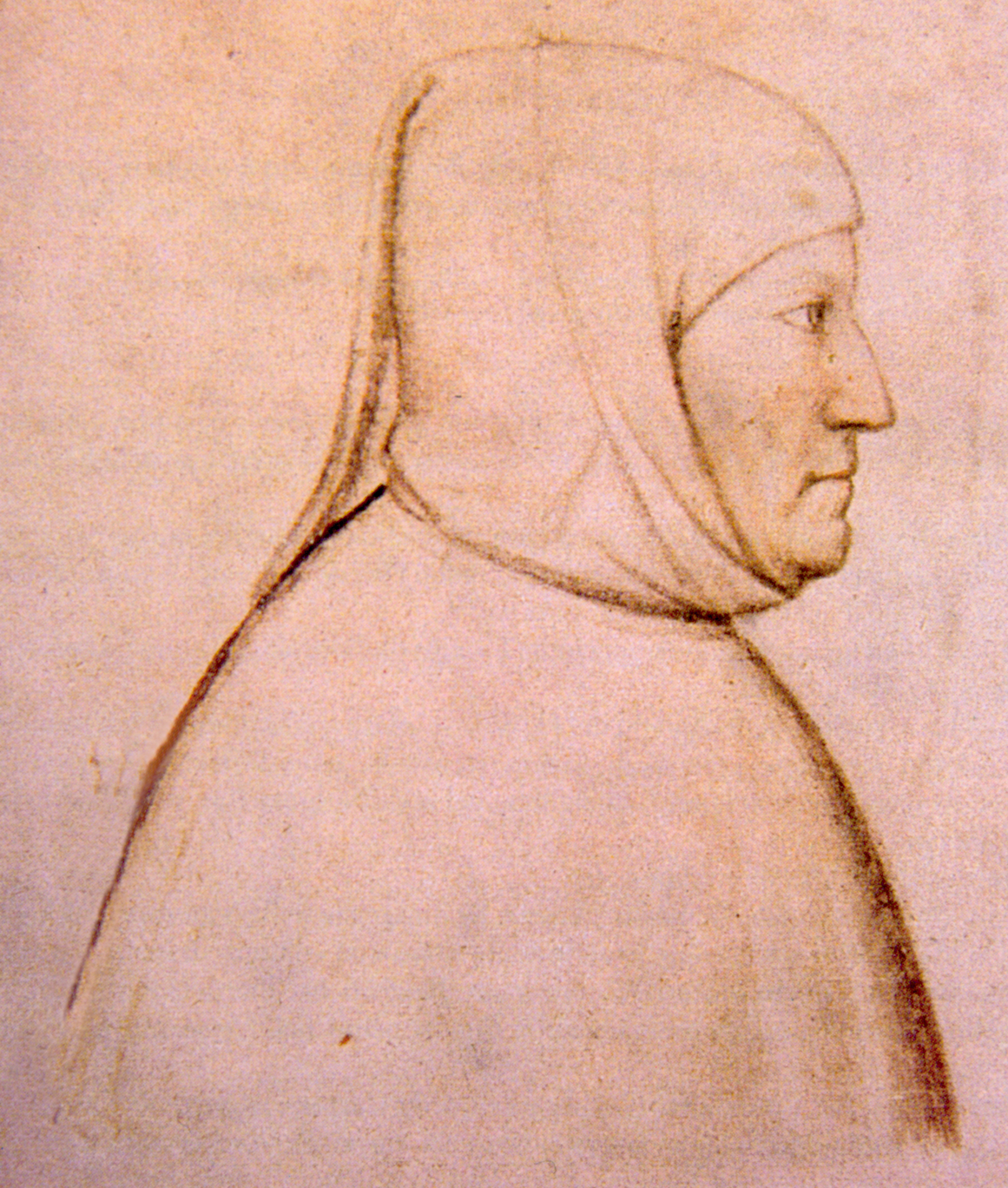
The Italian poet and scholar (1304–1374) who first described the post-Roman centuries as "dark." Petrarch was not making a dispassionate historical judgment — he was constructing a narrative. He needed an age of cultural darkness before him so that his own era could be positioned as the dawn of a new light. The "Renaissance" he helped invent depended on a "Dark Ages" it could be reborn from. The irony: most of the classical texts his movement "rediscovered" had been preserved through those centuries by the very monks and scholars his narrative dismissed.
Alcuin of York
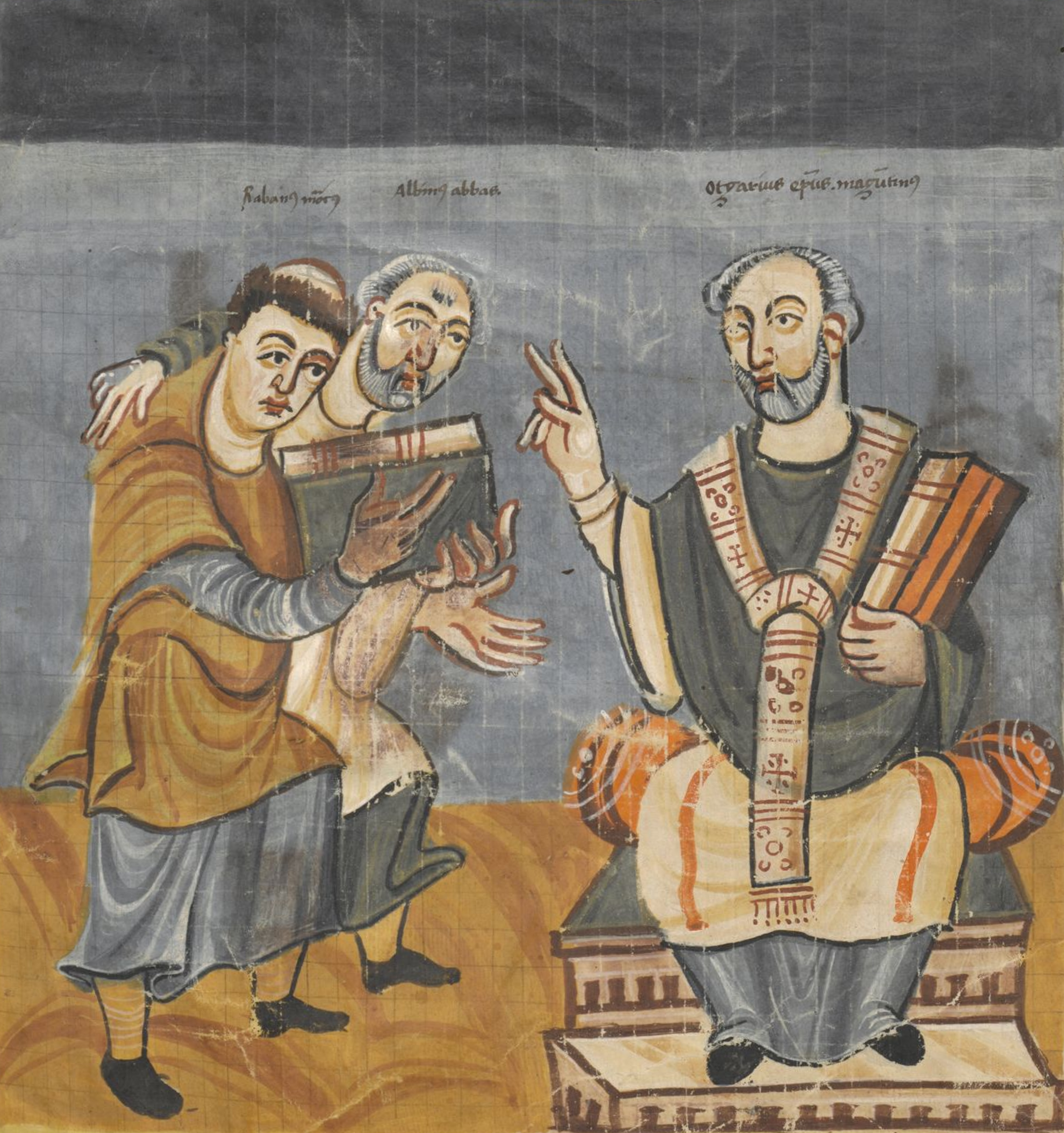
Born in Northumbria around 735, Alcuin was the finest educator in England before Charlemagne recruited him to Aachen. At the Palace School, he standardised the curriculum of medieval European education, wrote textbooks on grammar, rhetoric, logic, mathematics, and astronomy, and co-developed Carolingian minuscule — the writing system from which our modern lowercase alphabet descends. He wrote nearly 300 letters that survive, offering a window into the intellectual world of the Carolingian court. He lived and worked at the height of the supposed "darkness," produced scholarship of the highest order, and almost nobody outside of academic history has heard of him.
The Myth's Last Stand
The term "Dark Ages" has been expelled from academic scholarship. Historians use "Early Middle Ages" or "Late Antiquity." When the phrase appears in a peer-reviewed paper, it appears in quotation marks — a signal that the writer is aware of its problems.
And yet the myth persists in popular culture, in schoolrooms, in political rhetoric. It persists because it is convenient: for Protestants who need Catholic history to be oppressive, for secularists who need religion to be an enemy of knowledge, for progressives who need the pre-modern world to be primitive.
The darkness was in the eyes of the people who needed it to be dark. The medieval world itself was simply alive.
Get the Full Book
From Petrarch's myth to Charlemagne's school, from the House of Wisdom to the flying buttresses of Chartres — the full story of history's most persistent lie.