
Get the full EPUB
The EPUB is part of the HistorIQly Plus library. The case file on this page stays free to read.
This EPUB is already in your library. The case file on this page stays free to read.
Download EPUBPlus includes every book in the library. See what Plus includes
Every book in the library is yours to download.
All EPUBs are in English. Translations are coming.
On an October morning in 1869, two workers digging a well on a quiet New York farm struck something with their shovels. Three feet down, they uncovered a massive stone foot. The workers exposed a carved figure more than ten feet long, advertised as a petrified giant. The discovery soon became a national sensation.
A cigar maker financed the manufacture, transport and planting. The attraction brought paying crowds, supporters and sceptics.
1866
In Hull's later account, an argument with a Methodist preacher in Iowa inspires his plan to manufacture a supposed petrified giant.
2,990
Pounds of carved Iowa gypsum, hauled 1,200 miles in secret.
50¢
Per person, 15 minutes. Thousands came daily.
$30K+
Reported price for a three-quarter interest; Hull's receipts and exhibition revenue were separate sums.
The Evidence
Needle Pores
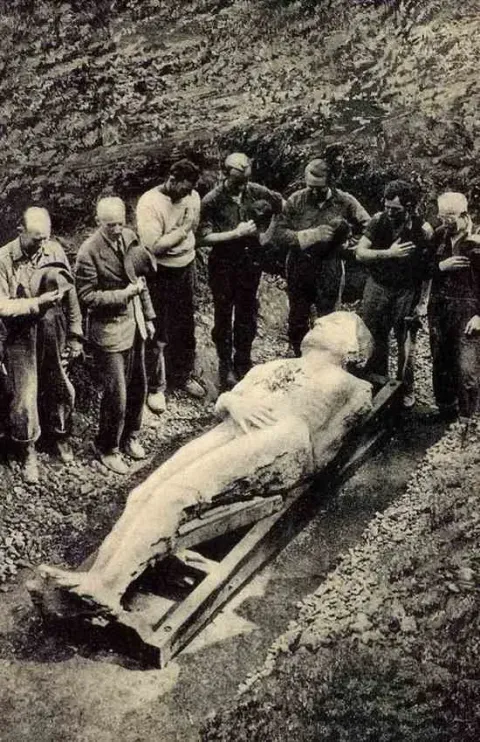
To simulate human skin, Hull drove darning needles into the gypsum surface, creating hundreds of tiny impressions that resembled pores. Sulfuric acid and ink were rubbed across the body to fake centuries of weathering. Hull later told Andrew Dickson White that vein-like bluish streaks already in the stone helped him select it.
Chisel Marks
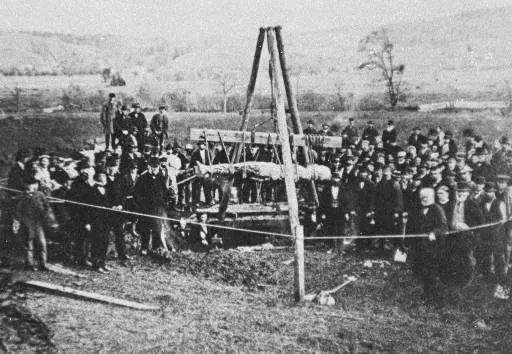
Yale paleontologist Othniel C. Marsh took one look and called it "a most decided humbug." Fresh tool marks were still plainly visible on the surface — marks that should have eroded away if the figure had been buried for centuries. The crevices showed no water damage. The stone was too soft. The anatomy was wrong.
Iowa Gypsum
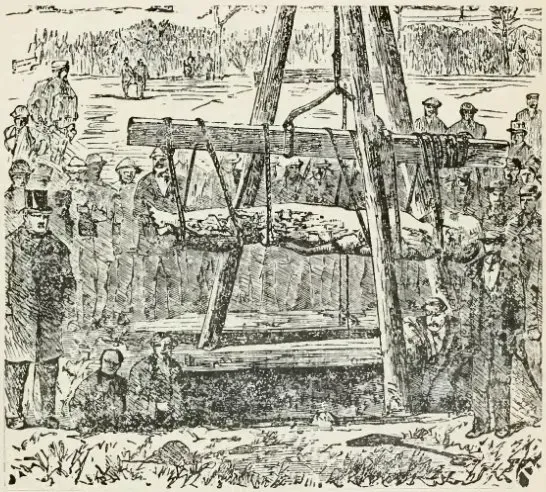
The entire 10-foot figure was carved from a single block of gypsum quarried near Fort Dodge, Iowa. Hull told the quarrymen it was for an Abraham Lincoln memorial. The finished figure weighed nearly 3,000 pounds; that is not a reliable measurement of the original quarry block. It was carved in Chicago, transported to New York and deliberately buried.
The American Goliath
The Carving
In a Chicago barn draped with quilts to muffle the hammering, stonecutter Edward Burkhardt and two assistants spend weeks sculpting Hull's "petrified giant" — using Hull's own body as the model.
The Discovery
Workers Gideon Emmons and Henry Nichols strike the stone foot while digging a "well" on Stub Newell's farm. Within days, newspapers across the country are running the story.
Barnum's Copy
After David Hannum's syndicate refuses P.T. Barnum's $50,000 offer, Barnum commissions a plaster replica and exhibits it in New York — claiming his is the original.
The Confession
George Hull admits the fabrication to the press. The owners also seek an injunction against Barnum, but the familiar judicial punchline is not supported by a located published court opinion.
Final Resting Place
After decades on the carnival circuit, the giant is sold to the Farmers' Museum in Cooperstown, New York — now Fenimore Farm & Country Village, which displays it in the Main Barn.
Key Figures
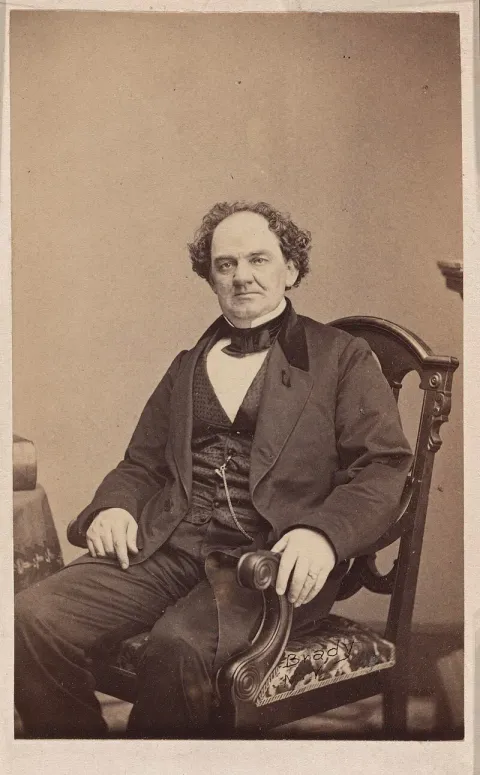
P.T. Barnum
Offered $50,000 for the giant. When refused, he made his own — and it drew bigger crowds than the original. The rival exhibits became associated with a saying about a sucker born every minute, whose attribution to either Hannum or Barnum is uncertain.
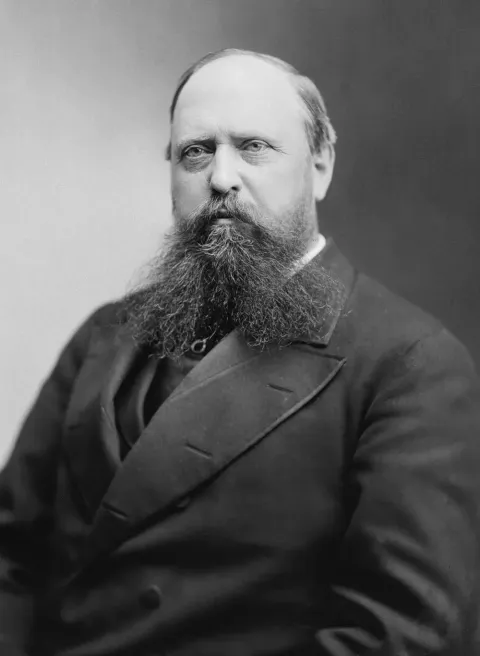
Othniel C. Marsh
Yale's star paleontologist visited the exhibit and immediately declared it "a most decided humbug." He spotted fresh chisel marks near crevices that showed no water erosion — proof the burial was recent.
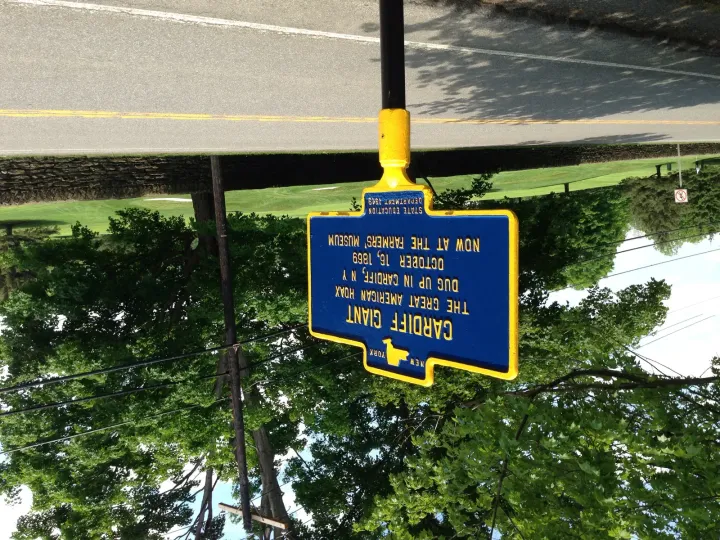
A Sucker Born Every Minute
Even after Hull's confession, the figure continued to be exhibited as a famous hoax. Its survival records continuing curiosity, without establishing what every visitor thought.
The Cardiff Giant shows how evidence, publicity and entertainment can draw the same audience. Knowing how it was made need not end the desire to see it.
Get the Full Book
Follow the buried stone figure from its manufacture to rival exhibitions and public exposure.