
Get the full EPUB
The EPUB is part of the HistorIQly Plus library. The case file on this page stays free to read.
This EPUB is already in your library. The case file on this page stays free to read.
Download EPUBPlus includes every book in the library. See what Plus includes
Every book in the library is yours to download.
All EPUBs are in English. Translations are coming.
On July 2, 1937, Amelia Earhart — the most famous woman in America — took off from Lae, New Guinea, and flew into the Pacific. She was 2,556 miles from a tiny coral island called Howland. She never arrived. No wreckage. No body. No answer.
Her final radio messages were strong, but they supplied no reliable bearing or exact position. Then — silence.
2,556
Miles of open Pacific between Lae, New Guinea and Howland Island — a speck of coral barely six feet above sea level. A small sustained navigation error over that distance could put the aircraft many miles off course.
1,151
Gallons of aviation fuel — six extra tanks where the passenger seats used to be.
250K
Square miles of Pacific searched by nine naval vessels and sixty-three aircraft.
89 yrs
And counting. The most famous disappearance in aviation history remains unsolved.
The Evidence
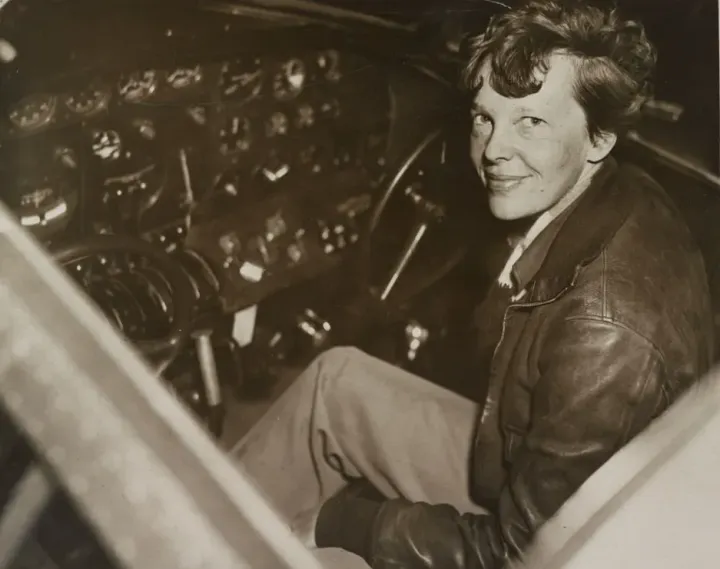
The Electra
Earhart's Lockheed Model 10-E Electra was a twin-engine monoplane modified for extreme range. Its passenger cabin was gutted and fitted with six fuel tanks holding 1,151 gallons. The pilot and navigator communicated by passing handwritten notes on a bamboo fishing pole — the engines were too loud for speech.
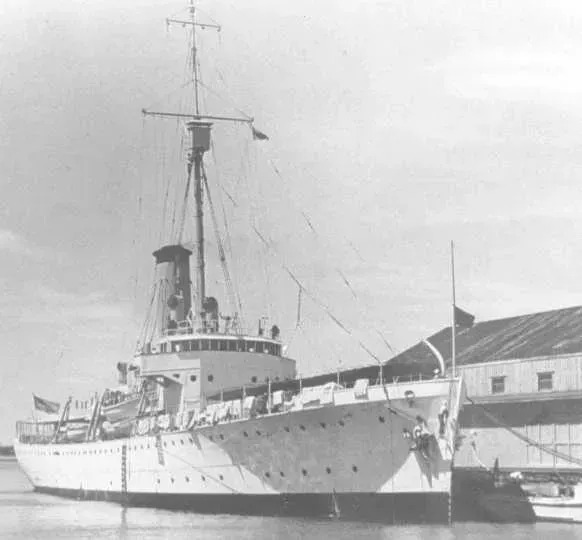
Last Transmissions
At 07:42 local ship time (19:12 GMT), Earhart radioed the USCGC Itasca: 'We must be on you but cannot see you. But gas is running low.' The signal was strong, suggesting proximity without establishing a distance. One hour later, her final transmission: 'We are on the line 157 dash 337.' Then silence. The Itasca sent smoke from its boilers. She never saw it.
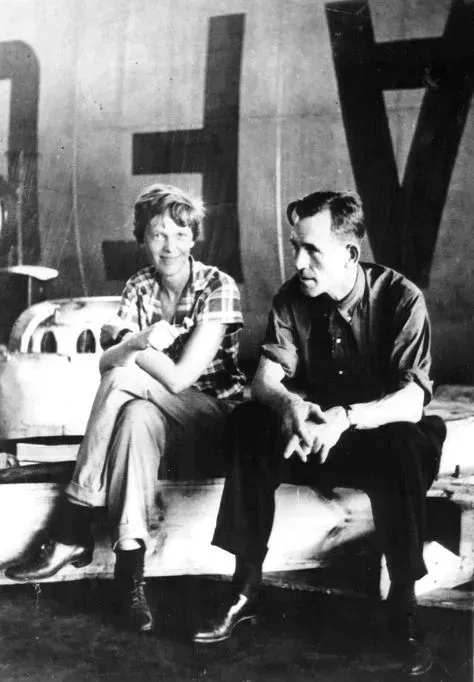
The Last Photograph
Amelia Earhart and navigator Fred Noonan after landing in Bandoeng, Dutch East Indies, eleven days before they vanished. Noonan was one of the finest aerial navigators alive — he had charted Pan Am's transpacific Clipper routes. But overcast skies on July 2 may have blocked the celestial observations he needed for their final approach.
Into the Pacific
Lady Lindy
Amelia Earhart crosses the Atlantic as a passenger on the Friendship. She calls herself 'just baggage, like a sack of potatoes' — and vows to cross on her own terms.
Solo Atlantic
Earhart flies solo from Harbour Grace, Newfoundland, to Londonderry, Ireland — through ice, fire, and a 3,000-foot spin. First woman to cross the Atlantic alone.
Eastward
Departs Miami on the second attempt to fly around the world. In 29 days, Earhart and Noonan cross South America, Africa, South Asia, and Australia — 22,000 miles.
The Silence
Takes off from Lae, New Guinea, for Howland Island. After twenty hours of flight and increasingly desperate radio calls, Earhart's transmissions cease at 20:13 GMT (08:43 local ship time). She is never heard from again.
Deep Sea Vision
Marine explorer Tony Romeo announces a sonar anomaly on the ocean floor 100 miles west of Howland — a shape consistent with a Lockheed Electra at 16,000 feet. In November 2024 the company reported that the target was a natural rock formation.
Key Figures
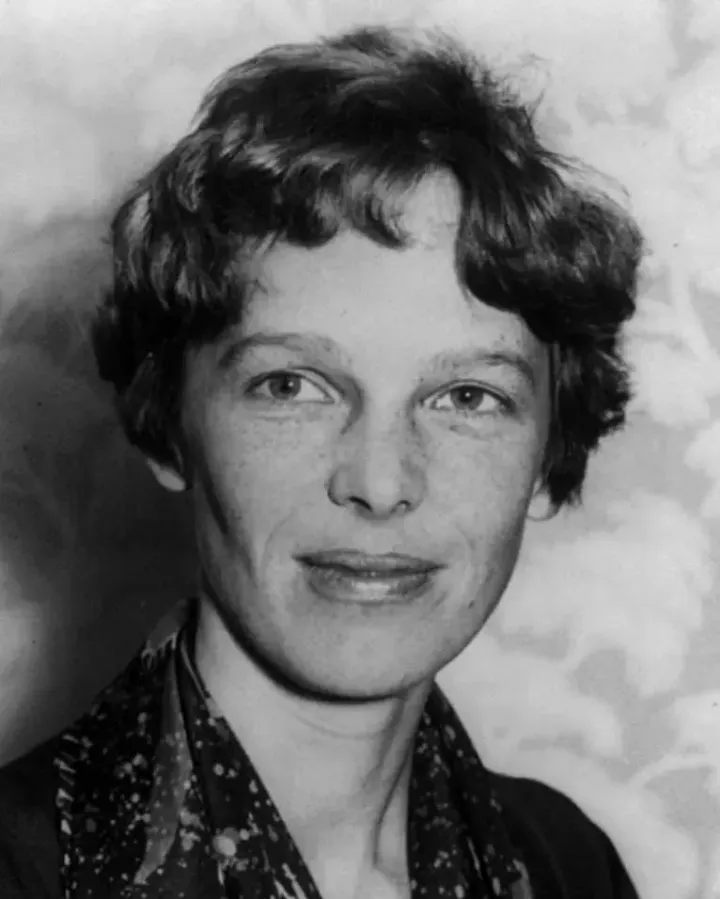
Amelia Earhart
The most famous woman aviator in history. She set records, co-founded the Ninety-Nines, and designed a clothing line for Macy's. On July 2, 1937, she vanished over the Pacific at the age of thirty-nine — 7,000 miles from completing a flight around the world.
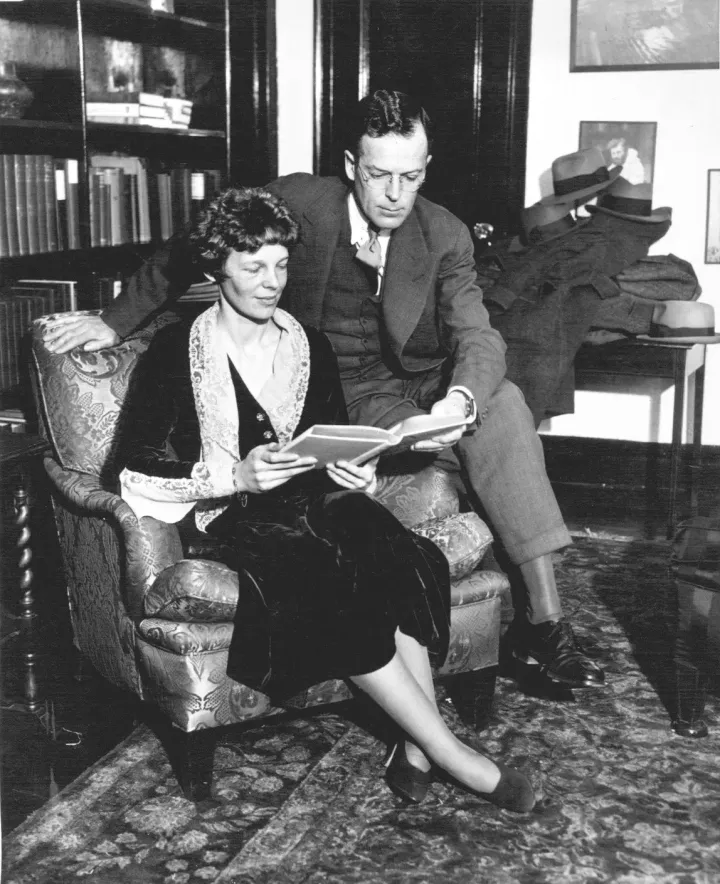
George Palmer Putnam
Publisher, promoter, and Earhart's husband. He proposed six times before she accepted — and on their wedding morning, she handed him a letter disclaiming 'any medieval code of faithfulness.' After her disappearance, he lobbied FDR and Eleanor Roosevelt to extend the search.
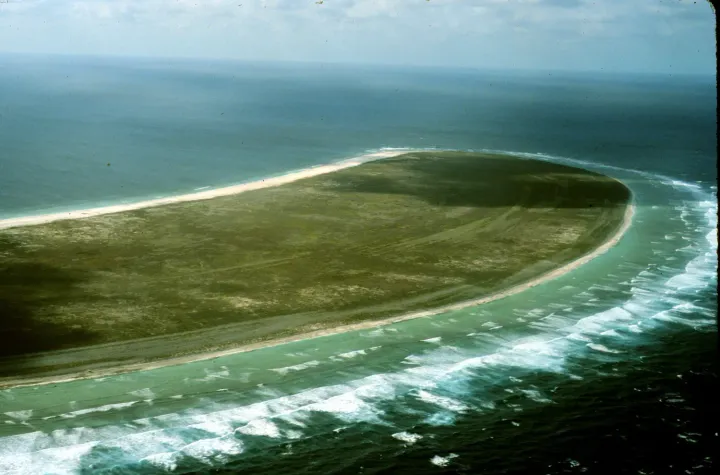
Into the Pacific
The Pacific Ocean covers sixty-three million square miles. A wreck on its seabed remains a leading possibility, but Earhart’s Electra has not been identified. Finding it could answer some of the questions left by the final radio exchange.
The radio signals at 07:42 local ship time were loud and clear. Earhart reported difficulty seeing her destination and low fuel. Strong reception could not tell the waiting crew where the aircraft was.
Get the Full Book
Follow the flight, the radio evidence and the search for Earhart and Noonan.